Newsletter
Newsletter Support JNS

Netanyahu: US settlement policy shift ‘fixes a historic wrong’

The Trump administration’s policy reversal is “a huge achievement” that will “remain for decades,” Israeli Prime Minister Benjamin Netanyahu tells West Bank residents during tour of the region.

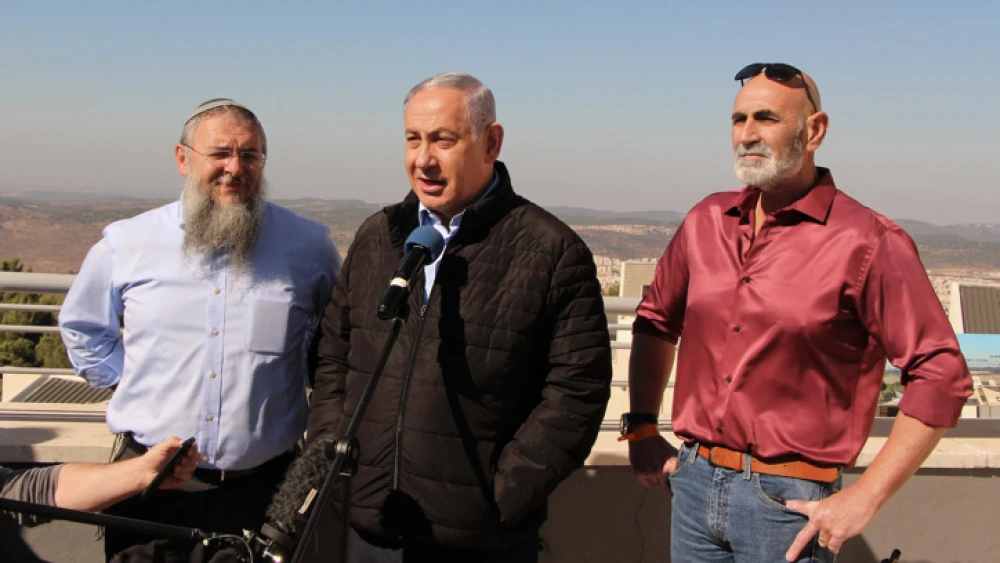
Israeli Prime Minister Benjamin Netanyahu, Gush Etzion Regional Council chairman Shlomo Ne'eman and Jordan Valley Regional Council chairman David Elchiani visit Alon Shvut in Gush Etzion on Nov. 19, 2019. Photo by Gershon Elinson/Flash90.
Israeli Prime Minister Benjamin Netanyahu, Gush Etzion Regional Council chairman Shlomo Ne’eman and Jordan Valley Regional Council chairman David Elchiani visit Alon Shvut in Gush Etzion on Nov. 19, 2019. Photo by Gershon Elinson/Flash90.

During a visit to the town of Alon Shvut in Gush Etzion on Tuesday, Israeli Prime Minister Netanyahu praised the U.S. administration’s policy reversal on Judea and Samaria as a “huge achievement” that “fixed a historic wrong.”

“I think it is a great day for the State of Israel and an achievement that will remain for decades,” he said.

U.S. Secretary of State Mike Pompeo announced on Monday that the “establishment of Israeli civilian settlements in the West Bank is not per se inconsistent with international law.”

The statement was criticized by Jordan as “dangerous,” while the Palestinian Authority said that the United States had “lost its credibility to play any future role in the peace process” as a result of the policy shift.

The move follows the Trump administration’s recognition of Jerusalem as the capital of Israel; the relocation of the U.S. embassy from Tel Aviv to Jerusalem; halting aid to the P.A. because of payments to terrorists and their families; and recognizing Israeli sovereignty over the Golan Heights.

The visit comes amid a relationship between American Jews and the African American community marked by historical alliances and modern strains.
The president said the recommendation tally does not resolve who can form a government, citing “mutual vetoes” between and within the political blocs.
“They try to call you ‘hateful’ if you believe that Palestinian kids should get to grow up in the land of their forefathers,” Dr. Abdul El-Sayed said.
“At a time when some are trying to silence our community, we have a voice at the table,” New York state Assembly member Sam Berger told JNS. “Make no mistake. We intend to use it.”