The Israel Defense Forces on Wednesday morning confirmed that strikes against Iran have been suspended following a ceasefire agreement between Washington and Tehran, while saying operations against Hezbollah in Lebanon are ongoing.
“In accordance with political leadership directives, the IDF has halted fire in the campaign against Iran and remains highly prepared to respond defensively to any violation,” the army said in a statement.
The IDF said fighter jets carried out extensive overnight strikes against dozens of ballistic-missile launch sites across the Islamic Republic to significantly reduce the scope of potential attacks.
Key production infrastructure of the Iranian regime was also struck in several areas across Iran, according to the statement.

At the same time, the IDF said targeted ground operations against Hezbollah in Lebanon are ongoing.
Israeli Prime Minister Benjamin Netanyahu issued a statement on Wednesday expressing support for the U.S.-Iran ceasefire, but said it “does not include Lebanon.”
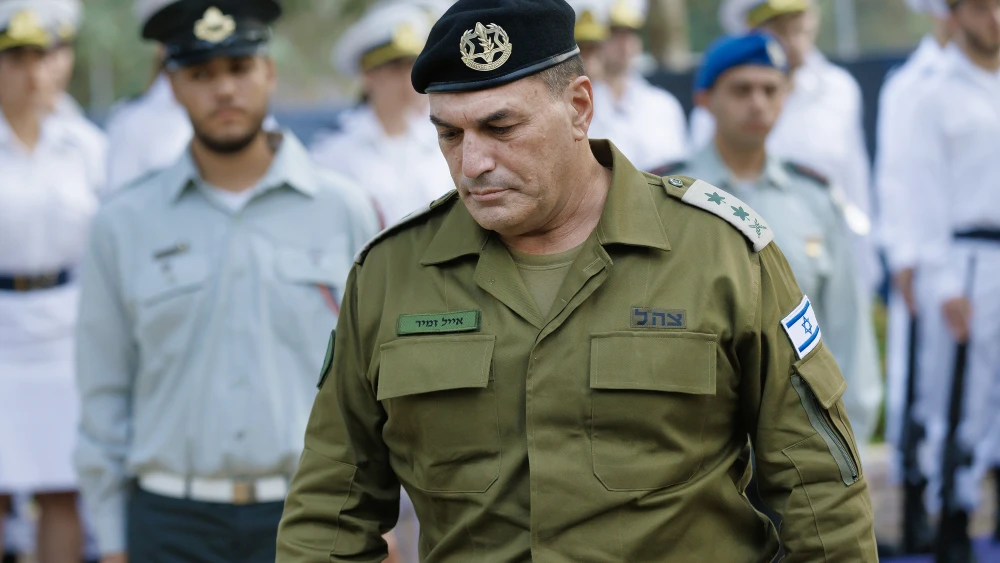
IDF Chief of Staff Lt. Gen. Eyal Zamir said on Tuesday that troops are “deepening the multi-focal effort to degrade the Hezbollah terrorist organization.”
“We continue to establish a forward defense posture to prevent direct fire toward our communities, while simultaneously operating against surface-to-surface fire,” he said.
“In every encounter, our troops prevail over Hezbollah. War carries heavy costs, and we will continue to act to remove threats against our civilians,” he added.

Zamir said on Sunday that the IDF had killed more than 1,000 Hezbollah operatives since the Iranian-backed terrorist group joined the war on March 2, “and that number will continue to rise.”
The military is striking Hezbollah “with determination, extensively and across multiple fronts,” Zamir said during a visit to Ras el-Bayada, a strategic coastal headland located near Tyre that is the northernmost point in Southern Lebanon where Israeli soldiers are currently operating.
“Every terrorist target and any target that supports terrorism in Lebanese territory will be struck,” he vowed, adding that the entire area south of the Litani River has been turned into an “operational zone” where the IDF will remain until it is “free of threats to Israel and our northern communities.”
“We issued advanced warnings to the residents of Southern Lebanon for their protection and to enable freedom of military operation,” Zamir said. “We will remain on this line as long as required.”
Hezbollah began firing rockets and suicide drones at Israel shortly after the assassination of Iranian Supreme Leader Ayatollah Ali Khamenei, who was targeted in the opening strikes of “Operation Roaring Lion” on Feb. 28.
In response to Hezbollah’s violation of the U.S.-brokered Nov. 27, 2024, truce agreement, Jerusalem launched an aerial campaign against the Iranian proxy and ordered IDF troops to advance and take control of additional areas in Southern Lebanon to halt cross-border attacks.
Meanwhile, the IDF said on Wednesday that the Home Front Command was conducting situational assessments and the public would be updated on any changes to defense guidelines.
“The IDF continues to operate across all sectors in order to defend the State of Israel and its citizens, and calls on the public to continue following Home Front Command instructions,” it added.