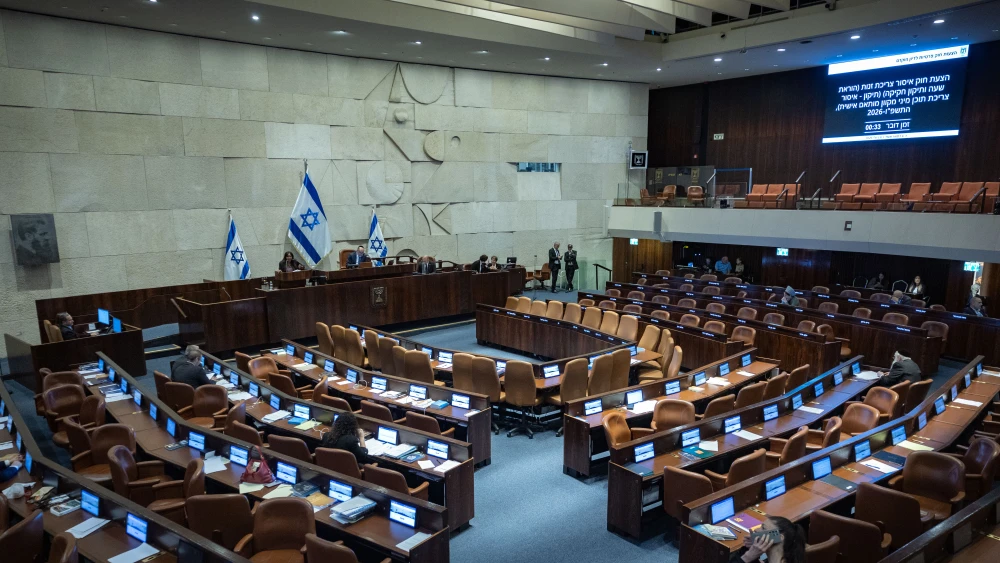
Israel’s Central Elections Committee on Thursday concluded its last deliberation ahead of the Oct. 27 general election, after it decided to reject petitions to disqualify the Religious Zionism-Zehut Party and Ozma Yehudit on the right, and the Democrats on the left.
The petition against the Democrats, headed by Yair Golan, was submitted by Itamar Ben-Gvir’s Otzma Yehudit. The petition to disqualify Otzma Yehudit was submitted by the Democrats. Both petitions cited alleged discrimination; against Arabs in Otzma Yehudit’s case and against Haredim and Israelis living in Judea and Samaria in the case of the Democrats, Israel’s Channel 12 News reported.
The Zulat Institute, a think tank promoting a humanistic worldview, according to its website, and several other parties submitted the petition against Religious Zionism-Zehut, also citing alleged racism.
Simcha Rothman, a Knesset member representing the Religious Zionism-Zehut party, urged Otzma Yehudit to withdraw its petition to disqualify Otzma Yehudit during the CEC’s concluding discussions.
Last week, the committee disqualified Ra’am, known also as the United Arab List. Likud and Otzma Yehudit filed the petition for that party’s disqualification based on its alleged ties to Hamas. The law precludes the running in elections of parties that negate Israel’s existence as a Jewish and democratic state, incite to racism, or support armed struggle by an enemy state or a terrorist organization against Israel.
The United Arab List said it would appeal the exclusion in court. Israel’s Central Election Committee has banned Arab parties several times in the past, including in 1984, 2009 and 2022. The High Court of Justice reversed those bans and allowed the parties in question to run.
Rothman said during his short intervention before the committee that Otzma Yehudit’s petition to disqualify the Democrats “subtracted from the achievement” of excluding the United Arab List.
Israel’s Central Elections Committee, which is chaired by a Supreme Court Justice, comprises representatives of the parties in the outgoing Knesset, which receive seats on the committee in proportion to their number of seats in Knesset. The four committee vice chairs represent Likud, Yesh Atid, National Unity and Shas. Representatives on the Committee vote on petitions and proposals.