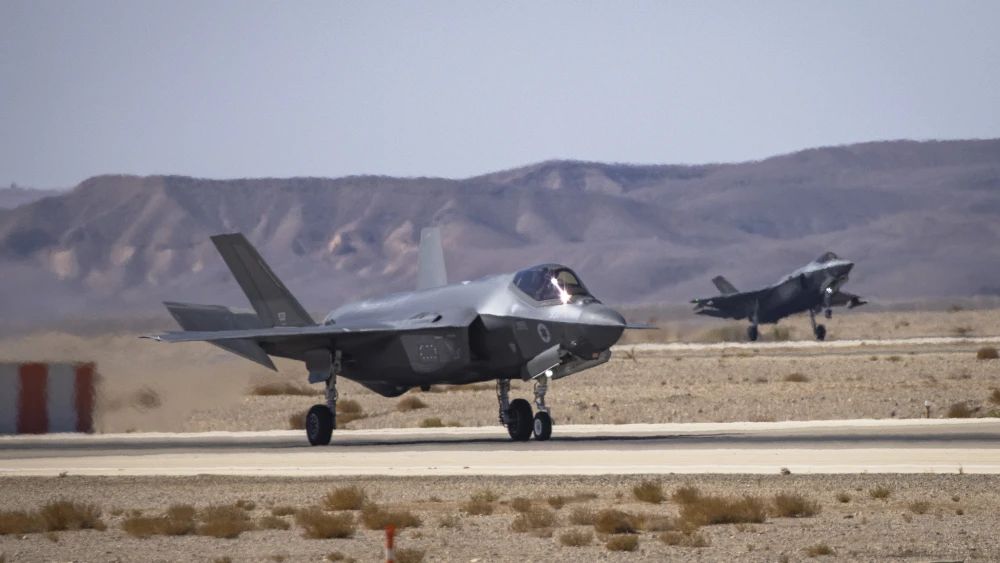
The Israeli Air Force is continuing to send dozens of fighter jets across Iran daily to degraded regime capabilities, with military sources reporting on Sunday that the offensive is currently focusing on three families of targets: Weapons production sites, nuclear program sites and hunting for missile launchers.
Detailing this three-pronged offensive, IDF International Spokesperson Lt. Col. Nadav Shoshani said during a briefing to journalists, “We have [Iranian] salvos and dozens of aircraft going back and forth over Iranian skies, taking advantage of our aerial security to carry out strikes against Iranian terror regime targets.”
The nuclear sites struck over the past 24 hours include the heavy water plant in Arak, which served as a key production site for plutonium for nuclear weapons, he said. Shoshani confirmed that this site had been previously struck in June 2025, adding that intelligence identified immediate Iranian attempts to rebuild the heavy water plant.
“There was a specific U.N. Security Council resolution against the actions the Iranian regime is taking in this site. And they are violating that Security Council resolution,” he explained.
Simultaneously, the operation dismantled critical nodes of the uranium enrichment pipeline, including “a unique facility in Iran used to produce explosive materials required for the uranium enrichment process, located in Yazd,” according to the military.
“This was one of the main infrastructures used for production of enriched uranium, which is a critical component in the production of nuclear weapons,” said Shoshani.
The campaign extends heavily into the regime’s maritime capabilities, with Israeli attacking the headquarters of the Iran’s Marine Industries Organization and additional weapons production facilities.
“We struck the headquarters of the Iranian terror regime’s marine industries,” Shoshani said, detailing the site’s activities as research and development, “but also a wide range of naval weaponry which is as you know part of the problems we’ve seen in in the Strait of Hormuz.” This directly follows the recent elimination of the IRGC Navy head, Alireza Tangsiri.
“We’ve had multiple successful strikes against target targets related to production and use of naval weapons,” Shoshani continued. “When we are able to have very successful operations against their manufacturing sites, against their production sites, this means a long lasting impact to this operation.”
Noting that the Houthis in Yemen fired one cruise missile and one ballistic missile at civilian population centers in southern Israel on Saturday, the military spokesman said, “They have announced that they have, just like Hezbollah, chosen the interest of the Iranian regime, fighting on behalf of the Iranian regime and engaging in war against Israel. We have prepared for a multi-front war. We’ve been fighting a multi-front war for the last two-and-a-half years with threats from various different fronts.”
Single-digit number of ballistic missiles
While Hezbollah in Lebanon attempted to fire hundreds of rockets and UAVs at Israel in recent days, the Iranian regime fired a single-digit number of ballistic missiles per day, according to military data. “The vast, vast majority of them [drones], both from Iran and Hezbollah, have been intercepted,” Shoshani said.
Despite the high interception rates, the civilian toll from the recent weekend included a 52-year-old man who was killed in Tel Aviv on Friday by a cluster munition, and a Hezbollah rocket strike killing a 43-year-old civilian in Nahariya.
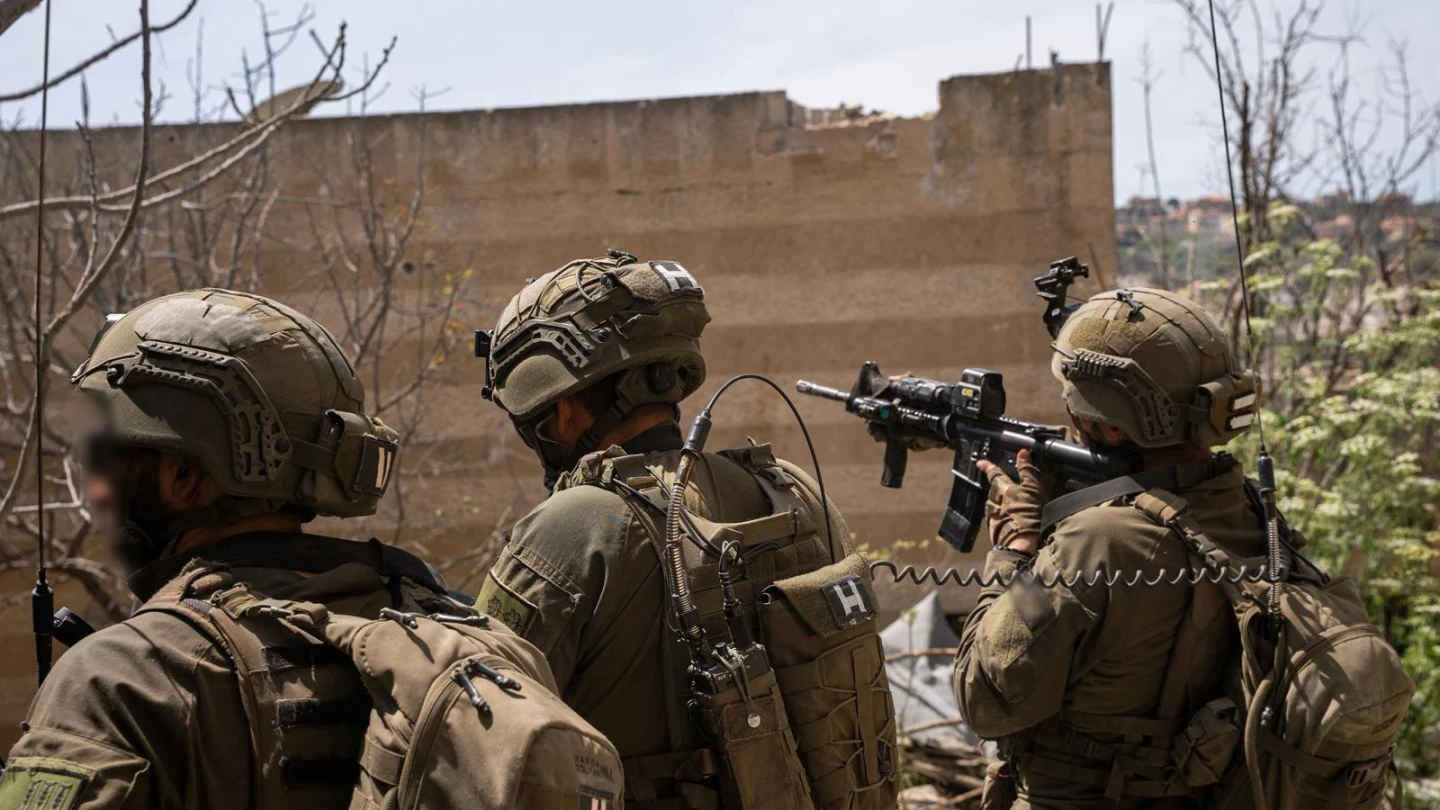
To remove the threat to northern communities, IDF ground forces maintain a growing defensive posture across Southern Lebanon. Three soldiers were slain in recent days in battles with Hezbollah.
Dozens of Hezbollah terrorist infrastructure sites were struck overnight in Southern Lebanon and the IDF eliminated two senior terrorists in Hezbollah’s Communications Unit, the Israeli military said on Sunday.
“We have been able to eliminate more than 850 terrorists from Hezbollah. A lot of them from their Rawan Force, their special forces that they have been sending south to fight against our soldiers,” Shoshani said.
Intelligence-driven operations have been uncovering massive weapons caches embedded directly inside civilian infrastructure in Southern Lebanon.
“We found them hiding weapons in a children’s school. We found them building a tunnel in the complex of a church in al-Kiam,” Shoshani said.
Furthermore, Israeli naval commandos [from Shayetet 13] located active stockpiles and operational sites mere kilometers from the Israeli border.
“Hezbollah has still an active force in Lebanon that is dragging the region down and the force that chose the Iranian regime interest over the Lebanese interest or the Israeli interest is dragging the two countries into war,” Shoshani said.
Regarding the elimination of Hezbollah’s Communications Unit operative, the IDF stated, “The terrorist Ali Hassan Shaib operated within the Hezbollah terrorist organization under the guise of a journalist for the Al-Manar network, while operating systematically to expose the locations of IDF soldiers operating in Southern Lebanon and along the border.”
Shoshani provided explicit details regarding Shaib’s integration into the terror group’s formal structure. “He was systematically exposing the location of IDF soldiers in Southern Lebanon. And this is not just something he did as a journalist. He was officially recruited as a member of Hezbollah with a salary, with a full membership, in 2020,” Shoshani stated. The spokesperson added that Shaib maintained official enlistment in the Hezbollah “military” wing since 2013.
According to additional information from a military official, “Senior Hezbollah officials referred to Ali Hassan Shaib as a ‘secondary axis’ within the organization’s propaganda apparatus.”
He utilized his platform to broadcast direct threats against Israeli civilians. “Among his notable propaganda publications was a video posted on his X account in 2024, in which he threatened the head of the Margaliot Local Council, Eitan Davidi, while displaying weapons aimed at his house [near the Lebanese border],” the official added.
“Ali Shaib maintained contact with senior and well-known Hezbollah operatives, including Ali Karaki, former commander of Hezbollah’s southern front,” and several other high-ranking terror operatives who have all since been eliminated, the official added.