Israel’s parliament voted on Wednesday to begin dismantling parts of the judicial overhaul enacted by Prime Minister Benjamin Netanyahu’s outgoing government, opening a new political battle over the balance of power between elected officials, the courts and other state institutions.
The first measure, which seeks to reverse changes to the way judges are appointed, passed its preliminary reading by 62 votes to 46. The bill will now be assigned to a parliamentary committee for further consideration.
The vote marks an early legislative victory for the opposition alliance led by former military chief Gadi Eisenkot. His Yashar party secured a key parliamentary position Tuesday when its lawmaker Matan Kahana was elected speaker of the Knesset by a vote of 66-52.
With support from Arab parties, Eisenkot’s alliance currently commands a majority in the legislature, even though negotiations to form a new government are still underway. The bloc is using that advantage to pursue legislation that would reverse several controversial measures introduced during Netanyahu’s previous term.
Beyond judicial appointments, the proposed changes target the authority of the attorney general, the government’s handling of investigations into police misconduct and legislation governing the prime minister’s tenure. Lawmakers are also seeking to repeal a new broadcasting law promoted by Israeli Communications Minister Shlomo Karhi, which expanded the government’s influence over Israel’s media landscape.
The attorney general is Israel’s most senior legal adviser to the government, and the office has traditionally played an important role in determining whether government actions comply with the law. Netanyahu’s government sought to weaken that authority, including by allowing ministers to disregard the attorney general’s legal opinions.
The legislation concerning judicial appointments would reverse changes to the Judicial Selection Committee, the body responsible for choosing judges. The proposed repeal would restore its previous composition and operating procedures.
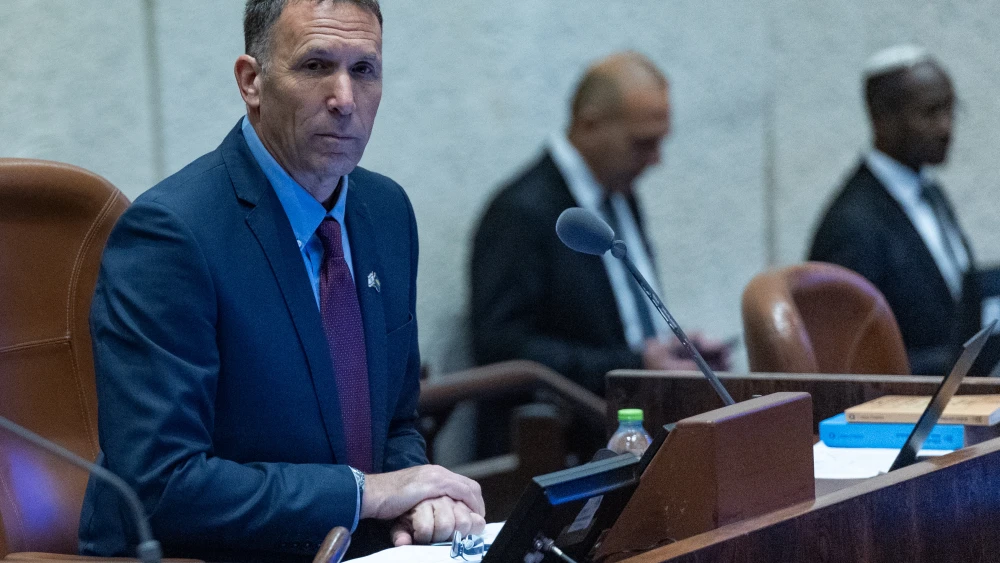
Roy Folkman, a Yashar lawmaker who chairs the Knesset Arrangements Committee, defended the decision to revisit the reforms, saying the country’s system of checks and balances needed protection.
“The sovereign is represented in the Knesset, but alongside it are two additional authorities and a system of checks and balances,” Folkman said, referring to the judiciary and executive branches.
He also cautioned against allowing a temporary parliamentary majority to make fundamental changes to Israel’s constitutional framework. “The Basic Laws of the State of Israel cannot be amended by a simple majority,” he said.
The Arrangements Committee approved expedited procedures on Wednesday, allowing several bills to bypass the normal 45-day waiting period before parliamentary consideration. Special committees will now prepare the proposals for additional readings.
The political window for the effort may be short. Eisenkot has until the end of December to form a government. Should he fail, Israeli President Isaac Herzog could give Netanyahu another opportunity, potentially putting the legislative agenda back in the hands of the outgoing prime minister’s political bloc.
Even with Wednesday’s approval, the proposed repeals are far from becoming law: each must pass three further parliamentary readings.
Eisenkot has 28 days from receiving the president’s mandate to present his government to the Knesset for a vote of confidence. The deadline for the initial period is Dec. 6, but the president customarily grants a 14-day extension, moving Eisenkot’s final deadline to Dec. 20.
If Eisenkot fails, Herzog is expected to nominate Netanyahu as a second candidate by Dec. 23, with a deadline of Jan. 20. If that attempt also fails, at least 61 MKs can recommend a third candidate by Feb. 10, who would have until Feb. 26 to form a government. Otherwise, the Knesset automatically dissolves, triggering an election on May 27.