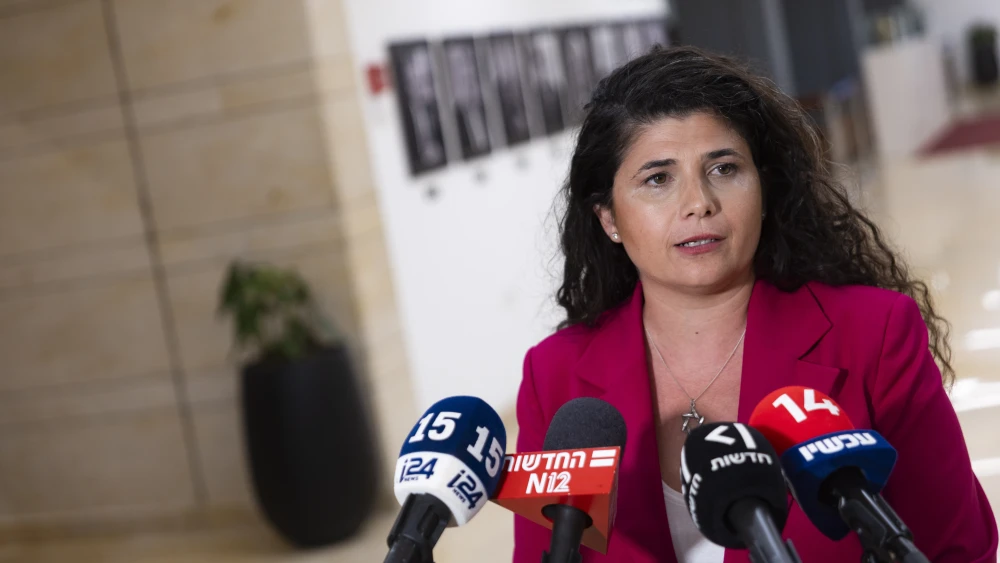
Former Israeli Deputy Foreign Minister Sharren Haskel, leader of the Israel First party, supports the formation of a broad national unity government post-elections on Oct. 27.
In an interview with JNS ahead of Tuesday’s vote, Haskel said Israeli politics are divided into two camps centered on Israeli Prime Minister Benjamin Netanyahu, leaving little room for parties unwilling to align themselves with either side.
“What we have today in politics is two camps: the Bibi camp, where everything he says is completely holy, and the anti-Bibi camp, where everything he says is a crime,” Haskel said.
Haskel argued that Israel First could break that political deadlock by denying either bloc the ability to form a government without it.
“If we pass the threshold, we are the only party that will be able to force both of these camps to sit together,” she said. “Unless we find a way to put that hatred aside and force them to sit together, we’re all losing.”
Haskel, who resigned as deputy foreign minister on July 14 and subsequently launched Israel First, said the party would support a government that does not depend on sectoral parties she accused of putting their own interests ahead of the country’s.
“We need a strong government. We need a united government,” Haskel said. “And we need a government that doesn’t look at sectoral interests, but at the good of Israel—that puts Israel first.”
Watch the full interview here.