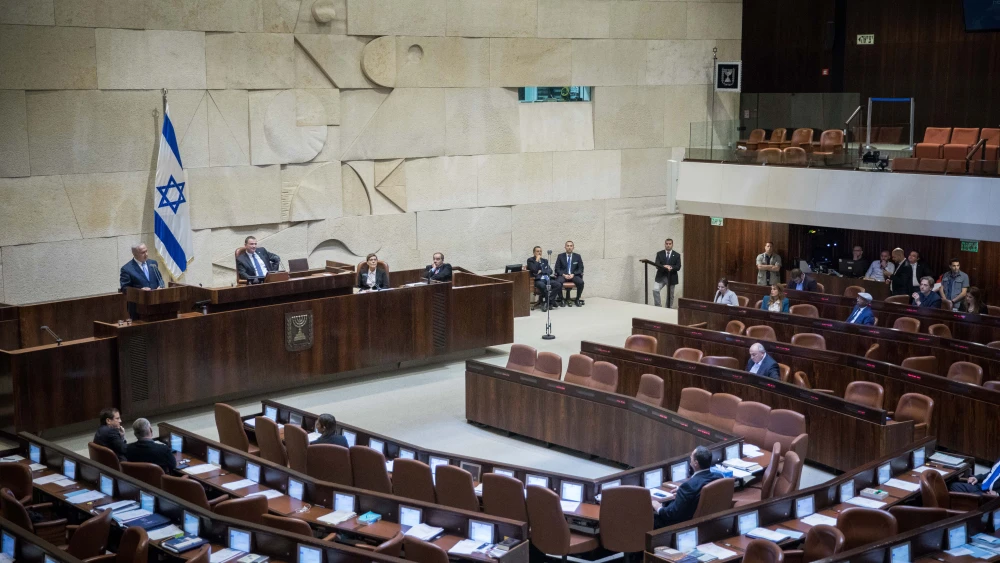
In what was assumed to be an obvious pass in the second reading of the “pay to slay” Knesset bill turned out to shock and dismay Israeli lawmakers as the head of the coalition, Knesset member David Amsalem, requested a revision to the bill that would mandate that the government deduct the amount that the Palestinian Authority pays terrorists from the NIS 8.5 billion (nearly $2.4 billion) per year of taxes that Israel collects for it, which will be then invested into a fund to pay damages to victims of terror.
The Israeli bill intended to discourage the P.A. from paying terrorists, and was previously given authorization by the Knesset Foreign Affairs and Defense Committee to go to a final vote in Israel’s Knesset.
Maurice Hirsch, head of legal strategies for the Palestinian Media Watch, told JNS just days before the revision was requested: “There is no question that the Israeli opposition bill will be passed in its second reading, as it received extremely wide support in Knesset.”
However, the bill that meant to force the P.A. to decide if it will use foreign aid for building infrastructure or killing Israelis was halted “to better fit the government’s policies,” according to Amsalem’s colleagues.
Despite Israeli Prime Minister Benjamin Netanyahu’s praise of the bill’s first passing and his July 2016 order to immediately deduct from tax-revenue transfers to the P.A. the amount of money being given to terrorists and their families, Amsalem maintained on Kan Bet public radio (formerly Reshet Bet) on June 19 that Netanyahu ordered him to request the revisions.
“At this stage, we don’t know why the revision was put in—the request itself doesn’t explain what the request actually entails—but we understand that prime minister asked the head of the coalition to revise it,” Hirsch told JNS.
“One possibility is that the government is insistent on having the discretion of whether to reduce the funds or not—that is the most optimistic option,” he maintained, adding that the alternative is that the government wants to halt the law completely, perhaps because of international pressure.
“Whether it’s international pressure from the Americans who are about to launch a peace plan, pressure from European Union or even threats from the P.A. to stop the security coordination, the bill must pass in order to force the Palestinian Authority to stop incentivizing terrorism,” said Hirsch.
He explained that “the next step is for the Foreign Affairs and Defense Committee to set a Knesset meeting where Amsalem must explain why he requested for revision. Then the committee will decide whether or not to accept the revision.”