
In summer 2025, I worked for a Palestinian Christian-run reconciliation organization and lived in Beit Sahour, a town near Bethlehem. While there, I met Palestinian scientist Mazin Qumsiyeh, who was nominated for the 2025 Nobel Peace Prize.
I asked him: “How long has your family lived here [in Beit Sahour]?” He replied that his family had resided there for “thousands of years.”
I was initially skeptical but didn’t investigate further. Later, I found that Beit Sahour’s records date his family’s arrival in the town to the late 18th century. Before then, the ancestors of his family lived in Wadi Musa, Jordan.
Prominent Palestinian figures have long lied about their personal history to strengthen political authority. PLO chief Yasser Arafat claimed to have been born in Jerusalem, although he was born in Cairo. Similarly, the scholar Edward Said’s account of his childhood connection to Jerusalem obscured how much of his upbringing took place in Cairo.
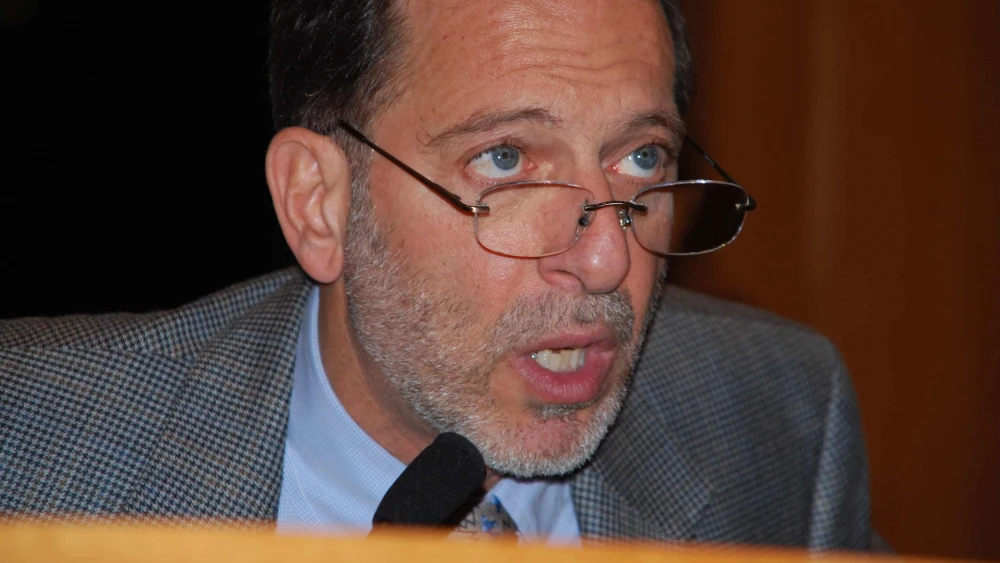
Personal stories give political arguments the authority of lived experience. That makes the less obvious distortions worth examining, too. Prof. Rashid Khalidi offers an important case. Khalidi is a Columbia University professor emeritus, a former PLO spokesman and a member of a notable Jerusalemite family. His book, The Hundred Years’ War on Palestine, recounts the conflict through his own experiences and those of his relatives. It spent more than 30 weeks on The New York Times nonfiction bestseller list.
But the parts of his family’s history that undermine the book’s narrative are missing.
Journalist Oren Kessler shared a little-known historical fact from his book Palestine 1936 in a recent interview. “There are actually indications that the whole idea of partition came from the Khalidi family,” he said.
In The Hundred Years’ War, Khalidi characterized early partition plans as colonial, oppressive endeavors that treated Palestinians “as if they had no national existence and no collective rights.” For example, Khalidi criticized the 1937 Peel Commission, which recommended creating a Jewish state in roughly 17 percent of Mandatory Palestine, moving approximately 225,000 Arabs out of that state, and transferring 1,250 Jews out of the proposed Arab state, for threatening to expel more than “200,000 Arabs” and denying their “goal of self-determination.”
Yet overlooked documents contained in Kessler’s book illustrate that the Khalidi family implored the British to divide the land and transfer its inhabitants.
Reginald Coupland, a member of the Commission, explained that the idea of partition had “come from an Arab source.” His statement followed a meeting with Ahmad Khalidi, principal of the Arab College and one of Rashid Khalidi’s uncles.
An earlier document adds substance to that connection. In 1934, Ahmad was the first Palestinian to propose cantonization, dividing the territory into separate administrative areas, as a “final solution” to the conflict. The Zionists would receive “the best lands of Palestine,” while their continued presence would depend on “economic success.” Ahmad also explained that the “transfer of property and population is bound to take place.”
Kessler’s book illustrates that the Khalidi family implored the British to divide the land and transfer its inhabitants.
In other words, a prominent member of Khalidi’s family advocated for territorial division and population transfer before Peel recommended them. Readers judging these ideas as colonial impositions deserve to know that Palestinian leaders helped create them.
Another relative’s position was more disturbing. Galilee District Commissioner Lewis Andrews recalled discussing partition with Hussein Khalidi, Jerusalem’s mayor and another of Rashid Khalidi’s uncles. According to Andrews, Hussein’s private openness to partition partly reflected his description of Jews as “a cancer in the body and the only way to make the body healthy is to cut the cancer out.”
Another omission in Khalidi’s book concerns Hussein’s role in the reporting on the battle of Deir Yassin. On April 9, 1948, the Irgun and Lehi, two dissident Zionist paramilitary forces, attacked the village outside Jerusalem, looted it and killed more than 100 inhabitants, including combatants and noncombatants. Reports quickly spread across Palestine. As Khalidi explained, people “fled as news spread of massacres like that … in the village of Dayr Yasin.”
While both Arab reporting and statements by the attacking forces inflated the death toll, Hussein gave orders to publicize rape allegations that survivors had denied. These false atrocity claims intensified fear, which also hastened flight. Since reports of Deir Yassin helped drive the Palestinian exodus, Hussein’s role belongs in the explanation of it.
Curiously, Ahmad and Hussein both appear in The Hundred Years’ War, but these facts above were neglected and remain mostly unexamined by researchers. While not responsible for the deeds of his ancestors, Khalidi is answerable for how he presents relatives whose experiences give his book authority.
Together, the omissions point in a consistent direction: British and Zionist decisions explain Palestinian suffering, while Palestinian decisions that contributed to the conflict are largely excluded. That’s the broader problem connecting selective accounts like Khalidi’s with misleading claims about personal origins and dispossession. Selective history and misleading personal narratives serve a similar political purpose: The story becomes more useful as inconvenient details disappear.
On campus, that has consequences. Students like me use history to decide whom to support, whom to condemn and what demands to make. Khalidi himself delivered a widely circulated speech supporting protesters at Columbia and comparing them with students who opposed the Vietnam War. A history that obscures Palestinian choices radicalizes students and prompts them to treat the charge of exclusive Israeli responsibility as a fact. It’s not a coincidence that many protesters quote or mention prominent Palestinians such as Said.
I went to Beit Sahour because I wanted to hear out and help Palestinians firsthand. But if Palestinian thought leaders continue to lie, omit and help radicalize my peers, peace in the Holy Land will never happen. Only when most Palestinians and their acolytes gaze inward and analyze their sins with a degree of honesty will this long and arduous conflict finally end.