The Palestinian Authority’s practice of glorifying terrorists is a daily occurrence, well documented by Palestinian Media Watch. Funerals of terrorists provide an additional opportunity for the P.A. to laud them as heroes and often set the scene for incitement.
To combat this phenomenon, Israel’s government decided that, as a general rule, the bodies of terrorists would not be transferred to their families, but rather buried in designated cemeteries in Israel.
In a rare divergence from this policy, in February of this year, the bodies of two Palestinian terrorists—Nimr Mahmoud Ahmed Al-Jamal, the murderer of three Israelis, and Hamza Zamaarah who after serving 14 years in prison for previous terror offenses attempted to stab an Israeli security guard—were transferred to their families.
The release of their bodies resulted in mass glorification of these terrorists.
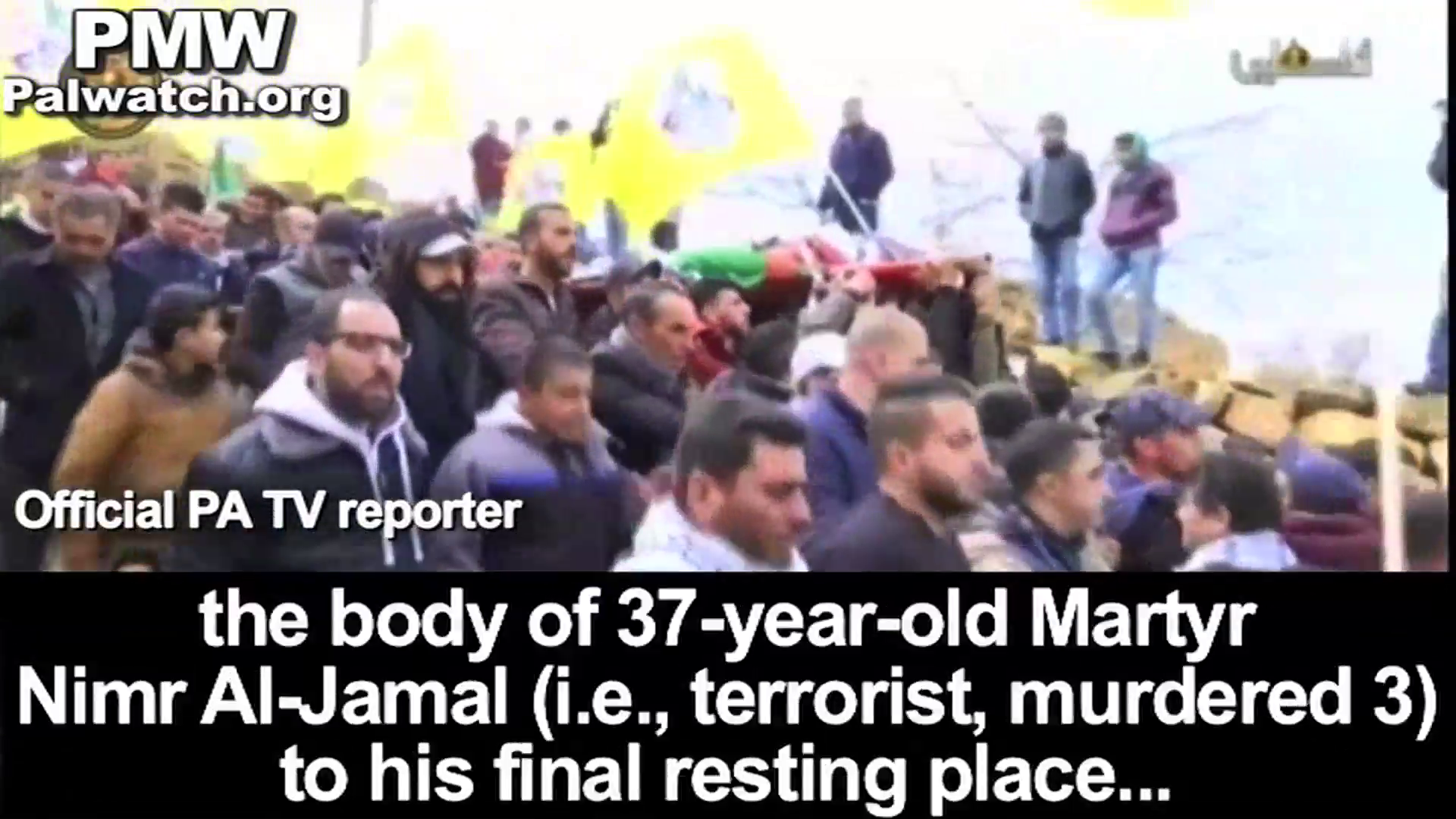
During its coverage of the funeral of terrorist Al-Jamal, P.A. TV praised him as a “martyr” who “ascended to Heaven” when he was killed during his attack:
 |  |
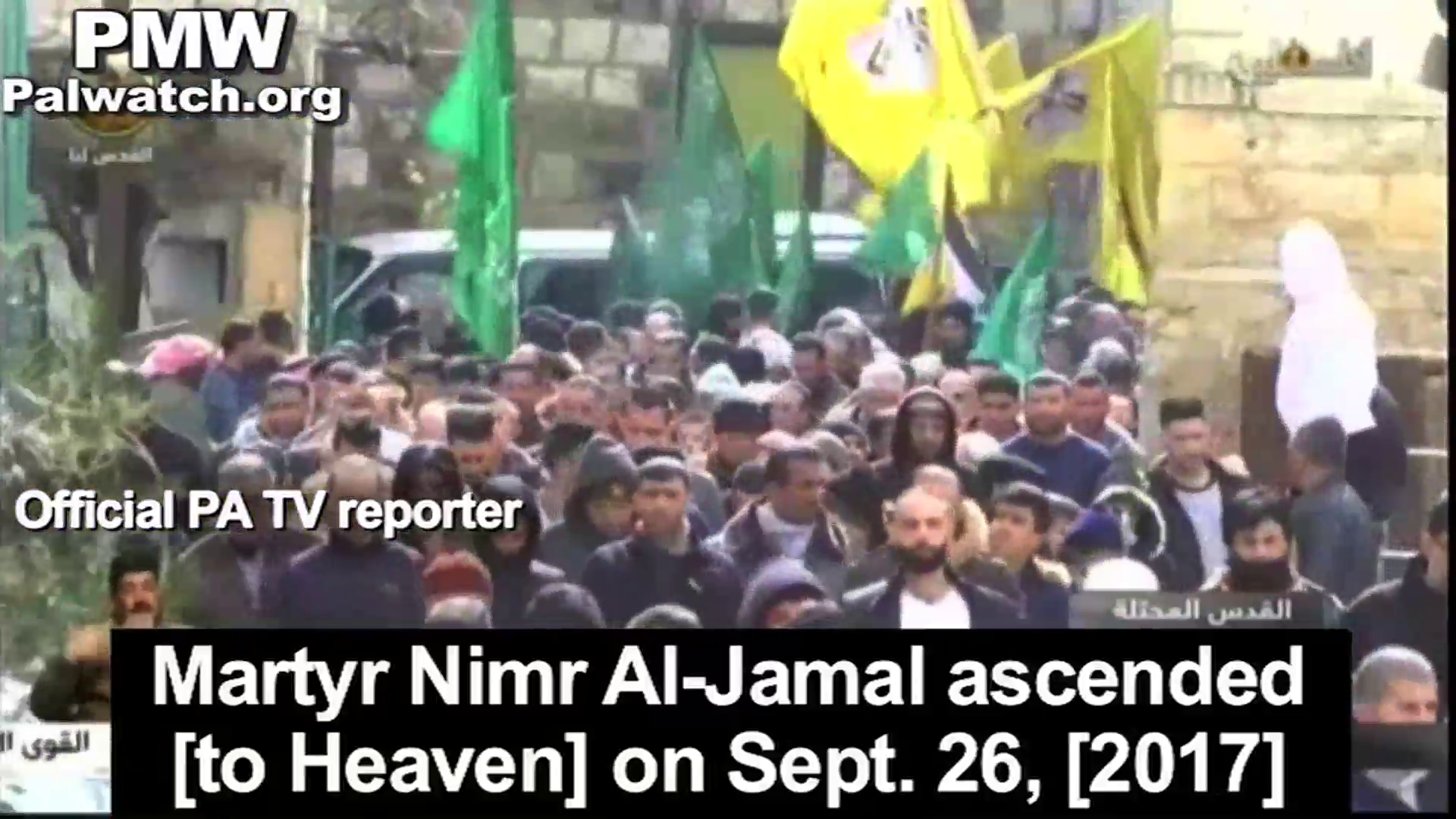 | 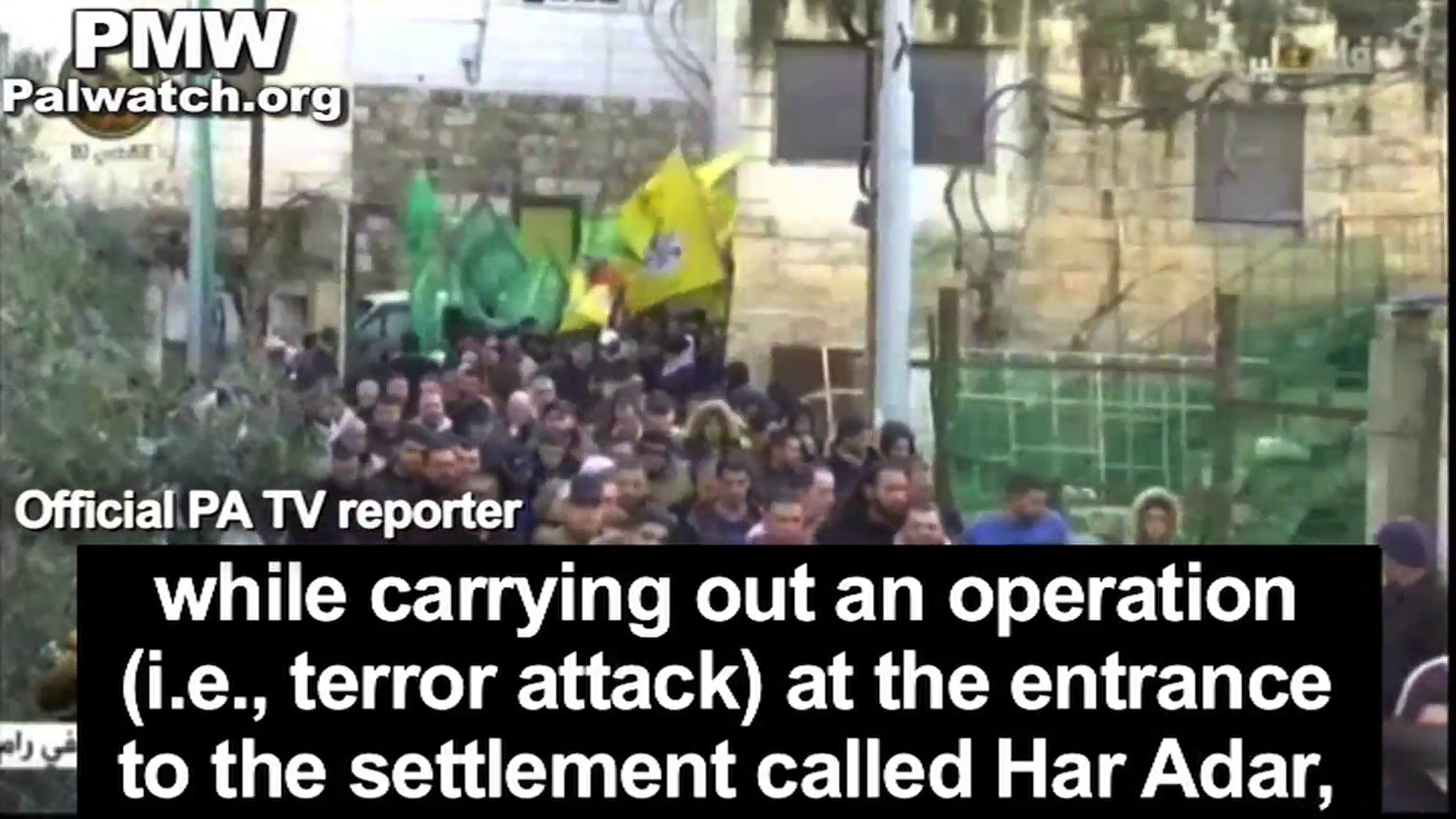 |
Official P.A. TV narrator: “In an atmosphere of sadness and grief, masses of our people accompanied the body of 37-year-old Martyr Nimr Al-Jamal to his final resting place ... Martyr Nimr Al-Jamal ascended [to Heaven] on Sept. 26, [2017] while carrying out an operation (i.e., terror attack) at the entrance to the settlement called Har Adar, during which three occupation army soldiers were killed. Since then his body was kept [by Israel], until he returned today borne on his friends’ shoulders to embrace his town’s soil and join the processions of Martyrs.”
[Official P.A. TV News, Feb. 17, 2018]
A statement by a relative of the terrorist shows that Palestinians view terrorist funerals as processions for “heroes” and “grooms.” According to Islam, Martyrs marry the 72 Virgins in Paradise: Inas Al-Jamal: “Today you saw that Nimr’s funeral as a groom is not a regular funeral; it is not the funeral of a groom, but the funeral of a hero, of a Martyr. Not only Nimr is for Palestine, we are all for Palestine.”
[Official P.A. TV News, Feb. 17, 2018]
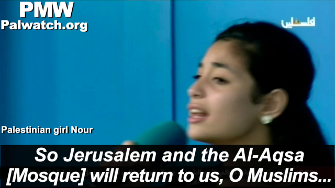
P.A. TV’s coverage of the funeral of terrorist Zamaarah exemplified that his parents also perceive his “Martyrdom” and his funeral as a “wedding” and his death as a sacrifice for “the defense of Palestine, the Al-Aqsa Mosque, and Jerusalem”:
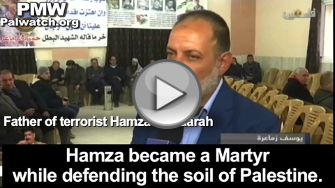 |  |
Father of terrorist Hamza Zamaarah: “Hamza is not just my child, he is the son of Palestine. Hamza became a Martyr while defending the soil of Palestine. Hamza became a Martyr while defending the Al-Aqsa Mosque, Jerusalem and the prisoners. Praise Allah.”
[Official P.A. TV News, Feb. 17, 2018]
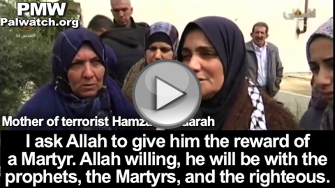 | 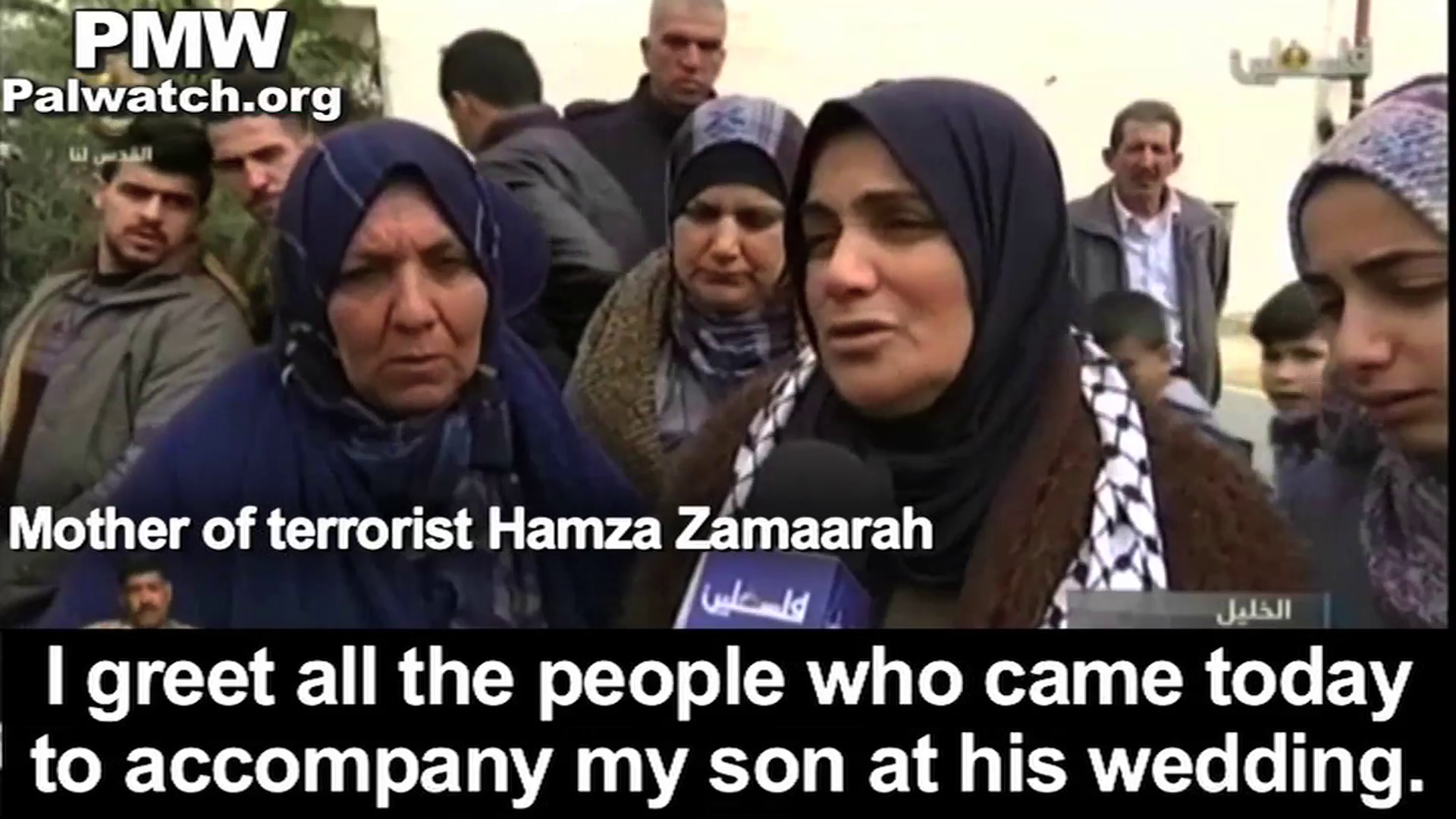 |
Mother of terrorist Hamza Zamaarah: “I ask Allah to give him the reward of a Martyr. Allah willing, he will be with the prophets, the Martyrs, and the righteous. I greet all the people who came today to accompany my son at his wedding. My son is a sacrifice for the homeland, for Palestine, for Islam and a sacrifice for all of Palestine.” The full report can be viewed at PMW here.