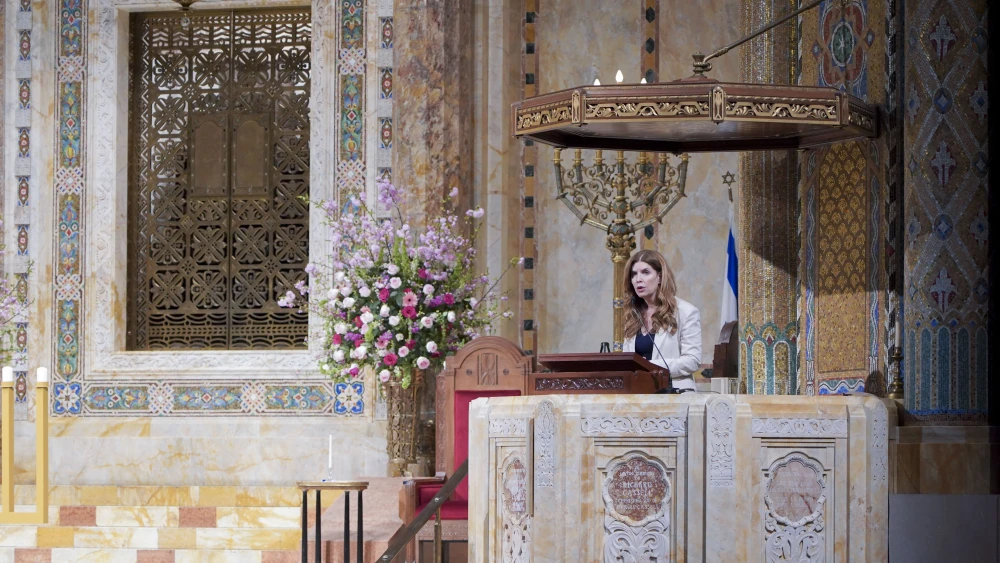
Fred Schoenfeld told an audience of several hundred at Temple Emanu-El on New York City’s Upper East Side that he stood before them both as a Holocaust survivor and as “someone who carries the memory of many who are no longer here to speak.”
“I speak because memory matters,” he told the audience on Sunday. “Now that responsibility is shared with you.”
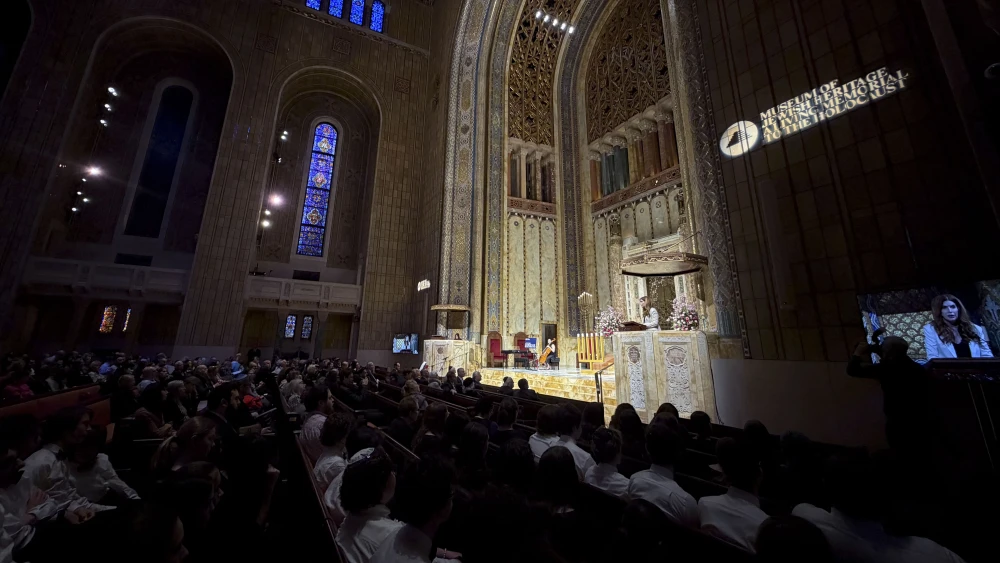
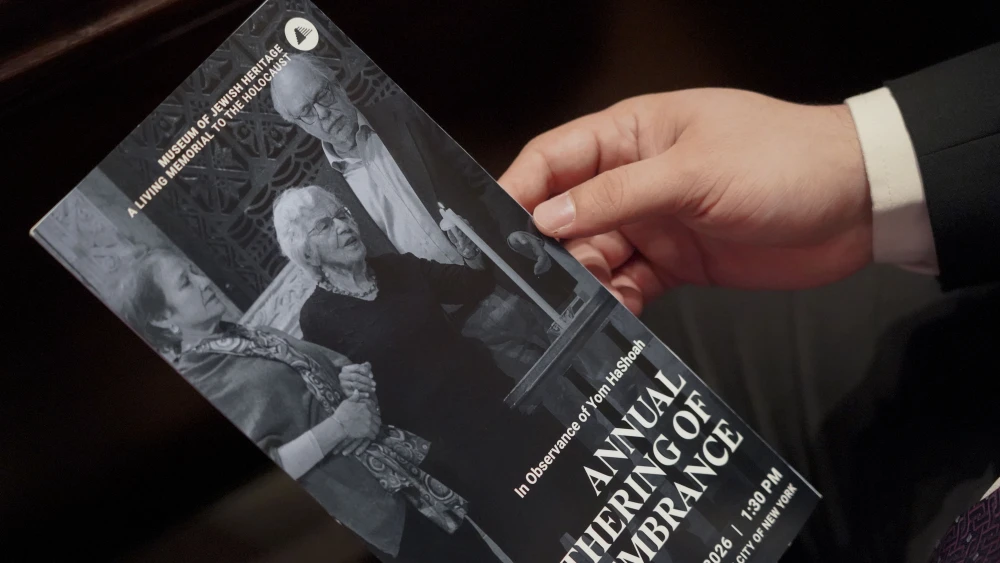
Schoenfeld was one of several speakers at the Museum of Jewish Heritage-A Living Memorial to the Holocaust’s annual remembrance event ahead of Yom Hashoah, which begins April 13.
The event drew Senate Minority Leader Chuck Schumer (D-N.Y.), Rep. Dan Goldman (D-N.Y.), city comptroller Mark Levine, City Council speaker Julie Menin and Manhattan borough president Brad Hoylman.
Menin told JNS that “we need to be remembering the memories of those who were killed in the Holocaust—my grandfather being one of them.”
“It is important that we remember what happened,” the council speaker told JNS. “Particularly now, more than ever, with this rise of antisemitism not only in the city but across the globe.”
Menin said that younger generations know less about the Holocaust.
“Studies are showing 34% of young people in New York City believe the Holocaust was a myth or exaggerated. That’s shocking,” she told JNS. “The only way we’re really going to counteract that is through education.”
Goldman, who is running for reelection against anti-Zionist, former city comptroller Brad Lander, told the audience that “we all have a responsibility to educate the next generation of Americans about the atrocities inflicted upon the Jewish people by the Nazis.”
“As a member of Congress, I have always and will continue to fight to strengthen protections for Jewish students, organizations and houses of worship, and to eliminate the scourge of antisemitism from our society,” he said.
A child survivor from Slovakia, Schoenfeld told attendees that normal life unraveled “step by step.”
“We had a home, a family, routines, small comforts,” he said. “Then, not all at once but gradually, everything changed. Neighbors turned away. We became something less than human in the eyes of others.”
Schoenfeld’s testimony underscored the central message of the ceremony—that remembrance is an active responsibility.
“The Holocaust did not begin with camps,” he told attendees. “It began with words, with small acts of exclusion, with people looking away.”
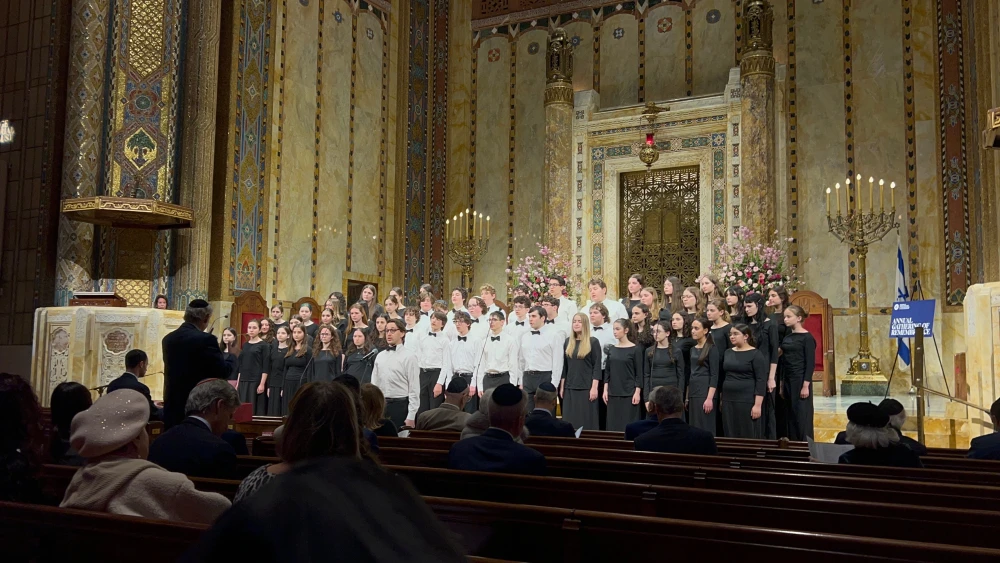
The annual gathering featured performances by the Jewish teen choir HaZamir, remarks from public officials and a candlelighting ceremony honoring victims of the Holocaust.
Jack Kliger, president and CEO of the Museum of Jewish Heritage, told attendees that the museum is “dedicated to making sure there will always be a place in New York where our grandchildren’s grandchildren can come to learn the lessons of the Holocaust.”
Menin told the audience that she is proud to have launched a partnership with the museum to bring every eighth-grade student at a city public school to the museum to see its Holocaust exhibit.
“Education is truly the antidote to hate,” she said.
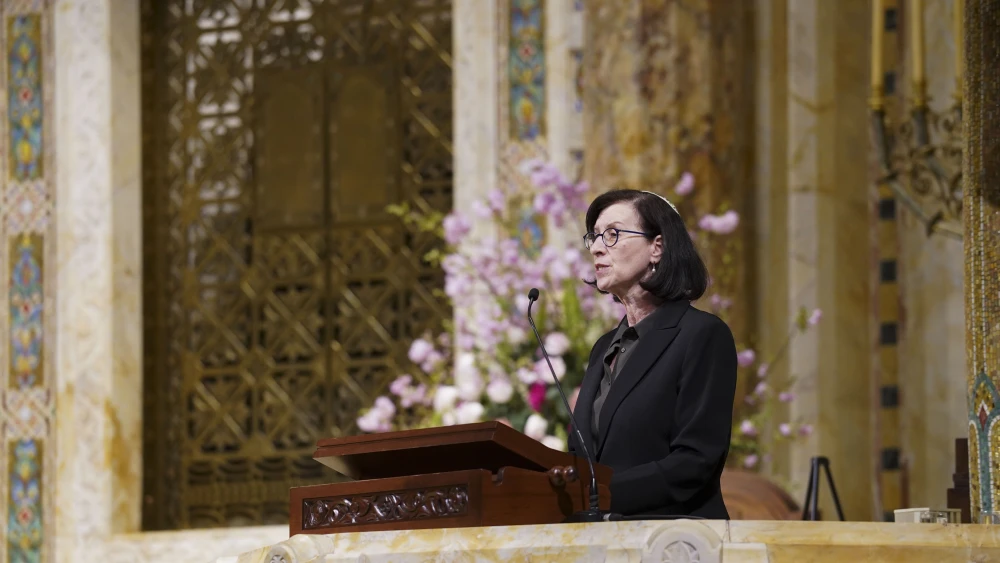
The council speaker also highlighted legislation that the body passed to fight Jew-hatred, including protest-free buffer zones around religious institutions.
“These bills protect the right to enter and exit synagogues and schools without fear, intimidation or harassment,” she told attendees. “This is not about limiting free speech. It is about ensuring safety and dignity.”
Levine, the city comptroller, told survivors in the audience that “you built families where families had been torn apart. You built communities where communities had been erased.”
“In doing so, you helped shape this city into something stronger, more vibrant and more compassionate,” he said.
Levine described survivors’ willingness to share their stories as a “form of heroism.”
“That is the meaning of this day,” he said. “Not only remembrance but resolve.”
Denise Miranda, commissioner of the New York State Division of Human Rights, told attendees that “too often, we speak of the Holocaust as if it is ‘ancient history,’ a black-and-white chapter in a textbook.”
“But the Holocaust ended only 81 years ago. It is a distance so short we can still reach out and touch the hands of those who witnessed it,” she said. “That is a stark reminder that the rise in antisemitism today poses a profound and immediate danger, and it demands an equally urgent response.”
The ceremony culminated with survivors lighting six memorial candles, with each flame representing a million Jews murdered during the Holocaust.
As the room fell silent, generations stood together in reflection, bound by a shared responsibility to remember, bear witness and ensure that the lessons of history endure.
“I stand here today because I survived,” Schoenfeld told the audience. “But survival comes with responsibility. The responsibility to bear witness.”