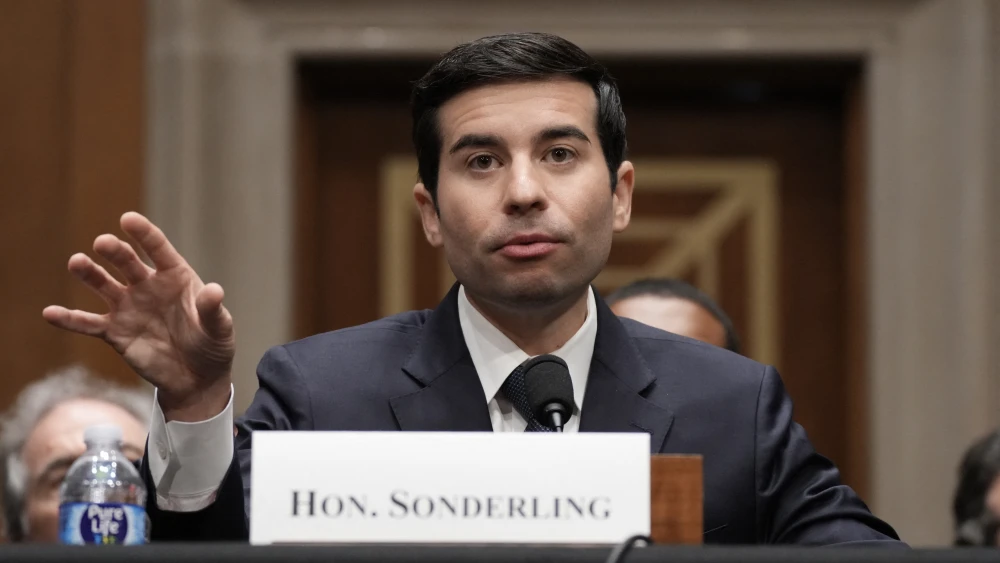
Keith Sonderling, U.S. President Donald Trump’s nominee to lead the U.S. Department of Labor, pledged to aggressively combat religious discrimination in the workplace, including antisemitism, during a Senate confirmation hearing on Thursday.
Sen. Susan Collins (R-Maine) asked Sonderling, 43, what role he believes the Labor Department should take in protecting American workers against religious discrimination, citing Sonderling’s grandparents, who survived the Holocaust but lost job opportunities because they were Jewish.
“It’s a very important role for the federal government to play to protect workers and religions of all faith, and that’s what you have my commitment to do,” he said.
Sonderling, a longtime government official and acting U.S. secretary of labor, added that the department has created a Center for Faith and launched an online resource to help workers in all 50 states identify religious protections and access Labor Department, Equal Employment Opportunity Commission and state resources.
He said his grandparents arrived in the United States before many of the nation’s religious workplace protections were enacted.
“Unfortunately, we still see that today, and that’s a very important role that we have in this administration to root out all religious bias, including antisemitism,” Sonderling said.
He also pointed to Trump administration executive orders addressing antisemitism, anti-Christian bias and religious discrimination, pledging that the department would enforce workplace protections equally across cases.
Earlier in the hearing, Collins asked whether the department would support legislation to ease visa restrictions for foreign religious workers, citing endorsements from the Rabbinical Council of America for such measures.
Sonderling said he is aware of the shortage of religious workers and pledged to work with other departments to address the issue.
“We can help this very important group come and stay in the United States,” he said.
The Louis D. Brandeis Center for Human Rights Under Law endorsed Sonderling’s nomination. Kenneth L. Marcus, the organization’s chairman and CEO, said the nominee’s background made him particularly suited to address rising antisemitism in workplaces.
“Antisemitism in the American workplace is rising at an alarming rate, and the moment demands a Department of Labor unafraid to confront it, along with every other form of discrimination,” Marcus said. “Keith understands what’s at stake in this fight in a way few others do.”