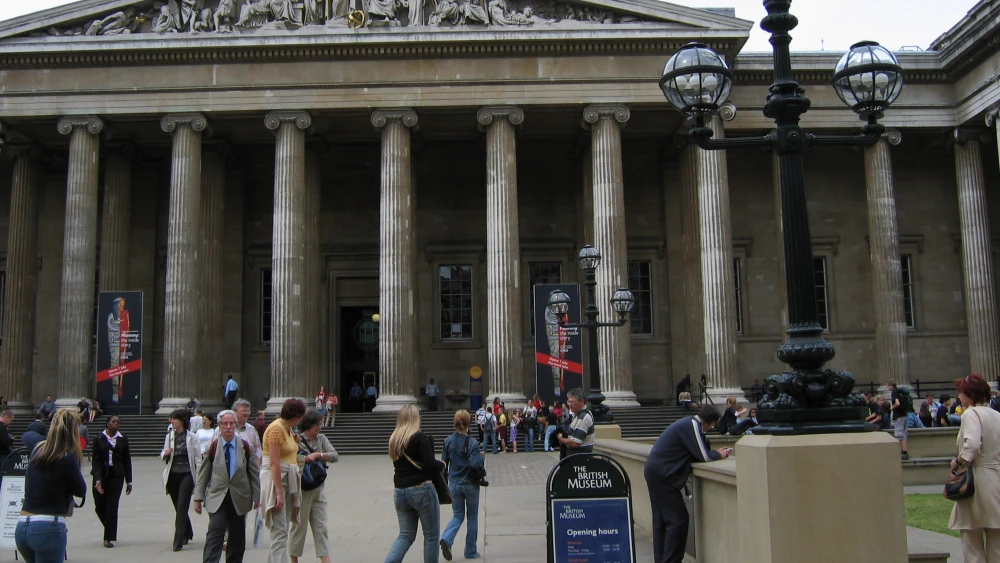
The British Museum has rescheduled a lecture on ancient Israel, part of Jewish Culture Month, that was postponed over security concerns after officials said that many of the registered attendees planned to disrupt the event.
Paul Collins, keeper of the British Museum’s Department of the Middle East, is now set to deliver the lecture, “Ancient Israel and Judah in the British Museum,” in June.
“We expect a strong demand and will also offer a livestream to make the event accessible to a wider audience,” the museum stated.
“A respectful and secure environment for our visitors, speakers and colleagues remain our highest priority, and we are working closely with all relevant teams to ensure robust arrangements are in place, as would be expected for an event of this nature,” the museum stated. “Exploring and understanding history lies at the heart of the British Museum’s mission.”
The lecture had originally been scheduled for May 28 at the museum’s BP Lecture Theatre. The museum said earlier this week that a “significant proportion” of registered attendees intended to “deliberately disrupt the event.”
The Board of Deputies of British Jews welcomed the decision to reschedule the event.
“We welcome the British Museum’s update on their event related to Jewish Culture Month,” the group wrote.
Jewish Artists for Palestine, a network of anti-Zionist Jewish artists and cultural figures, criticized the museum’s characterization of potential disruptions as a security issue.
“What is the purpose of holding a talk on such a controversial topic if not to invite questioning and debate?” the group wrote. “That the British Museum deems such a debate a security concern points to the event as a pro-Zionist propaganda exercise.”
The group added that the museum hosting the lecture in the BP Lecture Hall “is a morally bankrupt decision,” calling the energy company complicit “in genocide and ecocide.”