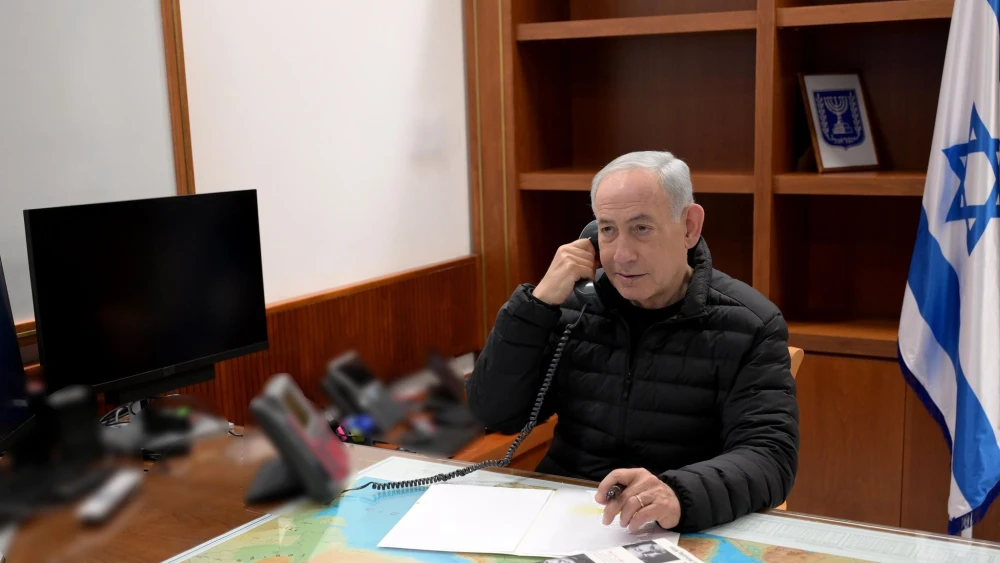
A senior U.S. official on Monday blamed the Iran-backed terror group for the necessity of Israeli action in Southern Lebanon, after Israeli Prime Minister Benjamin Netanyahu said he’d given the Israeli military authorization to deal Hezbollah “a crushing blow.”
Hezbollah “has ignored repeated requests to stop firing at Israel,” the official said, adding that Israel “will never be expected to passively absorb attacks on its forces and civilians.”
The Israeli military conducted a wave of strikes across Lebanon on Monday, including against Hezbollah targets in the Bekaa Valley in Lebanon’s east, close to the Syrian border, with Netanyahu stating Jerusalem will intensify its actions.
Israel has largely struck in the south of the country over the last five weeks.
Earlier this month, Israel and Lebanon agreed to extend a U.S.-brokered 45-day ceasefire, though Hezbollah has refused to hold its fire.
“What this requires of us now is to increase the strikes, to increase the intensity,” said Netanyahu, announcing that over 600 Hezbollah terrorists had thus far been eliminated. Ten Israeli soldiers have been killed since the initial ceasefire with Lebanon was announced.
All of this comes as Iran has reportedly demanded a complete cessation of hostilities by Israel against Hezbollah as part of a broader deal to end Washington’s war with Tehran, though U.S. Secretary of State Marco Rubio insisted on Monday that the two conflicts are to be treated separately.
The senior U.S. official said the status quo was “untenable,” accusing Hezbollah of trying to “derail ongoing negotiations between Lebanon and Israel.”
Israel opposes ending the fighting against Hezbollah, as a fourth round of direct talks between the Israeli and Lebanese governments take place next week in Washington, including discussions on Hezbollah’s disarmament, which Beirut says can only take place under ceasefire conditions.
The official put the blame on Hezbollah for the current situation, saying the terror group is “entirely responsible” and “is now intent on denying the Lebanese people a path to peace and reconstruction.”
“The idea that the Lebanese government is negotiating directly with Israel and stands to get significant support from the United States, all while Hezbollah is having their narrative of resistance challenged, is an existential threat to Hezbollah,” the official said, adding, “A successful ceasefire led by the government of Lebanon would strip Hezbollah of their power and their narrative.”
Israeli Foreign Minister Gideon Sa’ar blamed the Lebanese government on Monday for insufficiently pushing Hezbollah north of the strategic Litani River, contrary to a U.N. Security Council resolution.
“Israel’s activities in southern Lebanon are solely intended to protect its citizens from Hezbollah attacks and to dismantle the terror kingdom it built there,” Sa’ar wrote. “This is the result of the Lebanese government’s total failure to uphold its commitments.”