
“Operation Epic Fury” is a watershed moment in the moral and geopolitical realignment of the Middle East. It is the execution of a strategy that has been forming for years. Beneath the headlines about strikes and sorties lies a coherent framework aimed at reshaping the region by distinguishing governments that terrorize and destroy from those willing to cooperate in a new regional order anchored in stability, economic growth and peace.
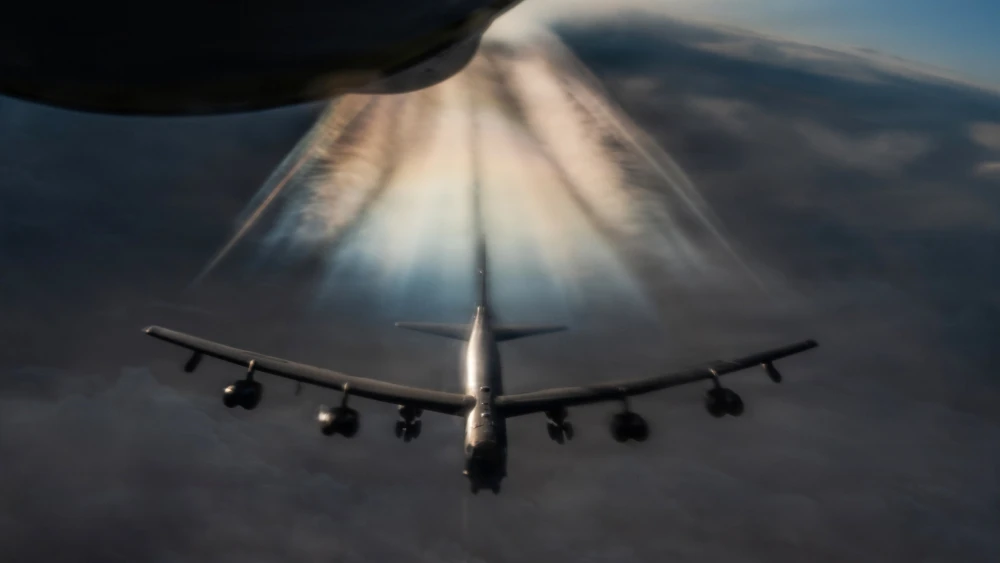
The military dimensions of the operation focus on breaking the mechanisms through which radical ideology is translated into coercive force. Airfields, missile depots, command structures, terror proxies and naval assets are the tools that allow Tehran to destabilize the region. By degrading these capabilities, the coalition, under an American-Israeli partnership, is reshaping the strategic environment.
“Epic Fury” is essentially a war for peace, aiming to make future aggression prohibitively costly, if not impossible, while opening new space for diplomacy, structural change and regional cooperation.
The Abraham Accords are at the center of this emerging order. These agreements were never merely symbolic diplomatic gestures. They were mechanisms for integrating the State of Israel into a broader regional security architecture alongside Gulf and other partners, with the United States acting as guarantor rather than a permanent policeman.
By constraining Iran’s ability to intimidate neighbors, “Epic Fury” lowers the risks associated with normalization and raises the likelihood of growing the circle of peace. In this way, the campaign can be seen as the enforcement phase of the Abraham Accords, setting a precedent for how any other future, malign actor would also be defeated.
The accords are widely being hailed as a defining achievement of U.S. President Donald Trump’s first term, and the current war is really a continuation of that strategic vision.
Some say it remains to be seen whether or not history ultimately vindicates this approach. The senior adviser to the president of the United Arab Emirates, Anwar Gargash, believes it will. He told Bloomberg News, “Iran made a mistake when it attacked the UAE and other countries in the Persian Gulf; it brings them closer to Israel and the United States. For countries that have relations with Israel, those relations will grow stronger. For countries that do not have relations, I expect additional channels to open.”
Indeed, I believe we are seeing biblical prophecy come to life in front of our eyes. Specifically, Isaiah 60:10-12 promises, “Foreigners will rebuild your walls, and their kings will serve you. Though in anger I struck you, in favor I will show you compassion. Your gates will always stand open; they will never be shut, day or night, so that people may bring you the wealth of the nations—their kings led in triumphal procession. For the nation or kingdom that will not serve you will perish; it will be utterly ruined.”
These verses foretell of nations and kingdoms prospering through their alignment with Israel. Those who seek to destroy Israel will be destroyed. In the wake of “Epic Fury,” those who align with a renewed regional vision are positioned to benefit economically and diplomatically. This operation is revealing which actors are willing to serve constructive ends and which persist in destructive ideologies.
The Iranian regime, which has long projected violence beyond its borders, including through proxies and destabilizing networks, is being neutralized. Ultimately, the reign of the mullahs will perish. At the same time, the Iranian people, along with nations willing to pursue cooperation, security integration and normalization, are finding doors open that were previously sealed shut.
Our generation is witnessing events that will be studied for decades, perhaps centuries. If the anticipated security framework solidifies and true cooperation expands, this joint military operation will not be remembered for the Falcon jet fighter, but for the dove of peace.
And that is, indeed, epic.