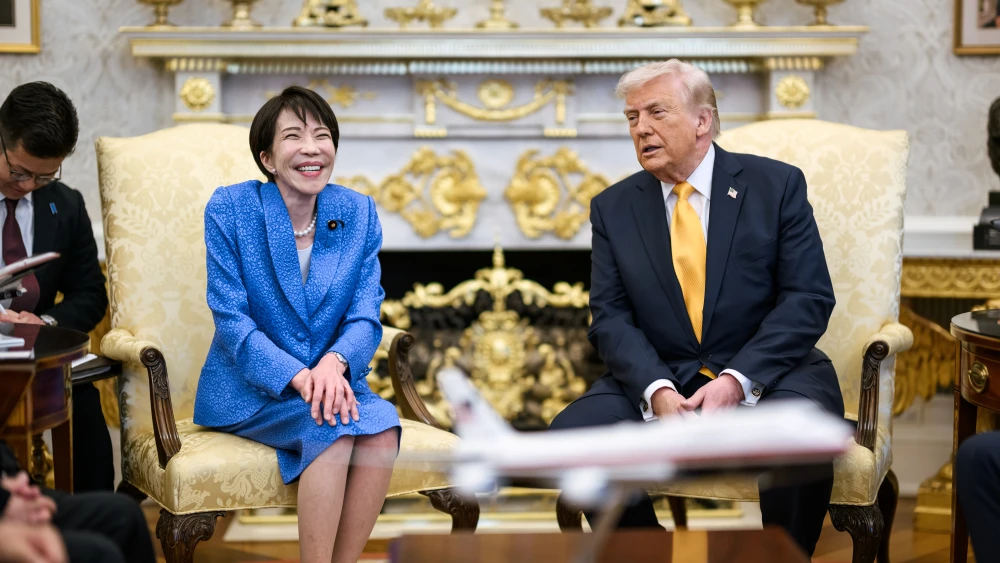

Japan officially launched its National Intelligence Bureau (NIB) on July 31, the most significant restructuring of its intelligence architecture since the founding of the Cabinet Intelligence and Research Office (CIRO) in 1952.
In essence, the reform formalizes and expands CIRO’s existing mission under a new name and structure rather than creating a completely new capability. Stability and continuity are key: Kazuya Hara, NIB’s first director-general, was CIRO’s last director. Staff remains at around 700 officials, seconded from other ministries—just as before.
The new National Intelligence Council is functionally an elevation of the existing vice-ministerial Cabinet Intelligence Council to a ministerial body chaired by the prime minister, styled after the National Security Secretariat’s cabinet-coordination model rather than a standalone agency, and now sitting on par with it.
Yet this should not be mistaken for a semantic change. In practical terms, it enables smoother information sharing, better communication between agencies and alignment under Sanae Takaichi’s leadership. Its mandate covers counterterrorism, national emergency response and counter-foreign-intelligence. Beyond that, it reflects an ongoing shift in Japanese society from dogmatic pacifism to pragmatic realism, a shift also displayed by Japan’s recent foreign policy.
This is another link in a chain of reforms aimed at preparing Japan to address geopolitical uncertainty. The most notable previous overhauls were the 2008 intelligence community reform and former Prime Minister Shinzo Abe’s 2013-15 security legislation package, which built the political and legal foundation for the current reform.
There is also an operational layer to this story, which emerged in January 2015. As Abe visited Israel, news broke that ISIS had captured two Japanese citizens, Kenji Goto and Haruna Yukawa, alongside a Jordanian pilot, and was demanding ransom. Abe sent an emergency response team to Amman, led by then-Deputy Foreign Minister Yasuhide Nakayama, to oversee negotiations. They achieved little, and ISIS murdered the hostages.
Japan learned a hard lesson that day about the limits of its ability to protect its citizens overseas, as well as the gap in its own understanding of Middle Eastern trends. Abe’s immediate response was to expand Japan’s regional presence, sending officials to learn about and deepen security cooperation, including with Israel. That 2015 decision laid the operational groundwork for what is unfolding now.
Abe blazed the path. Takaichi is walking down it. Doing so without a parliamentary majority by winning opposition support for the reform says as much about a shift in national mindset as does the reform itself. No one can ignore the growing threats from China, Russia, North Korea, Iran and non-state actors anymore.
Days after the NIB’s launch, Japan’s cabinet approved the new edition of its defense white paper. The roughly 600-page document again named China as “an unprecedented and the greatest strategic challenge” to Japan’s security. For the first time, it contained a chapter dedicated to drones and AI, drawing lessons mainly from the Russia-Ukraine war and the Middle East. The white paper also revised Japan’s arms export rules to extend the country’s security reach globally.
Takaichi isn’t stopping there. As promised after her election win, the government confirmed it will revise all three national strategic documents ahead of schedule: the National Security Strategy, National Defense Strategy and Defense Buildup Program. This comes alongside a defense budget that has exceeded nine trillion yen for the first time.
These steps are the manifestation of Japan’s proactive foreign and security policy, which in turn enables deeper cooperation with partners. The United States remains Japan’s dominant defense partner and provided much of the model for the NIB and the NSS alike. Australia, the United Kingdom and Germany have contributed as well.
Takaichi is building Japan’s self-reliance and autonomy in the security sphere, diversifying its intelligence partnerships beyond the U.S. alliance, and potentially turning the Asian nation into a more sophisticated intelligence player relative to its allies.
Despite rumors, formal accession to the Five Eyes intelligence alliance—composed of the United States, the United Kingdom, Canada, Australia and New Zealand—isn’t on the agenda. In any case, the added value of accession is questionable: Japan already has geographic proximity to Chinese, Russian and North Korean signals environments that none of the Five Eyes states can match, along with advanced technology and close cooperation with at least three of the five. What Japan can now do is expand intelligence and security cooperation with a much wider circle of like-minded countries.
What’s next for Japan? It still needs to build out its Open Source Intelligence (OSINT), Human Intelligence (HUMINT) and counter-intelligence capabilities to make the NIB a world-class agency.
Israel is positioned to be the partner Japan needs to accomplish this and is far more suited for the role than it was in 2015.
The security dialogue between Jerusalem and Tokyo has matured steadily since Abe’s original outreach. And the wars in Gaza, Lebanon and Iran have generated precisely the kind of operational knowledge that the NIB will need to absorb. This includes large-scale drone warfare, layered missile defense tested under live fire and, most importantly, the creative thinking that turns raw intelligence into mind-blowing operations in real time, such as the “pagers” operation against Hezbollah.
Israel has been forced to build and rebuild its intelligence-to-operations pipeline repeatedly while under fire on several fronts. Few countries can teach these capabilities to other countries the way Israel can. Thus, intelligence is simply the next layer in an Israel-Japan relationship that has already touched on trade, defense and technology.