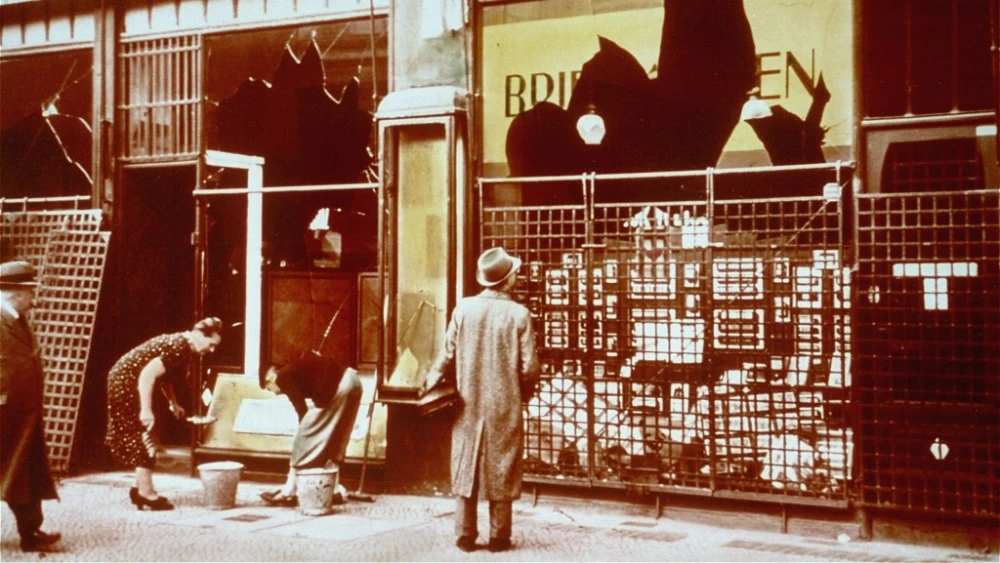

Eighty-eight years after Kristallnacht, I stand in a Berlin synagogue at a Kristallnacht commemoration convened by the International March of the Living. Alongside German police officers and their international colleagues, I think of my own ancestors and those of my husband; the ones who survived the Holocaust and the ones who did not. Could they have imagined such a gathering more than eight decades later?
To commemorate the November 1938 pogroms in this company is to recognize how much has changed and to consider what that change requires of us today.
Our ancestors’ gratitude would surely be profound. So would their understanding of what is at stake. The safety of Jewish communities is a measure of whether democracy can uphold its promises. Equal citizenship becomes meaningful when people can live, worship and raise their children without fear of being targeted for who they are.
As President of the International March of the Living, I meet public safety leaders around the world. Our conversations return to a fundamental principle: democracy depends on people and institutions willing to protect it. Confronting antisemitism is central to that responsibility, because its consequences reach far beyond those immediately targeted.
Extremist ideologies that turn Jews into enemies also threaten other religious and racial minorities, immigrants, police officers, elected officials and democratic institutions. Conspiracy theories encourage people to distrust their neighbors and see public life as a struggle against hidden enemies. When these ideas become acceptable, they weaken the shared confidence on which democratic society depends.
The Holocaust did not begin with extermination camps. Words, conspiracy theories and the normalization of hatred helped create the conditions for persecution. Institutions participated, laws were corrupted and too many people looked away. Police complicity helped strip Jews of their rights, dignity and ultimately their lives.
This history demands attention be paid to the choices that allowed exclusion to become routine and violence possible.
For law enforcement, the lessons carry particular weight. Professional responsibility must be grounded in moral responsibility. A badge confers authority, but it also creates obligations toward people who may have little power of their own. Upholding the law requires a commitment to equal protection and accountability, including when prejudice makes that commitment unpopular or difficult.
Holocaust survivors have carried the burden of memory for decades. The rest of us must carry the responsibility that follows from it.
Officers understand how rhetoric can feed radicalization and lead to violence. Their work in identifying warning signs, investigating threats and intervening before an attack can interrupt that process. Prevention rarely attracts the same public attention as tragedy. Yet a threat taken seriously, information shared promptly or a vulnerable institution given protection can determine whether a community remains safe.
Every synagogue, Jewish school or community center protected by police gives practical meaning to religious freedom and equal citizenship. These places sustain everyday life: children learning, families gathering, people praying. If fear drives people away from them, the damage extends beyond any individual incident. Community confidence suffers, and freedoms that exist in law become harder to exercise in practice.
That conviction guides our partnership with the Miller Center for Policing and Community Resilience. We have partnered on programs since 2017 and, over the past three years, police chiefs, sheriffs, national security officials, investigators and prosecutors from around the world have joined the March of the Living on Yom HaShoah, Holocaust Memorial Day. Their participation brings Holocaust remembrance into direct conversation with the responsibilities they carry today.
At Auschwitz-Birkenau, alongside Holocaust survivors and participants from different generations, faiths and communities, these professionals confront the consequences of institutions abandoning their duty to protect. The experience invites questions that remain relevant to their work: Who is being left vulnerable? Are warning signs being recognized? Does the exercise of authority preserve the dignity and rights of every person?
The presence of international law enforcement leaders also offers hope. Their willingness to learn together and stand with Jewish communities demonstrates that institutions can make different choices. Remembrance can help shape professional judgment and strengthen a shared commitment to prevent hatred from becoming violence.
That commitment must be sustained through cooperation. No community or country can meet today’s threats alone. International partnerships enable professionals to learn from one another, while local relationships help ensure that concerns reach those able to act. Effective policing depends on trust, open communication and a shared commitment to everyone’s safety. Communities must have confidence that reporting a threat will bring a serious response.
Jewish communities deeply value these relationships. We are profoundly grateful to public servants whose vigilance and decisive action have prevented attacks and saved lives. Supporting their work means sustaining partnerships beyond commemorations and moments of crisis, so that communication and confidence are already established when they are needed most.
Holocaust survivors have carried the burden of memory for decades. The rest of us must carry the responsibility that follows from it. The Holocaust’s victims were abandoned by institutions and people who could have offered protection. Remembering them demands that we prepare and support those entrusted with that duty today and hold them accountable for fulfilling it.
An attack on Jews challenges the rule of law and the ability of people with different identities and beliefs to live safely together. For law enforcement, political leaders and communities alike, Holocaust remembrance must inform daily decisions about human dignity and democratic freedom. Its meaning will be measured in the lives we protect and the future we make possible for the next generation.