
Passover is my favorite holiday.
I say this knowing it surprises people. Passover is labor-intensive and emotionally demanding, and it requires you to clean your kitchen in ways that border on obsessive. But I love it.
I love the cooking most of all, and the way it takes over my week, a little like Thanksgiving: the menu-building, the smell of matzah-ball soup filling the house, the way I try to make sure there is something special for everyone.
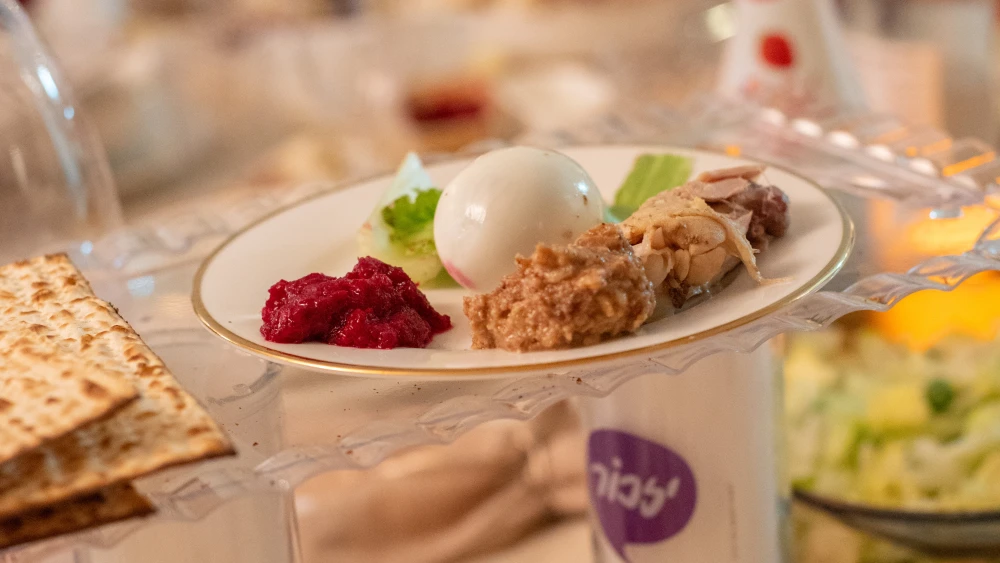
For 10 years in Philadelphia, I hosted the seder almost annually, and my friends knew to wait all year for that soup. I also make Sephardic charoset truffles with dates, golden raisins, apricots, honey and cinnamon—rolled by hand. I love putting the charoset and maror on the matzah together, the sweet and the bitter in one bite. I love that Judaism gave us a ritual that holds both at once.
Every year, somewhere in the middle of the seder, I felt it: the bitter and the sweet.
Children are woven into every corner of Passover. Not loudly, not cruelly, just everywhere.

There’s “The Four Questions,” traditionally sung by the youngest child at the table. Then come “The Four Sons” (or “The Four Children”), each one representing a different way a child might receive the story. There’s Elijah’s cup of wine, with young eyes planted to see a bit of it sipped. The highlight might be the afikomen, hidden for little hands to find. And the songs, of course, are designed to keep young voices engaged well past bedtime.
The entire architecture of the seder assumes that you are passing something down. That is the point. That is the mitzvah.
But what happens when there is no next generation at your table yet? What happens when you have been trying and waiting and hoping, and the seder arrives again, and you are still the one with no one to teach “The Four Questions” to?
For years, I sat with that in silence. I was not alone. One in eight couples struggles with infertility, and Jewish families are no exception. Every Passover, people navigating IVF, IUI, pregnancy loss, adoption and donor journeys sit down at a seder table full of symbols about liberation and future generations, carrying a grief that the Haggadah has no language for.
I am a writer and a designer. I am also a Jewish convert, someone who chose this tradition deliberately and has spent years finding my place inside it. I have been on my own fertility journey for nearly a decade, through a first marriage that fell apart partially because of it, through years of treatments and waiting, and now, at the age of 41, preparing for a donor embryo transfer this spring with my husband.
Somewhere along the way, I stopped waiting for someone else to make the resource I needed. At the beginning of 2026, I created SouthernMikveh.com, where I write about what it means to pursue parenthood as a Jewish woman in Tennessee, a state where lawmakers are actively debating the future of IVF, and insurance coverage is another battle entirely.
Last month, I published “From the Narrow Place to Hope: A Haggadah Supplement for Fertility Journeys,” the first Haggadah supplement written specifically for this ongoing family issue. It works alongside any Haggadah, weaving Jewish wisdom, reimagined rituals and space for reflection into the traditional seder.
I named it after the Mitzrayim—the narrow place—because that is what this journey is. You are not lost. You are not forgotten. You are in the narrow place, moving through it, waiting for what comes next.
The word seder means “order.” There is an order to things, the Haggadah tells us. A story that moves from slavery to liberation, from darkness to light, from the narrow place to hope. I have been living inside that story for a long time. I think a lot of people reading this have, too.
This Passover, I will make my matzah-ball soup. I will roll the charoset truffles by hand. I will put charoset and maror on the matzah, and hold the bitter and the sweet together, the way I have learned to do. And I will sit down at the seder with my own supplement in front of me, finally with somewhere to put everything I have been carrying to the table for years.
The story is not over. The door is still open.