Politics and Knesset

“I’ve produced four peace deals with Arab countries, and now you see Jews and Arabs hugging in Dubai. Why can’t that happen here?” says Israeli Prime Minister Benjamin Netanyahu in Umm al-Fahm.

The Israeli prime minister will be able to name officials to the fifth or 10th place on Likud’s Knesset list for the March 23 election, as well as to slots number 26, 28, 36, 39 and 40.

Data reveals that residents of cities listed as having the lowest standard of living report a greater sense of communal belonging and trust in the government than their affluent counterparts.

As many as five different parties, ranging from Yamina to Yesh Atid, had been courting the former military chief.

For the first time since its inception in the 1960s, in the March elections Israel’s Labor Party may fail to pass the electoral threshold.

“This is the closing of a particularly moving circle; entire families are being reunited in Israel,” said Amira Ahronoviz, director general of the Jewish Agency for Israel.

“The detention order is struck down,” said attorney Faisal Siddiqi.

In a first since its inception in the 1960s, Labor is not expected to secure the four Knesset seats required to pass the electoral threshold.

Israeli Prime Minister Benjamin Netanyahu is owed thanks for his accomplishments, “but when we needed him the most, he was not there for us,” says Yamina head Naftali Bennett.
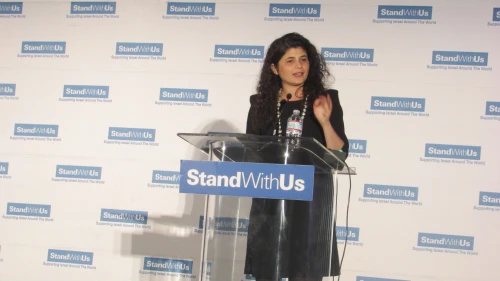
Sharren Haskel follows the same move by Michal Shir and Yifat Shasha-Biton.

The next round, slated for March 23, will take place amid the ongoing coronavirus pandemic and the corruption trial of the prime minister.
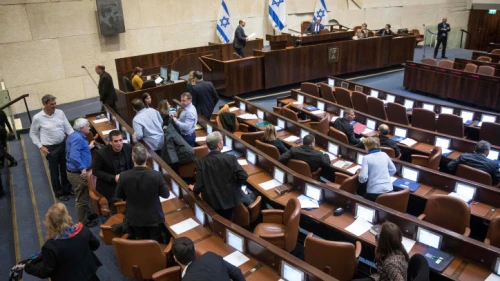
The bill failed by a narrow margin of 49-47 after Likud Knesset member Michal Shir and Blue and White lawmakers Assaf Zamir, Ram Shefa and Miki Haimovich voted against it.