This past weekend in the north of Tehran, many women engaged in quiet acts of defiance against their regime. They went out publicly without their hijabs, hair flowing, and attended a rock concert—singing and swaying to the music.
In any other country, this would be commonplace. In Iran, this constitutes an act of rebellion.
Iranian women have noticed that the same restrictions that led to the death in September 2022 of Mahsa Amini, a 22-year-old Kurdish-Iranian woman (as well as countless others), within the “Women-Life-Freedom Movement” have begun to be somewhat relaxed. For these women participants, the simple act of attending a concert without a hijab was not just about enjoying music, but about reclaiming their space in public and personal autonomy. Their visible defiance resonated with many others, inspiring conversations about individual rights and the meaning of freedom in everyday life.
AI surveillance cameras, however, remain in place in the country, tracking women who do not cover their hair. And the state still maintains the mandatory hijab law, Article 638 of the Islamic Penal Code, with the enforcement of the so-called “morality police.”
While the authorities attempted to suppress the event and intimidate attendees, the women remained resolute, refusing to be silenced or forced back into conformity. Their presence at the concert was a powerful statement—not only of resistance, but of solidarity with others seeking change. Despite the risks involved, these women are quietly challenging social norms and government authority, demonstrating remarkable courage. Their actions signify a growing movement that seeks greater personal freedom and equality within Iranian society.
Domestically, there might be a modicum of improvement, at least within urban settings. In the foreign-policy arena, however, there is not much change in the strategy of Islamic leaders—namely, Ayatollah Ali Khamenei. He remains as austere as ever, even though the land bridge stretching from Tehran to Baghdad to Beirut and the Mediterranean now has a major clink in its armor: Syria is under the control of a Sunni strongman, Ahmed al-Sharaa. That country is replete with sectarian violence and human-rights issues, incorporating a population of Druze, Alawites, Kurds and Christians; still, it is no longer simply Iran’s proxy.
This shift in Syria’s leadership has complicated Iran’s regional ambitions, disrupting established alliances and creating new uncertainties for the so-called “Axis of Resistance.” The changing dynamics have forced Tehran to reconsider its approach, as it faces internal dissent and external challenges to its influence.
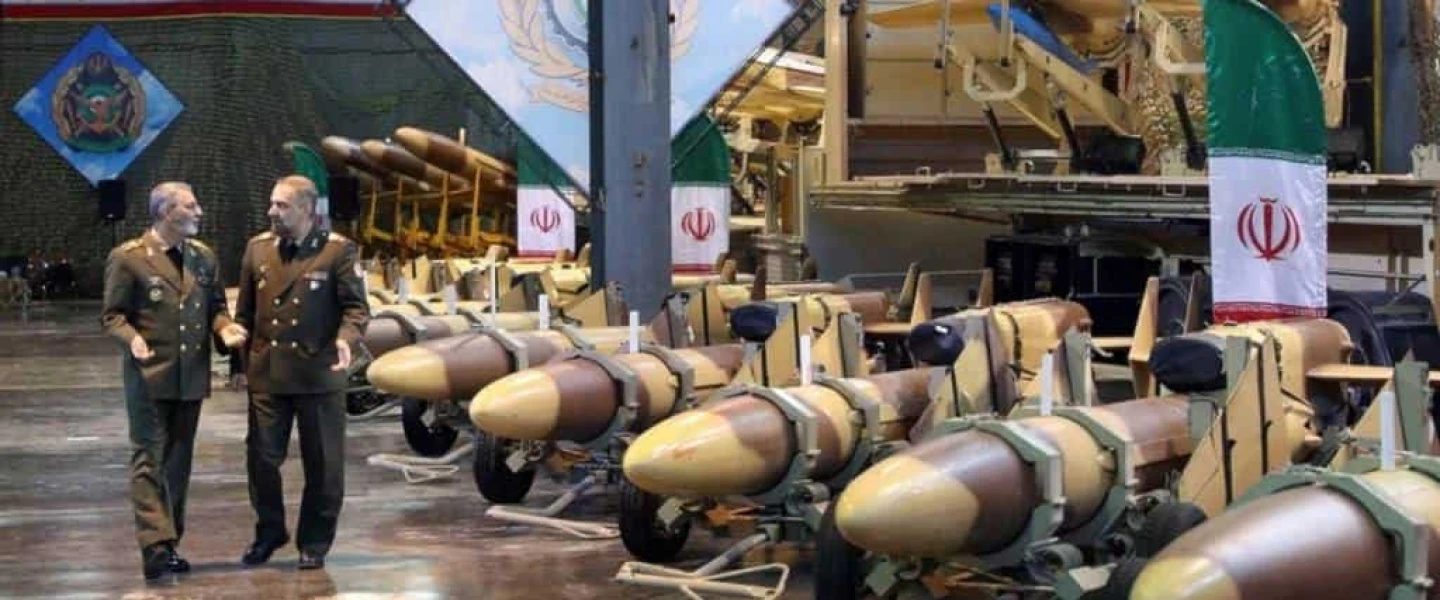
According to satellite imagery, the damage done by the combined Israeli and U.S. attacks to the Natanz and Fordow nuclear plants in June can be rebuilt. Last week, Rafael Grossi, director of the International Atomic Energy Agency (IAEA), said “we witnessed unbelievable attacks on Iran’s nuclear sites” this summer, and it is his opinion that Iran does not now possess nuclear weapons. Still, he noted, its “scientific knowledge cannot be destroyed.”
As of today, Iran still has not allowed the IAEA nuclear inspectors in. In early October, the United Kingdom, France and Germany triggered “snapback sanctions” on Iran; in response, Iran declared that the inspection agreements were “null and void.” Together with Russia and China, Iran notified the IAEA that the mandate for reporting Iranian nuclear activities has “officially expired.”
Although there is an awakening within a certain element within Iran, this has not disturbed the reigning mullahs’ overall nuclear ambitions or the export of radical Shi’ite theology through Hezbollah. Much of this activity sits directly under our noses in the tri-border areas of Argentina, Paraguay and Brazil, and Bolivia, Peru and Chile. There, Hezbollah operatives heavily engage in dawa conversion activities (the Islamic practice of inviting people to Islam through various methods), money laundering and drug trafficking.

While moments of defiance and resistance can be seen more and more in Iranian civil society, longstanding institutional barriers and entrenched power structures continue to restrict progress. The interplay between hope and repression is evident in the daily lives of citizens and the broader geopolitical maneuvers of the Iranian government.
This interaction between domestic political activism, modest, incremental change and internal repressive pressures, as well as the exporting of autocratic seventh-century rulings, is shaping a complex landscape, leaving the future of Iran’s policies very uncertain.
As Iranian civil society pushes for incremental reform, its government will continue to respond with force and surveillance, creating an atmosphere where progress is met with persistent resistance. Nevertheless, the courage shown by individuals in defying oppressive norms signals a slow but meaningful shift in public consciousness toward greater demands for freedom and accountability.