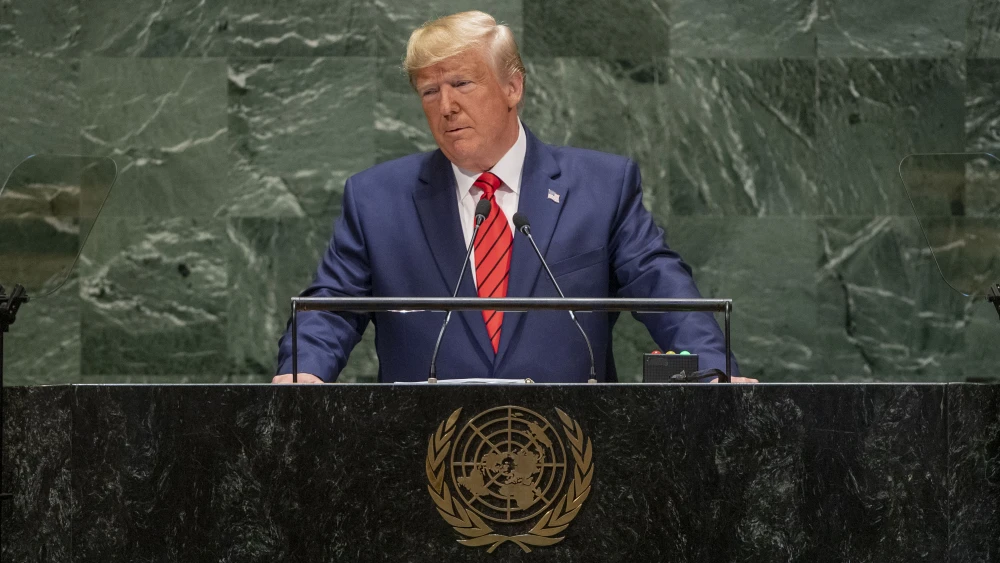
U.S. President Donald Trump issued a proclamation on Wednesday barring senior Iranian government officials and their families from entering the United States, whether for work, travel or study.
In the visa ban, Trump accused Iran of sponsoring terrorism, detaining American citizens and posing a military and cyber threat to its neighbors.
“Given that this behavior threatens peace and stability in the Middle East and beyond, I have determined that it is in the interest of the United States to take action to restrict and suspend the entry into the United States, as immigrants or non-immigrants, of senior government officials of Iran, and their immediate family members,” Trump said in the proclamation.
The move comes after years of petitions from the families of Americans imprisoned in Iran.
As part of their efforts, the families compiled a list of Iranian nationals with close family connections to top Iranian officials, including Iranian President Hassan Rouhani himself.
Trump handed authority to decide who would be covered by the proclamation to the secretary of state, but said exceptions to the ban would include lawful permanent U.S. residents, those granted asylum and refugees already admitted to the United States. He also provided possible exceptions for people whose entry “would further important ... law enforcement objectives.”
It was not clear whether the proclamation would affect Iranian diplomats currently in New York for the U.N. General Assembly meeting.
There are currently at least four Americans imprisoned in Iran, under pretenses that United Nations monitors and human-rights groups have called baseless.
Earlier on Wednesday, at the UNGA gathering, Rouhani accused the United States of “merciless economic terrorism.”