U.S. Foreign Policy

The legislation recognizes that new Israeli-Arab partnerships align with U.S. national interests.

The legislation proposes that the United States withhold 20 percent of its security assistance until the Lebanese Armed Forces take “effective actions to limit or expel Hezbollah-influenced military personnel.”
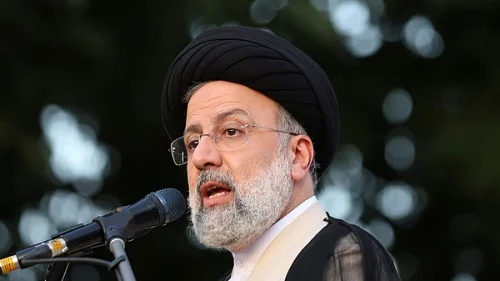
Ebrahim Raisi also said he wouldn’t meet with U.S. President Joe Biden, and that “the U.S. is obliged to lift all oppressive sanctions against Iran.”
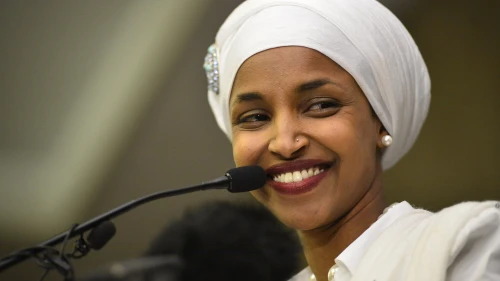
Democratic strategist Steve Rabinowitz told JNS that while he personally would not have chosen Rep. Ilhan Omar for the committee, Democrats are likely not calling for her removal because “the world is not just Israel and the Palestinians.”
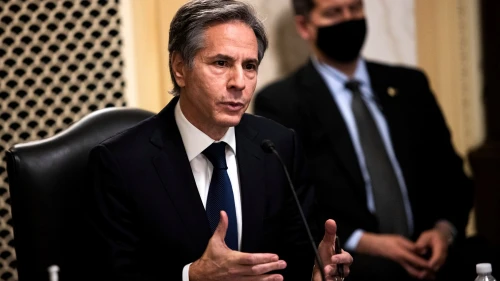
“If [the sanctions] are not inconsistent with the JCPOA, they will remain unless and until Iran’s behavior changes,” U.S. Secretary of State Antony Blinken tells the Senate Appropriations Committee.
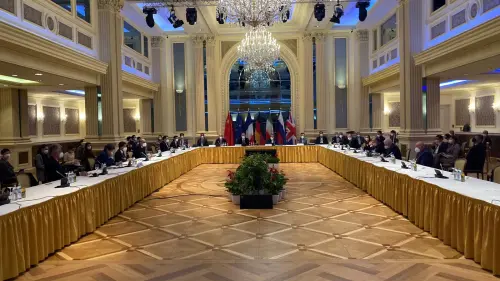
Senior diplomats from Britain, France Germany: “The most difficult decisions lie ahead” • “The main problems with the U.S. have been settled,” says the Iranian president.

Israeli Defense Minister Benny Gantz will hold “a strategic dialogue on the emerging agreement with Iran, safeguarding Israel’s defense superiority and the stability of the Middle East,” said a statement.
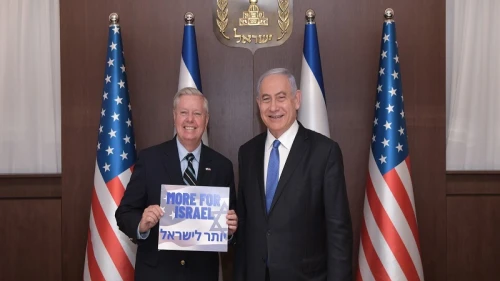
“The worst possible outcome for the world is to allow the Iranian regime to acquire nuclear capability,” the senator tells Israeli Prime Minister Benjamin Netanyahu.
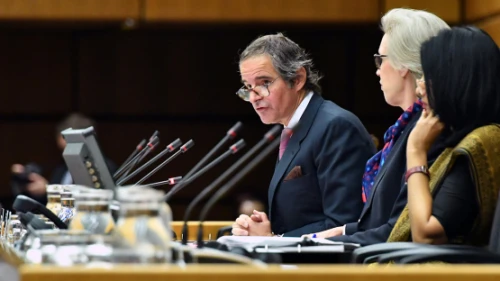
“The Iranian program has grown, become more sophisticated, so the linear return to 2015 is no longer possible,” says International Atomic Energy Agency head Rafael Grossi.
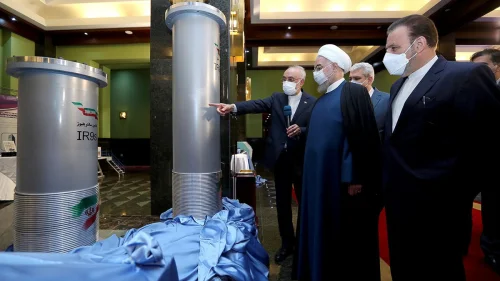
“Rejoining the JCPOA in 2021 is more reckless than when the U.S. agreed to it in 2015,” said JINSA CEO and president Michael Makovsky.
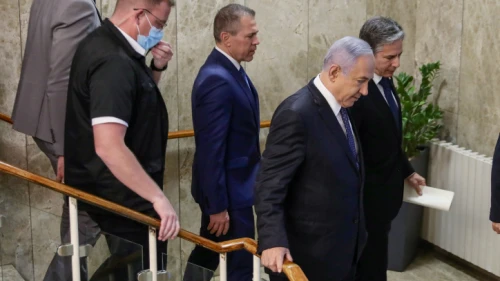
During their joint press conference in Jerusalem, Israeli Prime Minister Benjamin Netanyahu said he had discussed the Iranian threat with U.S. Secretary of State Antony Blinken and expressed hope that the United States “will not go back to the old JCPOA.”
Richard Goldberg, senior adviser at the Foundation for Defense of Democracies, says it “makes no sense from a U.S. negotiation posture. We’re giving up historic leverage in exchange for compliance with an already flawed deal that is already expiring.”