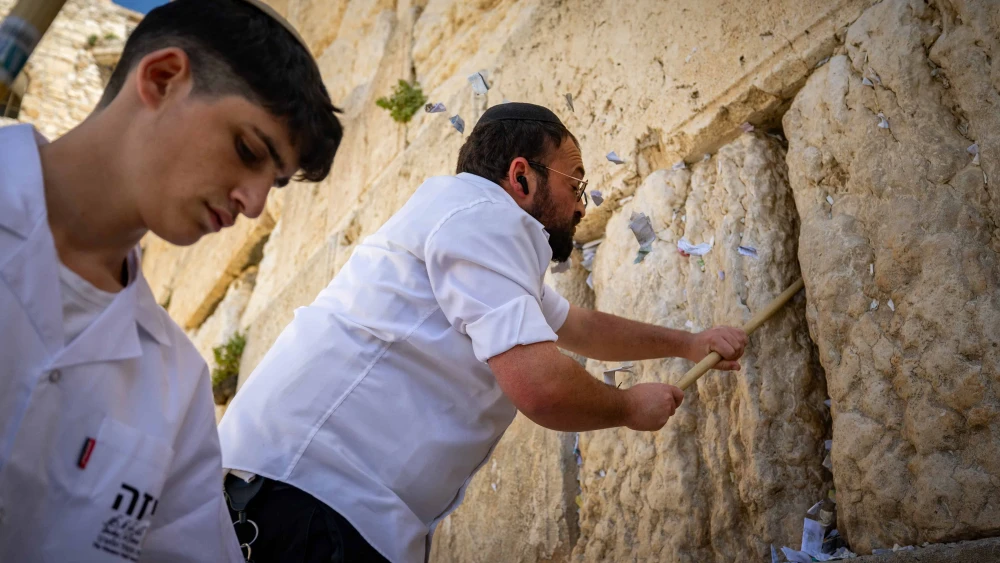
The Western Wall Heritage Foundation removed tens of thousands of prayer notes from Judaism’s second-holiest site on Wednesday in preparation for the Passover holiday, which starts on April 12.
Rabbi Shmuel Rabinowitz, rabbi of the Western Wall and holy sites, oversaw the annual extraction of prayer notes, which will be buried alongside disposed sacred writings according to Jewish customs.
“The removal was carried out according to halachic guidelines, using gloves and disposable wooden tools to preserve the sanctity of the site and the personal nature of the notes,” the Western Wall Heritage Foundation noted in a statement posted to Instagram.
Rabinowitz offered a prayer for unity among the Jewish people and for all those who placed prayers in the Western Wall, the foundation said.
Each day, hundreds of notes are submitted to the Western Wall Heritage Foundation’s website, in addition to hundreds of thousands placed by worshippers who visit the Old City of Jerusalem throughout the year.
Since Rosh Hashanah, the Jewish New Year that started on Oct. 2, tens of thousands of notes were put into the Wall—both from the Jewish state and around the world—including from IDF soldiers, wounded troops, bereaved families and families of hostages held by Hamas in Gaza.
“What stood out this year were notes sent to the foundation’s website by citizens of countries hostile to Israel, including Iran, Yemen, Iraq, Qatar, Lebanon, Pakistan, Sudan, Jordan, Egypt, Kazakhstan and more,” according to the pre-Passover statement on Wednesday.
“These notes contained heartfelt requests for peace, reconciliation and the building of connections between nations and peoples,” it revealed.
Passover, or Pesach, begins at sundown on Saturday, April 12, this year and runs through Saturday, April 19 in the Land of Israel, while the holiday that commemorates the exodus last an additional day in the Diaspora.