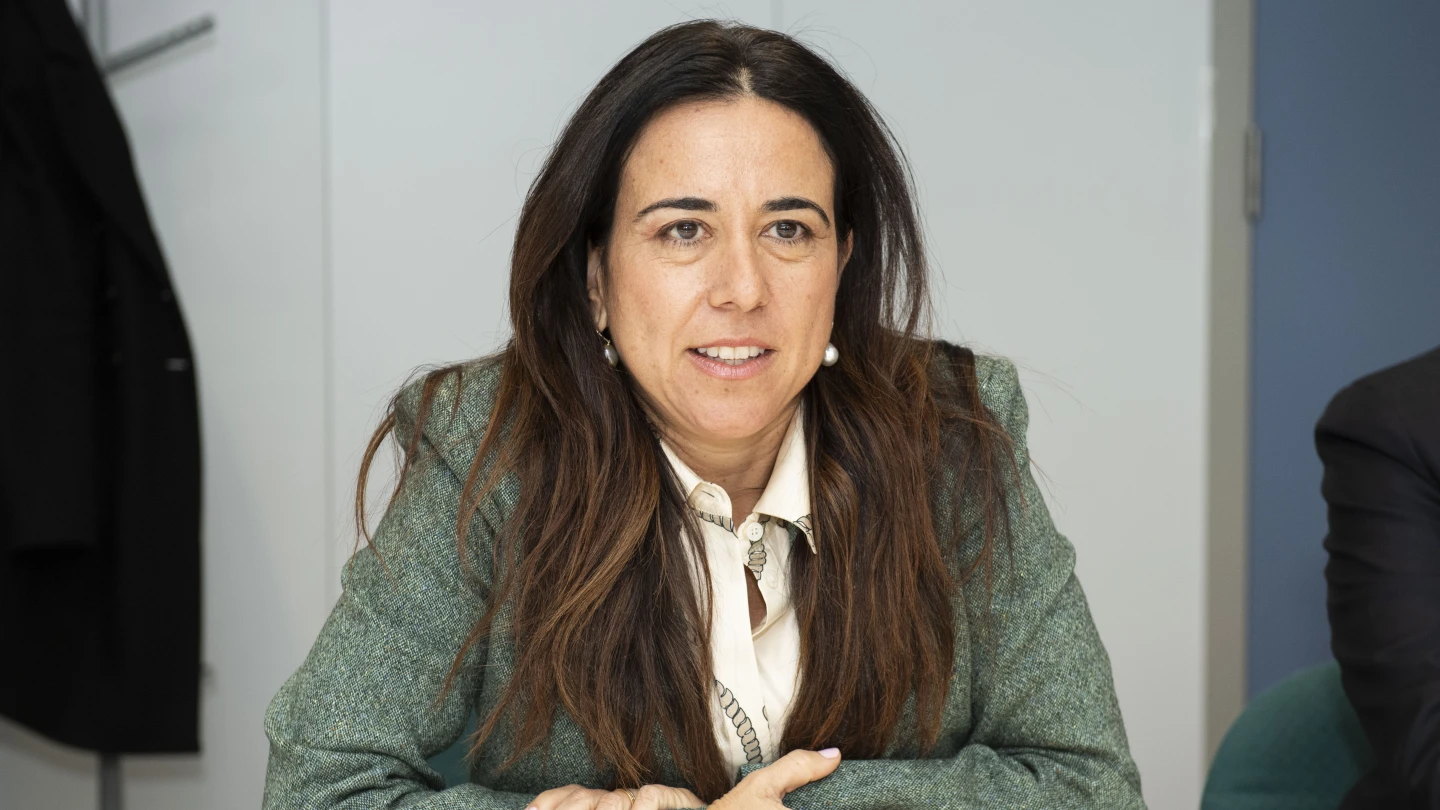
The Ruderman Program for American Jewish Studies at the University of Haifa convened its annual conference last week at the Rabin Center in Tel Aviv, bringing together leading scholars, policy experts and public figures to examine the triangular alliance between Israel, Washington and American Jewry against the backdrop of an ongoing war and a charged political moment on both sides of the Atlantic.
The conference, titled “A Triangular Alliance in the Shadow of War and Elections: Israel, Washington and American Jewry,” drew researchers, practitioners, journalists and alumni of the Ruderman Program for a day of academic panels, roundtable discussions and a public forum addressing the most pressing questions facing the U.S.-Israel relationship today.
Among the most urgent issues discussed was the future of the defense aid agreement governing U.S. military assistance to Israel. Yonatan Adiri, an entrepreneur and former political and technology advisor to President Shimon Peres, argued that the current framework is approaching a breaking point and proposed a bold structural alternative.
“I can see how we’re heading toward a crash in this whole affair,” said Adiri. “What I’m proposing is a model of moving from dependency to partnership. The $3.8 billion stays—that’s the U.S. third. Israel injects two new thirds that weren’t there before: a commitment to purchase at least $4 billion a year in American procurement and an annual investment in U.S. financial instruments from Israel’s foreign currency reserves. All in all, you’re generating real value. For Israel and for the United States.”
The conference also addressed the shifting landscape of American public opinion toward Israel, particularly among younger and left-leaning voters. Kobi Bara, Ph.D., of the Jewish People Policy Institute (JPPI) urged a methodical approach to understanding the problem, pushing back against both panic and oversimplification.
“There’s an intervening variable here,” Bara said. “America doesn’t define itself only in relation to Israel. It has its own deep, objective problems and the polarization we’re seeing has roots that have nothing to do with Israel. If you want to understand the challenge and choose the policy and tools that can actually have an impact, you have to understand it in depth first. Let’s be methodical.”
Jay Ruderman, president of the Ruderman Family Foundation, said the conference reflects the foundation’s conviction that the U.S.-Israel relationship demands sustained honest engagement, especially in difficult times.
“The relationship between Israel and American Jewry cannot be built only on crisis and emergency,” said Ruderman. “The real test of this alliance is whether we can sustain it through tension, disagreement and complexity, not just in moments when we have no choice. That is what drives the Ruderman Program. The belief that understanding each other deeply, honestly and without shortcuts is not an academic exercise, it’s a moral responsibility.”
The morning academic panel, moderated by David Barak-Gorodetsky, Ph.D., of the Ruderman Program, featured presentations from Amnon Cavari of Reichman University on Israel’s position in the American political system, Gatit Paz, Ph.D., of Bar-Ilan University on Israel in Jewish-American literature and Adi Scherzer, Ph.D., of Hebrew University of Jerusalem on how Israel is taught in the United States during wartime. A midday roundtable brought together alumni and current cohort participants of the Ruderman Program for facilitated discussion on the impact of the war on American Jewish-Israeli relations.
The afternoon public panel, moderated by Oded Bino, senior field producer at Channel 12 News, also featured a presentation from Hadas Lorber on whether the deepening security-technological partnership between the U.S. and Israel represents a new form of alliance.
The Ruderman Program for American Jewish Studies at the University of Haifa offers students both the historical grounding and modern-day understanding needed to strengthen the relationship between Israel and American Jewry. Backed by more than two decades of work by the Ruderman Family Foundation, the program promotes ongoing academic research on Jewish-American life, American society and the vital bond between American Jews and the State of Israel.