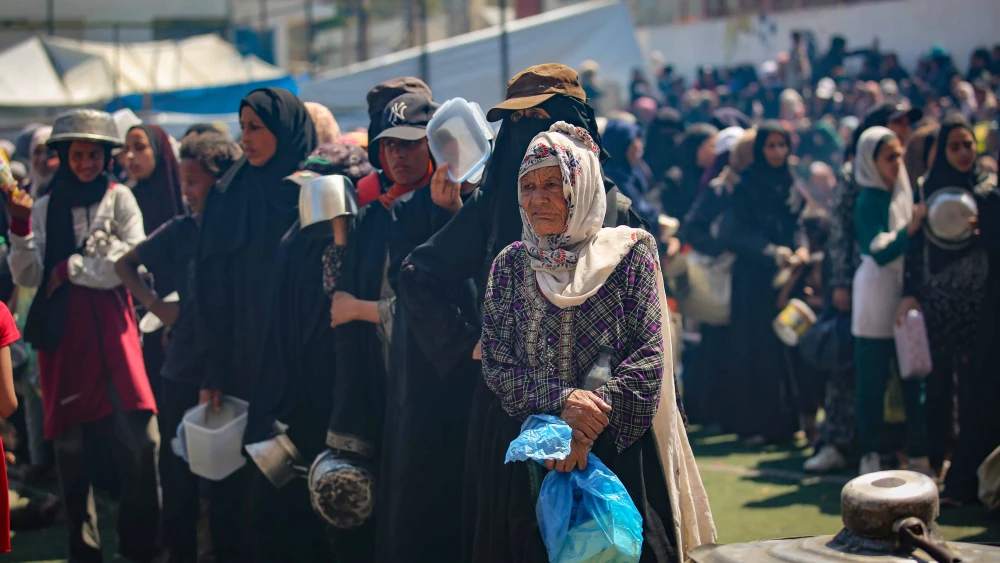
Civilians in Gaza are suffering, caught in the middle of a brutal war with hundreds of thousands of people displaced; buildings, homes and infrastructure decimated; and widespread food insecurity.
Israel recently announced a military pause in Gaza to allow for an expanded distribution of humanitarian aid for up to 10 hours daily.
U.S. President Donald Trump also announced a new U.S.-European partnership to open unguarded food distribution centers inside Gaza, marking a notable expansion of direct relief efforts. Neighboring partners, including Jordan, Egypt and the United Arab Emirates, have joined airdrop missions, delivering critical food supplies.
While much of the world holds Israel responsible for alleviating Gaza’s crisis, it is important to remember that it was Hamas that invaded Israel on Oct. 7, killing more than 1,200 and dragging 251 hostages into Gaza, sparking this horrific war.
As stated by its own leaders, Hamas is willing to sacrifice its people to destroy the Jewish state. While aid has been delivered on multiple occasions since the war began, Hamas and criminal gangs in Gaza have been known to steal aid, hoard fuel and execute civilians who challenge their control. Hamas continues to reject ceasefire proposals, including the most recent offer brokered by the United States and its partners, refuses to release Israeli hostages and demands to remain in power at the expense of its own citizens.
Getting aid into Gaza is not just an Israeli problem. Egypt controls a key border crossing that it has largely kept shut, and the country built a massive wall in early 2024 to protect its border with Gaza. The United Nations has left hundreds of aid trucks undelivered inside the Strip, claiming security risks. The vast majority of Arab countries have not directly contributed to relief efforts in Gaza. Meanwhile, Israel, facing a multi-front war with Iranian terrorist proxies, including Hezbollah and the Houthis, has been expected to fight Hamas, oversee all aid into Gaza and minimize civilian casualties all at the same time.
While the suffering in Gaza is heartbreaking, Israel and its military have taken extensive measures to prevent humanitarian collapse at its own risk, while fighting a terror group that embeds itself among civilians and refuses to surrender.
Israel has expanded humanitarian corridors, opened new entry points and coordinated with the U.S. and other partners to facilitate relief. In recent months, the Israel-U.S.-backed Gaza Humanitarian Foundation (GHF) has delivered nearly 100 million meals, feeding up to 2 million Gazans a day while bypassing Hamas control. Israel also has facilitated the entry of 94,000 aid trucks carrying more than 1.8 million tons of food, fuel and medical supplies. The Israeli Defense Forces recently airdropped food and aid into Gaza for the first time.
Israeli Prime Minister Benjamin Netanyahu and other officials have emphasized that dismantling Iranian-backed Hamas must go hand in hand with avoiding a humanitarian collapse.
John Spencer, chair of urban warfare studies at West Point, confirmed: “I have seen restraint by the IDF in Gaza, humanitarian aid and deliberate compliance with legal standards, often at tactical cost.”
Providing aid to a civilian population on the other side in a war is virtually unprecedented. Despite these extraordinary efforts, headlines continue to portray Israel as deliberately starving Gaza.
Deflection and misinformation prolong the crisis
The humanitarian crisis in Gaza is real and horrifying, with shortages of food, medical supplies and drinkable water fueling immense civilian suffering. Images and reports of devastation have shocked the world. But as former IDF international spokesperson and current senior fellow at the Foundation for Defense of Democracies, Jonathan Conricus, explained, this crisis is not merely a byproduct of war; it is rooted in Hamas’s deliberate strategy of leveraging human suffering to pressure Israel politically and diplomatically.
Hamas has rejected ceasefires, hoarded aid and uses civilians as shields, all while continuously vowing to annihilate Israel and refusing to release Israeli hostages.
Hamas is also weaponizing images and media coverage to amplify outrage. While many of the images are authentic, some widely circulated photos have been proven misleading or misused. One recent viral image of an emaciated child actually depicted a 5‑year‑old boy evacuated with Israel’s help on June 12 to Italy for treatment of a genetic illness unrelated to the war.
Another viral image, according to an investigative reporter, featured by multiple media outlets and shared repeatedly on social media, appears to be of a boy with cerebral palsy requiring specialized medical care since birth. As tragic as these children’s stories are, Hamas terrorists’ use of these images to elicit global outrage only confirms a lack of respect for the lives of their own citizens and a willingness to do anything to retain control of Gaza at all costs.

False narratives inflame outrage, fuel attacks against Jews and harden public opinion against Israel around the world, just as Hamas intends. The ecosystem of misinformation—from viral “citizen journalists” to AI deep fakes—makes truth harder to discern. Combating misinformation requires skepticism, reverse image searches and following analysts who report from verified sources.
Debunking the ‘genocide’ accusation: ‘Psychological warfare’
The most explosive charge leveled against Israel is genocide, a term that evokes the Holocaust, and that is no accident. Hamas and its advocates deliberately use this framing to falsely cast Israel as a uniquely evil state deserving of annihilation.
The facts tell a different story. Genocide, under international law, requires the intent to destroy an entire group. Israel’s actions demonstrate the opposite upon closer inspection: While waging war against a genocidal terrorist organization, Hamas has facilitated humanitarian aid, issued evacuation warnings before strikes and taken unprecedented steps to minimize civilian harm.
Genocides are marked by catastrophic population loss: The Nazi Holocaust of 6 million Jews, the Hutu genocide of 600,000 Tutsis in only 100 days in Rwanda and the more than 1 million Armenians massacred by the Ottoman Turks. At least 60% of the population was murdered in these actual genocides. Even if Hamas’s inflated casualty figures are accepted, less than 3% of Gazans have died, and a large portion were Hamas militants.
Reports from NGOs and independent military experts confirm that Israel’s casualty ratios, while devastating in human terms, remain significantly lower than comparable conflicts. The reality is not a genocide. This ongoing conflict is an ugly, asymmetrical war against a terrorist group that pledges to repeat Oct. 7 “again and again” while hiding behind its own people. Hamas uses hospitals, schools, and mosques as weapons depots, ensuring any Israeli response risks civilian casualties.
As former U.S. Secretary of State Antony Blinken warned, international outrage aimed solely at Israel rewards Hamas for its intransigence, prolonging both the war and civilian suffering.
Political psychologist Irwin Mansdorf calls the shifting of blame and the exploitation of images “psychological warfare.”
This strategy manipulates public opinion and transfers the moral burden from Hamas to Israel. France’s recent announcement that it will recognize a Palestinian state at the United Nations in September, condemned by U.S. Jewish groups as “dishonoring Oct. 7 victims,” demonstrates how Hamas turns outrage into powerful political gains.
Since Oct. 7, Hamas has always had the option to end its people’s suffering by surrendering and releasing the hostages, but has consistently refused the option to achieve peace.
Points to consider:
- Israel is expanding humanitarian aid despite the war.
The prominent anti-Israel narrative of a “siege without care” ignores a deeper and more complex reality. Gaza is suffering, but Israel is taking active, sustained steps to alleviate that suffering while fighting Iran-backed Hamas, a terrorist organization that uses civilians as shields and aid as leverage. Israel is expanding aid corridors, opening new entry points and coordinating with countries and organizations to facilitate relief. These actions reflect Israel’s effort to balance military necessity with preventing a humanitarian collapse.
- Hamas created the humanitarian crisis and wants it to continue.
Hamas bears primary responsibility for the suffering of civilians in Gaza. It steals designated aid, hoards fuel for rockets, and threatens or even executes those who resist its control. Operating from hospitals, schools and mosques, Hamas ensures that any Israeli response risks civilian casualties. This is deliberate psychological warfare using starvation and death to inflame worldwide outrage, shield its leaders and extract political concessions from Israel. Until Hamas releases the hostages, surrenders and stops abusing Palestinians, the crisis will continue.
- False accusations embolden Hamas and endanger Jews.
Misinformation about “mass starvation” or “genocide” do not just smear Israel, but rather empowers Hamas by turning suffering into a dangerous and global propaganda weapon. These false narratives echo the ancient blood libels that once fueled pogroms: portraying Jews as sadists who enjoy harming children. Viral images—often cropped, staged or recycled from other conflicts—bypass fact‑checking and rapidly spread, emboldening Hamas and fueling attacks against Jews around the world. Confronting these lies is essential to protecting Jews and exposing Hamas’s dangerous strategy.
- The false ‘genocide’ accusation distorts reality.
Labeling Israel’s war against Hamas “genocide” is false and morally corrosive. Genocide requires the intent to destroy an entire people. Israel’s actions prove the opposite: delivering aid, warning civilians before strikes and risking the lives of Israeli soldiers to reduce Palestinian civilian casualties. This conflict is an ugly, asymmetrical war against a terrorist group that hides behind its own civilians while pledging to repeat Oct. 7 “again and again.” The genocide label cheapens the term and rewards Hamas propaganda.
- Sharing the truth is an act of courage.
Gaza’s suffering is real, but so is the manipulation of that suffering to wrongly vilify Israelis and Jews around the world. This is not a time for slogans. We must share verified facts, challenge misinformation and tell the full story in accurate context. Israel is not perfect, but it is not the monster portrayed online, on air and in print. It is a nation under attack, striving to balance survival with humanity.