Newsletter
Newsletter Support JNS

Iran calls sending of troops to Saudi Arabia by US ‘posturing’

Iran’s foreign minister tells CBS he’s “not confident” war can be avoided, says movement of U.S. troops and military equipment to Saudi Arabia and the UAE is “all going the wrong direction.”

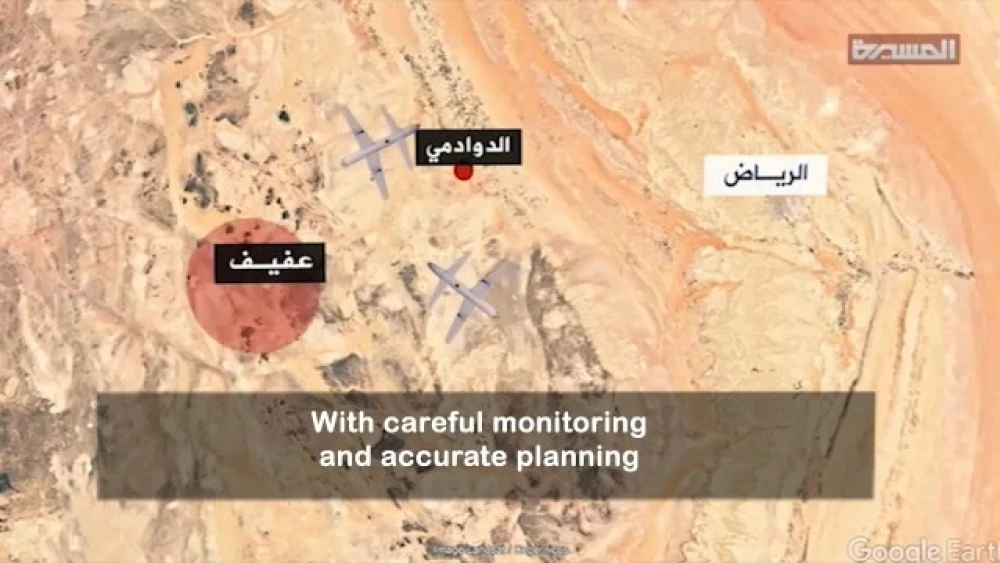
A map showing the location of the Saudi facilities hit by drone and missile attacks on Sept. 14, 2019. Source: Houthi-controlled al-Masirah TV.

Iran’s Foreign Minister Mohammad Javad Zarif referred to the sending of U.S. troops to Saudi Arabia as “posturing” in an interview on Sunday on CBS’s “Face the Nation.”

“I think it’s posturing. I think it’s all going the wrong direction in addressing this issue,” said Zarif.

U.S. President Donald Trump decided on Friday to send American troops to Saudi Arabia to strengthen the country’s air and missile defenses.

The Pentagon said the troops sent would not number in the thousands and would have a defensive mission, Reuters reported on Saturday. In addition, the delivery of military equipment to Saudi Arabia and the United Arab Emirates would be expedited according to the report.

The United States blamed Iran for the attack on Saudi Arabia’s oil facilities the previous weekend, but Zarif again claimed that Iran was not responsible in the CBS interview.

Asked if he believed that war could be avoided, Zarif responded, “No. No, I’m not confident that we can avoid a war. We ... I’m confident that we will not start one, but I’m confident that whoever starts one will not be the one who finishes it. [...] That means that there won’t be a limited war.”

The U.S. president warned that the U.S. military will begin targeting Iranian power plants and bridges on Tuesday if the Strait of Hormuz is not opened.
The cell posed an immediate threat to Israeli forces in northern Gaza, according to the military.
The event, which was attended by 70,000, comes just over two months after the rapper, also known as Kanye West, publishing an apology letter for antisemitic remarks.
An 11-year-old girl critically hurt last week by an Iranian missile remains in serious condition.
The question follows a controversial ruling by the Israeli High Court of Justice instructing the military to permit an anti-war protest on Saturday night in larger numbers than wartime restrictions on public gathering allow.
Israel’s military says launches have struck inside or near peacekeeping posts.