Newsletter
Newsletter Support JNS

Palestinians to lead UN’s largest bloc of nations

The Palestinians are set to lead the largest bloc of members in the United Nations, known as the Group of 77 (G77).

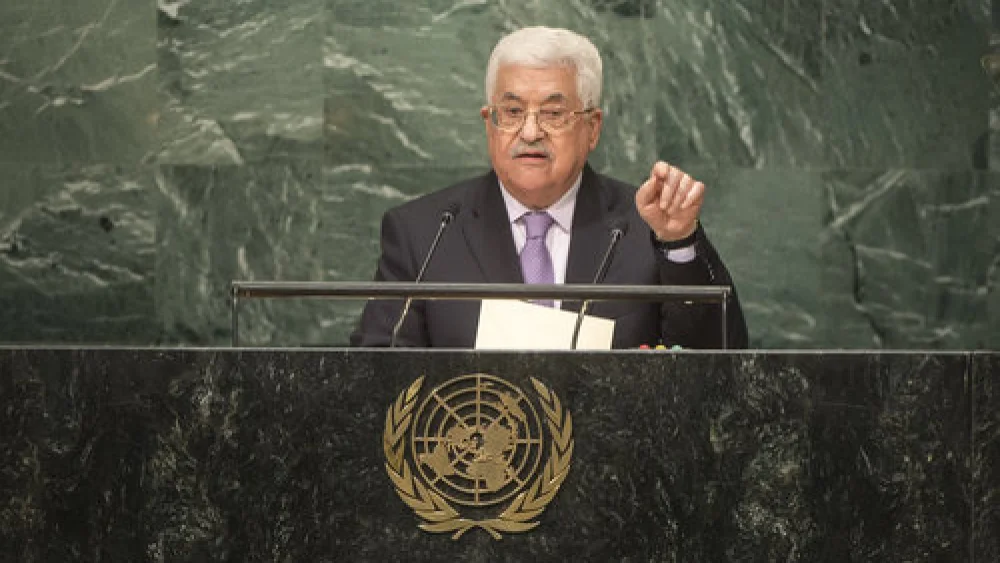
Palestinian Authority President Mahmoud Abbas addresses the general debate of the United Nations General Assembly in September 2016. Credit: U.N. Photo/Cia Pak.

The Palestinians are set to lead the largest bloc of members in the United Nations, known as the Group of 77 (G77) and China, on Tuesday.

Palestinian leader Mahmoud Abbas is expected to be in New York for the ceremony, followed by a meeting with U.N. Secretary General António Guterres, U.N. Security Council president Francisco Antonio Cortorreal of the Dominican Republic, in addition to other world leaders.

Because the Palestinians have the status of a non-member state at the United Nations that would have made them ineligible for the chairmanship of the bloc without a special vote, the U.N. General Assembly held one last October to temporarily elevate the Palestinians’ status at the world body to resolve the issue.

The G77 was established in 1964 and seeks “to articulate and promote their collective economic interests and enhance their joint negotiating capacity on all major international economic issues within the United Nations system, and promote South-South cooperation for development,” according to its website.

“This is an important historical event added to the political achievements of the State of Palestine since it joined the UN as an observer state in 2012. It is also an important achievement to assert the Palestinian identity in the international community, which colonial powers have tried to abolish over many centuries.” Presidential spokesman Nabil Abu Rudeineh told Palestinian Wafa news agency on Monday.

Turkey has historically denied genocide allegations against the Ottoman Empire’s conduct during World War I.
In a draft report delivered to the U.S. president, the commission also called for improved religious accommodations for U.S. service members.
Salah Salem Sarsour, accused of concealing Israeli military court convictions on immigration forms, argued his detention was part of a Trump admin effort to target the pro-Palestinian movement.
CENTCOM stated that the strikes targeted missile, drone and radar facilities after the Islamic Republic attacked a cargo ship in the Strait of Hormuz, calling the assault a violation of the ceasefire.
Now that the primaries are over, “we hope that everyone will come together and be united,” Christine Quinn, chair of the executive committee of the New York State Democratic Party, told JNS.
An Iranian official warned on Friday that the safety of ships passing through the Strait of Hormuz without Iran’s permission “cannot be guaranteed.”
Benny Gantz, JNS editor-in-chief Jonathan S. Tobin, Gilad Erdan, Mosab Hassan Yousef, Nissim Black and leading voices in security, diplomacy, media, law and Jewish communal affairs headline the summit’s third day in Jerusalem.

