By Ben Cohen/JNS.org
To get a sense of what really lies beneath the campaign to boycott Israel—which is about much more than just boycotting Israel—it can be helpful to see how this issue is presented in the Arab world, and how it plays out there.
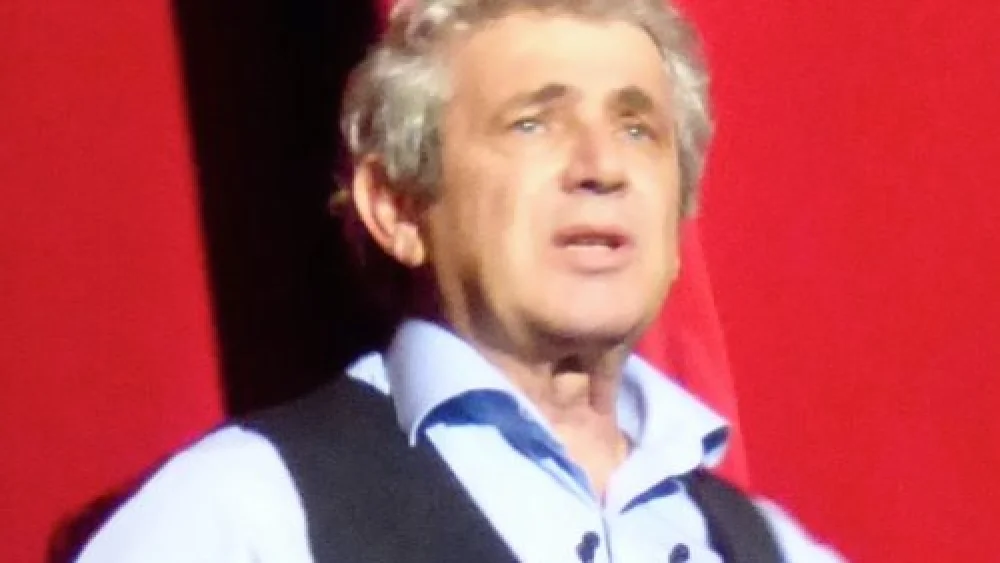
The prestigious international culture festival in Carthage, Tunisia, opened July 13 under the shadow of a call to boycott one of the performers—Michel Boujenah, a French-Jewish actor and a proud son of Tunisia, the land of his birth.
Boujenah is not an Israeli citizen, nor does he live in Israel. But he is a vocal supporter of the Jewish state, and an outspoken opponent of the anti-Semitism that continues to plague France.
Here in the West, the BDS campaign has not quite reached the stage of boycotting artists simply because they have expressed support for Israel—you need to perform, exhibit, publish or lecture there in order to incur their wrathful campaigns, such as the one recently launched by aging rocker Roger Waters against the band Radiohead. Additionally, because the anti-Semitism of the BDS movement is carefully coded, its Western components tend to shy away from boycotting Jews whose only tie to Israel is that they have family there, and care deeply about what happens to the country.
Not so in the Arab world. In Tunisia, Boujenah’s personal relationship with Israel was enough for the UGTT, Tunisia’s labor union federation, to join Tunisian BDS advocates from the “International Campaign for Boycotting Zionism” in calling for his removal from the lineup at the Carthage Festival.
“We do not want a Zionist, whatever their nationality, on our stages and in our festivals!” the boycotters declared. “Michel Boujenah is known as one of the leading Zionist Franco-Tunisian figures who have always defended Israel, its wars and its army.”
But if the campaign against Boujenah is a reminder of how crude Arab anti-Semitism can be, the events that followed the call to boycott him are an even more important reminder that there are some very courageous individuals in the Arab world. These people are taking a stand against the political ugliness embodied by the campaign to oppose “normalization” with Israel.
Yamina Thabet, president of the Tunisian Association for the Support of Minorities, mocked the boycotters’ claim that Boujenah could not be a loyal Tunisian, “as if being non-Muslim requires one to prove one’s patriotism!”
“What I denounce is the cowardly behavior of those who do not have the guts to acknowledge their hatred and therefore hide the under guise of some general excuse,” Thabet declared, thereby acknowledging a simple truth that the Western BDS campaign, along with its enablers and excusers, continues to dance around: BDS is anti-Semitic.
Even in the comparatively liberal environs of Tunisia, it still requires remarkable courage for someone like Thabet to protest against the dual loyalty smears aimed at a man who, incidentally, is coming to perform, not to promote Israel or Jewish causes—such as the case of the murdered Jewish pensioner Sarah Halimi, for whom Boujenah has become an articulate and passionate spokesman.
Encouragingly, Thabet was not alone. Carthage Festival Director Mokhtar Rassaa responded to the boycotters on a local radio station, describing Boujenah as “above all a Tunisian artist,” and praising him for his frequently expressed support of Tunisia’s democracy movement.
“He is a Jew, he has an attachment to Israel, just as we Muslims have an attachment to Mecca,” Rassaa said. “That does not make him a leader of Zionism!”
I don’t think it’s a coincidence that these two examples of Boujenah’s Tunisian defenders—and there were more of them—come, respectively, from the fields of political advocacy and the promotion of culture. From their distinct vantage points, both of them perceive without much difficulty what makes the BDS campaign so detestable: its doctrinaire anti-Semitism; its desire to censor, boycott and ban those who purvey knowledge and entertainment; and its determination to suppress an honest dialogue between Jews and Muslims about the issues dividing us.
I wish, frankly, that we had more examples of such clear-sightedness and bravery on our own American landscape. Listening to the likes of BDS activist Linda Sarsour or the anti-Semitic group Students for Justice in Palestine, you are compelled to wonder why American progressives are unable to see what their Tunisian counterparts are seeing in the case of Boujenah.
Perhaps it will take outright boycotts of individuals simply for supporting Israel—most of whom will be Jews, with the occasional non-Jew thrown in as cover—to persuade those who think BDS is reasonable that it is manifestly not so. As I said earlier, the BDS movement in the West hasn’t quite reached this position; equally, we have no reason to believe this hate campaign won’t eventually arrive there.
Ben Cohen writes a weekly column for JNS.org on Jewish affairs and Middle Eastern politics. His writings have been published in Commentary, the New York Post, Haaretz, The Wall Street Journal and many other publications.