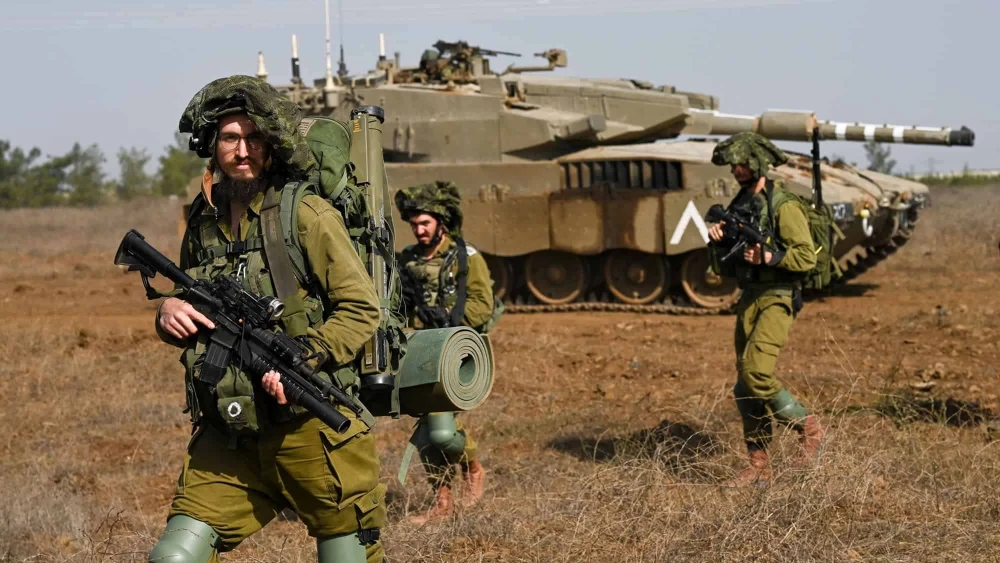

The intense multi-front war has thrust the issue of the Israel Defense Forces’ personnel requirements into sharp national focus.
On March 25, IDF Chief of Staff Lt. Gen. Eyal Zamir warned the government that reservists are under intolerable strain, stating, “I am raising 10 red flags,” according to a report by Channel 13. Zamir estimated that the IDF is short of some 15,000 soldiers, of whom 8,000 would be combat soldiers.
According to former senior military commanders, the strain on personnel is the result of multiple factors, which ultra-Orthodox recruitment can help absolve, potentially creating two divisions worth of soldiers, but which extend beyond that issue in scope.
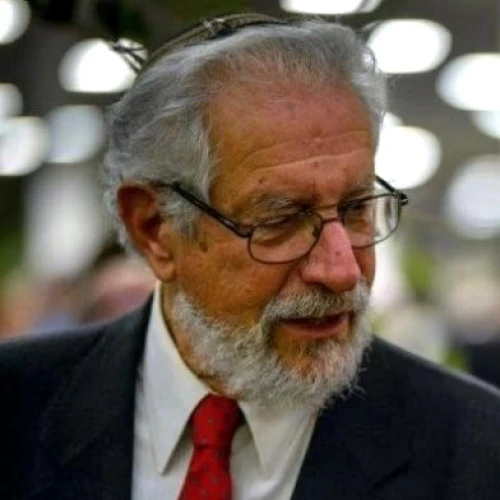
Maj. Gen. (res.) Uzi Dayan, a former IDF deputy chief of staff and ex-head of the IDF Planning Directorate, challenged the narrative that the initial failures of Oct. 7, 2023, were driven by a lack of manpower.
Speaking to JNS, Dayan said that the regular conscripted army, which is responsible for the critical first 24 hours of any conflict, has actually been expanding annually due to larger draft cycles. “The question is what they do with these forces, what their state of alert is, what their operational readiness is,” he said.
The personnel shortage, Dayan argued, is primarily felt in the continuous security operations and area defense operation, which heavily rely on reservists. This shortfall is the result of long-term strategic calculation by successive military and political leaderships. “There was indeed a decline that was mainly a concept of several generations ..., the concept was that so many reserve units are not needed, and that it is possible to manage [in this way] in a situation where you fight in two arenas,” Dayan detailed. This doctrine assumed the IDF could defend on one front while decisively winning in another, then shift forces accordingly to the first front.
However, this concept failed to account for the evolution of the regional threat landscape, specifically the rise of Iran’s “ring of fire,” which includes heavily armed terror proxies across Lebanon, Gaza, Yemen and Iraq. Dayan said that the primary failure was not merely conceptual, but deeply psychological. Strategies focused on deterrence rather than decisive victory.
This view is echoed by Col. (res.) Hanan Shai, a research fellow at the Misgav Institute for National Security and Zionist Strategy, and a former member of the 2006 Second Lebanon War inquiry.
Shai traced the current predicament back to a fundamental shift in IDF doctrine. “The problem was created as a result of the State of Israel essentially abandoning its national defense concept, which said that since it cannot manage long wars, and it also has no depth to absorb attacks, it will remove threats in their infancy beyond the fence in short, decisive wars within enemy territory,” he explained.
According to Shai, at the end of the previous century, the IDF transitioned into an “army of deterrence.” This shift meant the military chose to leave enemy formations intact across the border, relying on retaliatory strikes to alter the enemy’s willingness to fight, rather than their physical capacity to do so. This approach proved catastrophic as Hamas and Hezbollah developed substantial maneuvering ground forces capable of launching surprise invasions.
Swift, decisive wars
The abandonment of the doctrine of swift, decisive wars directly exacerbated the personnel crisis, according to Shai. “You cannot defend a thin border that was organized against terrorists,” he said.
The current situation, characterized by a prolonged war reliant on reservists, is the direct consequence of failing to achieve rapid military victories, Shai said. “He [the chief of staff] should first start with what he needs to do, shorten the wars,” Shai stated regarding Zamir’s comments on shortages. “If he shortens the wars, then there won’t be such a big manpower problem.”
To address the immediate numerical shortfalls, Dayan proposed several adjustments to the existing force structure. The most urgent measure, he argued, is extending the mandatory service length for regular conscripts. He calculated that extending regular service is far more efficient and economically viable than continually mobilizing reservists. “A regular [conscripted] soldier replaces about 11 reservists a year,” Dayan assessed, noting that regular soldiers do not require extensive pre-deployment training and administrative overhead.
Furthermore, Dayan advocated for aggressively identifying and re-assigning personnel whose current roles are obsolete or inefficient. He points to naval personnel, specifically those who served on missile boats. “It is interesting to check how many combat missile boat veterans who were on missile boats do not serve in the reserves,” and since there are no reserve missile boats, these trained combatants are entirely underutilized.
Dayan also highlighted the potential of specific demographic groups, such as the graduates of the ultra-Orthodox Netzah Yehuda Battalion, previously known as Nahal Haredi. Initially underutilized in the reserves, the current crisis prompted the military to hastily organize them. “When the war started, and suddenly there was a shortage, they set up reserves from Netzah Yehuda graduates,” Dayan noted, resulting in the creation of several new battalions.
He also advocates expanding the “Shlav Bet” (Phase B) program, which allows older immigrants to undergo expedited training to serve in the reserves, a program that has often been restricted or closed in the past.
The most contentious aspect of the manpower debate remains the drafting of the ultra-Orthodox (Haredi) men. While recognizing the deep political and social complexities, Shai offers a radical structural proposal to integrate this demographic. Recognizing that the primary Haredi concern is cultural assimilation, Shai suggesting the establishment of a separate, parallel military organization exclusively for the Haredi population.
“To establish another army right next to the IDF. ... To establish their own army, with their own command,” he proposed. This force would operate under state law but maintain absolute cultural isolation, allowing recruits to serve without compromising their way of life. “The only thing needed from them is that they will be able to enter and manage combat in a sector, that’s the big picture,” Shai said.