Newsletter
Newsletter Support JNS

Arizona amends its anti-BDS law

The modified version would apply to state contractors with more than 10 employees and those that receive a contract that is at least $100,000.

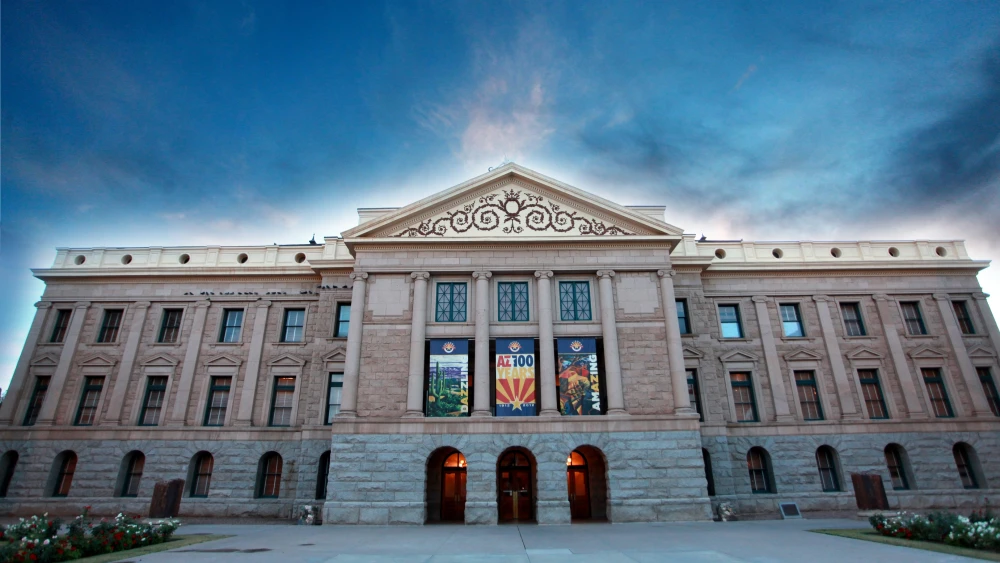
The Arizona Capitol Museum building in Phoenix. Credit: Gage Skidmore via Wikimedia Commons.

Arizona Gov. Doug Ducey signed a bill on Tuesday to amend the state’s law prohibiting public contractors from boycotting Israel.

The 2016 anti-BDS bill was blocked by a federal court in September, citing a possible violation of the First Amendment. The modified version would apply to state contractors with more than 10 employees and those that receive a contract that is at least $100,000.

The new anti-BDS measure mirrors the one in Texas that passed last week.

The Israeli-American Coalition for Action, which worked with lawmakers to amend the law, praised the updated measure.

“In passing Arizona’s original law, and again with SB1167, the state’s legislature was perfectly clear in its intent, predicating passage on the recognition that commercial discrimination and boycotts of Israel are overwhelmingly anti-Semitic in nature and are not political,” said chairman Shawn Evenhaim. “That’s why these bills passed with such a high level of co-sponsorship and bi-partisan support.”

Describing the move as “unprecedented and highly controversial,” Israel’s Foreign Ministry said it ties “the hands of his successor” and degrades the U.N.’s “rules-based order.”
Foreign Minister Sa’ar hosted his Congolese counterpart in Jerusalem to sign two Memoranda of Understanding.
“All of the terrorists were transferred to the security forces for further investigation,” authorities added.
The incident joins a series of similar ones in recent months, posing a danger to the safety of IDF troops, according to the military.
“Our goal is to safeguard our security while also expanding the circle of peace around us,” he added.
The find will be housed in an archaeology, art and innovation wing of the Tower of David Museum slated to open in late 2028.