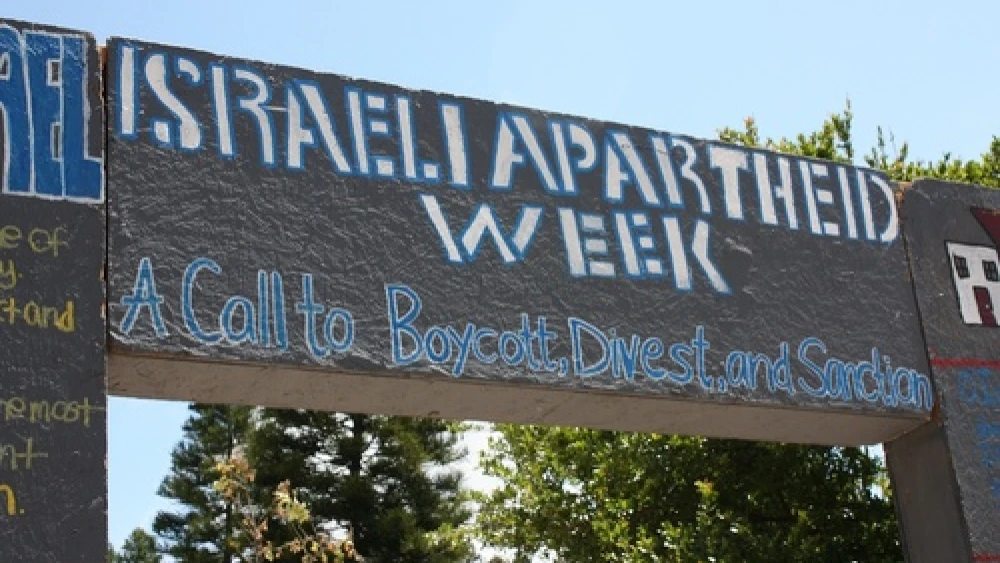
Anti-Israel activity on college campuses in the United States increased during the 2018-19 academic year, according to an Israel on Campus Coalition report that shows there was a record number of anti-Israel disruptions at pro-Israel campus events.
During the academic year, campuses on the East Coast experienced more anti-Israel events than any other region, including an increase in anti-Israel activity at Ivy League schools such as Columbia University, Brown University and Cornell University.
Harvard University experienced a rise in anti-Israel events over the past two academic years.
Overall, 28 BDS and other anti-Israel campaigns were run on college campuses—an increase of a few more over the 2017-18 academic year and a decrease of 16 over the 2014-15 academic year.
“As the BDS movement has become more established over time, anti-Israel tactics have become increasingly hostile as Israel’s detractors double down on efforts to make campuses inhospitable to Jews and Zionists,” according to the report.
The 2018-19 academic year consisted of the highest recorded number of anti-Israel interruptions at pro-Israel events at 23, an increase of five from the previous academic year.
“While the prior academic year saw a surge in pro-Israel cooperation and coordination, professional collaboration among anti-Israel activists also reflected an increase in shared challenges across campus and community spaces,” stated the report. “As anti-Israel organizations bolstered ties with campus activists, intensifying Israel-related anti-Semitism, pro-Israel students and community members faced common threats of discrimination and delegitimization.”
ICC executive Jacob Baime said in the report that despite the rise in anti-Semitic and anti-Israel sentiment in higher education, “demonstrating the impact of pro-Israel outreach, student governments and campus administrators are rejecting divisive BDS initiatives and expressing public support for Israel and pro-Israel students. On dozens of campuses, American and Israeli academic institutions are increasing cooperation, forging new partnerships while deepening existing ties.”