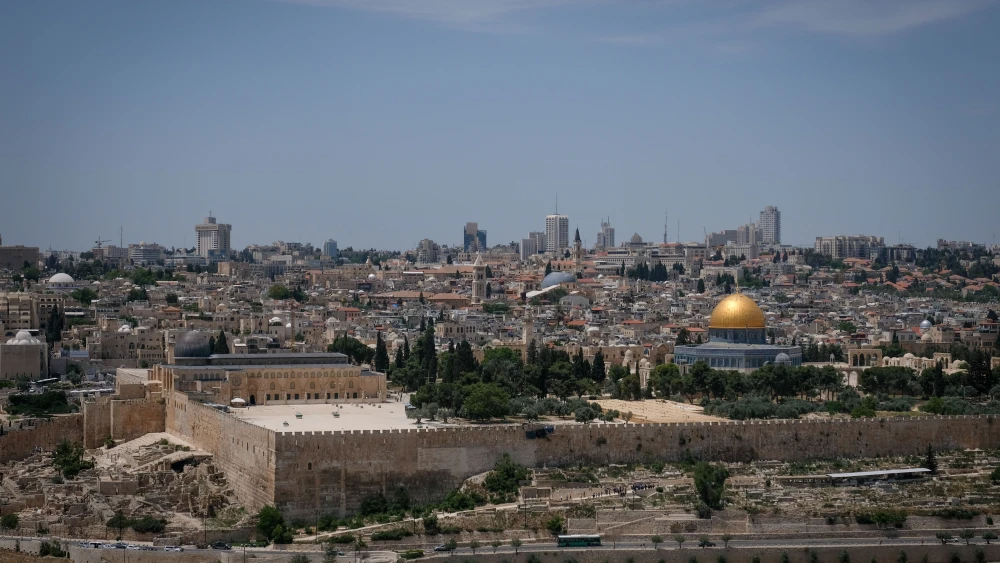
Archaeologists have discovered an 11th-century moat just outside Jerusalem’s Old City walls—the first hard evidence of a fabled Crusader siege against the city 920 years ago. Attested to in several historical documents, many scholars nonetheless believed the siege was a myth.
The groundbreaking find was made as part of the Mount Zion Archaeological Project, a joint international effort led by professor Shimon Gibson and professor James Tabor of the University of North Carolina in Charlotte in cooperation with Rafi Lewis of Ashkelon Academic College. The excavation site is part of the Jerusalem Walls National Park, where archaeologists have previously found a first-century Jewish mansion and a rare gold coin stamped with the face Roman Emperor Nero.
The five-week battle for Jerusalem between Crusader armies and the Fatimid Caliphate that controlled the region in 1099 C.E. came to a head in July 15 of that year, with Raymond IV, Count of Toulouse, one of the leaders of the First Crusade, attacking the city from the south while another Christian force erected a tower to breach the city walls from the north.
Raymond of Aguilers, who wrote a contemporary account of the battle, described a moat dug by the Muslim defenders to thwart attackers to the south. According to his chronicles, the count promised golden dinars to all Crusaders who would help fill the ditch so he could build a stable siege tower against the wall.
“Anyone who ever dealt with the Crusade in Jerusalem knows this story. ... It’s a very saucy bit of story,” said Mount Zion team co-director Lewis according to GeekWire. “But nobody ever found the ditch, so people said maybe [the story was] made up.”
Gibson said the realization they had uncovered the ditch began to set in when he noticed that the dirt layers were not sloping away from the city wall, but rather towards it, in a manner consistent with a ditch or moat which had been filled in.
According to the account by Raymond of Aguilers, the siege ultimately succeeded, but the tower was burnt down. When the northern force conquered the city, Crusaders spent a week slaughtering Muslim and Jewish residents of the city.
Over five years, the team mapped and dated the layers and artifacts, revealing a 13-foot-deep, 56-foot-wide moat. A blackened layer found atop the moat is believed to be evidence of the 1153 civil war between Crusader King Baldwin III of Jerusalem and his mother, Queen Melisende.
In a house discovered adjacent to the site archaeologists also found arrowheads, two cross pendants of the type typically worn by Crusaders, and a 3-inch piece of gold jewelry with pearls, jade and glass, consistent with Fatimid Muslim style.