Newsletter
Newsletter Support JNS
Yaakov Lappin

Yaakov Lappin

Yaakov Lappin is an Israel-based military affairs correspondent and analyst. He is the in-house analyst at the Miryam Institute; a research associate at the Alma Research and Education Center; and a research associate at the Begin-Sadat Center for Strategic Studies at Bar-Ilan University. He is a frequent guest commentator on international television news networks, including Sky News and i24 News. Lappin is the author of Virtual Caliphate: Exposing the Islamist State on the Internet. Follow him at: www.patreon.com/yaakovlappin.

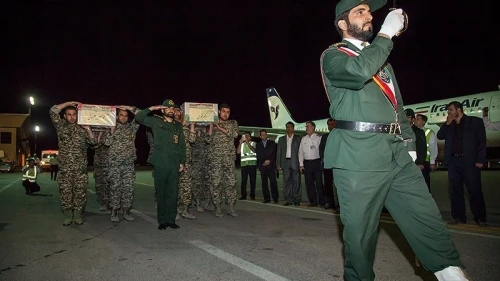
Israel’s shadow war in Syria is based on the strategic objective of convincing the Islamic Republic that its investment there is going to waste. Iran has so far chosen to weather the strikes and shift tactics without abandoning its Syria project.
“Jerusalem should not upset the applecart with regards to Ankara, and it should preserve the possibility of returning relations to their previous state of a strong military alliance,” said Ofer Israeli, an expert on foreign-policy at the Herzliya Interdisciplinary Center.
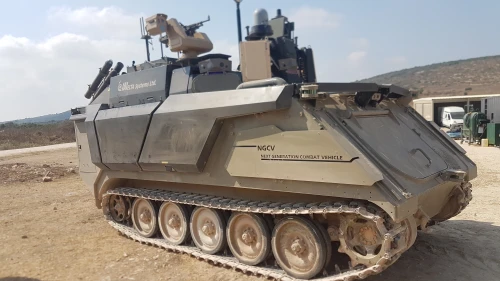
The Carmel future armored vehicle will drive itself, autonomously select and prioritize targets, and control its own unmanned ground vehicles.
Despite U.S. sanctions cracking down on its economy, Iran isn’t giving up its hegemonic aspirations, and is now focused on using Iraq for its purposes.
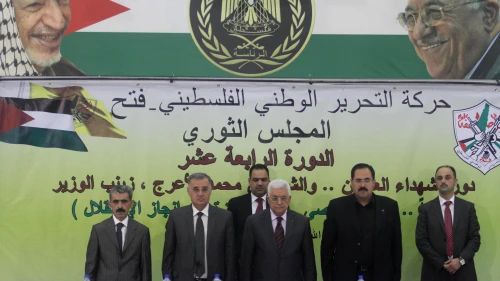
“Mahmoud Abbas’s predecessor, Yasser Arafat, operated in a similar manner, appointing several deputies and preventing any of them from amassing too much power, even encouraging occasional rivalries between them,” said Professor Boaz Ganor, founder and executive director of the International Institute for Counter-Terrorism in Herzliya.
“Lt. A”, a 24-year-old transport aircraft navigator, describes his unlikely journey to receiving his wings.
Gazan terror organizations are looking into armed drones and sea-based commando cells, while concentrating fire at Israel’s Iron Dome defense system to overwhelm it.
IAI-Elta is offering its radar to the U.S. Army’s Patriot system; Rafael is marketing its advanced SPICE guidance kits to the U.S. military.
The envisioned pipeline would take natural-gas reserves from Israeli and Cypriot waters, and carry them into Greece and beyond.
Instead of 255 alert areas, Israel has now been divided into 1,700 areas—meaning that the disruption caused by projectile alerts will be more localized, preventing fear, angst and an unnecessary run to a bomb shelter.
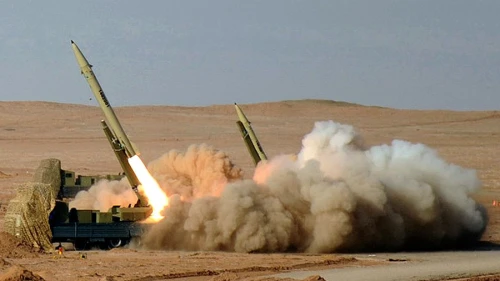
The strikes indicate that Iran and its Lebanese proxy, Hezbollah, were involved in a major new weapons’ development or smuggling project, possibly aimed at giving Hezbollah new precision missile capabilities with which it can target strategic Israeli sites.
Without a coordinated plan, the military’s build-up would resemble “an orchestra” in which “everyone does what they want, and the noise is terrible,” says Brig. Gen. (Res.) Dr. Sasson Hadad.