Newsletter
Newsletter Support JNS
Yaakov Lappin

Yaakov Lappin

Yaakov Lappin is an Israel-based military affairs correspondent and analyst. He is the in-house analyst at the Miryam Institute; a research associate at the Alma Research and Education Center; and a research associate at the Begin-Sadat Center for Strategic Studies at Bar-Ilan University. He is a frequent guest commentator on international television news networks, including Sky News and i24 News. Lappin is the author of Virtual Caliphate: Exposing the Islamist State on the Internet. Follow him at: www.patreon.com/yaakovlappin.

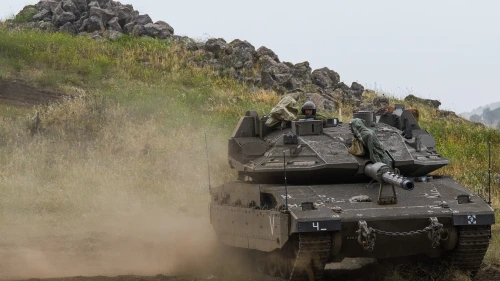
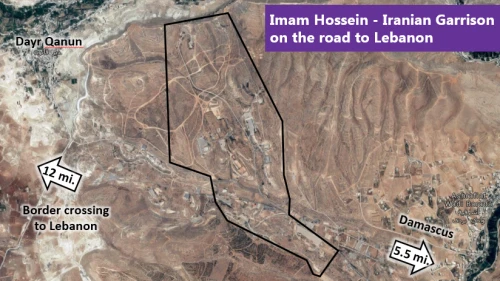
Iran tried to force Israel to accept its presence in Syria, and the effort failed. It ended up losing more than 50 military targets, and Israel’s message to Tehran—to exit Syria immediately—received a powerful boost.
It’s risky, to be sure, but optimism lingers. “An arrangement will discernably minimize our control of Palestinians [and] decrease hostility, and suitable security arrangements can be made,” Yoram Cohen told participants at the Annual Herzliya Conference.
Providing an alternative view to PM Benjamin Netanyahu’s support for America’s withdrawal from the Iran nuclear deal, Maj.-Gen. (Res.) Amos Gilead says at the annual Herzliya Conference. “In Israel, we supported the cancellation of the deal, and everyone is satisfied. Why are we satisfied? What are the options?”
The secretive and sensitive Unit 9900, which specializes in visual intelligence and plays an essential role in the activities of the Israel Defense Forces, has received some 100 autistic volunteer soldiers so far.
Iran is continuing to try and build up its attack capabilities in Syria, and testing Jerusalem’s determination to stop it.
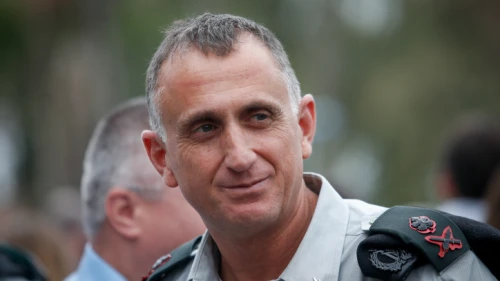
Maj. Gen. Tamir Heiman is taking the helm at a critical moment in Israel’s low-profile campaign to disrupt the force buildup of its enemies as part of a campaign dubbed “the War Between the Wars.”
Nevertheless, the nations and parties in the midst of possible escalation have nothing to gain from an all-out war.
A public show (not a showing off) of force on Israel’s Independence Day . . . in the air, on the seas and at ground level.
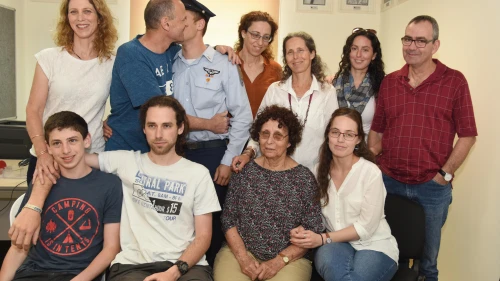
Recalling Ohad Shadmi, a pilot and squadron commander, whose family made unequivocal decisions to protect the Jewish state in the skies and on the ground.
Participants in joint military-civilian tours of War of Independence sites learned about acts of bravery that turned events around and left a mark on Israeli history.
While the purpose was to target Syria’s chemical-weapons capabilities, in actuality, the strikes are more of an indication of Russia’s successful ability to cause Western powers to limit their action.
An industry of intelligence-gatherers and air-force operations works behind the scenes, nipping threats in the bud and doing so without sparking major wars in the process.