Europe

“It just doesn’t stop; it’s shock after shock,” said Maurice Dahan, the regional head of the Israelite Central Consistory of France, after the cemetery attack. “I don’t know how long we are going to carry on.”

The incident was part of the latest string of increasing anti-Semitic attacks in France.

Anti-Semitic acts in Germany increased by 10 percent overall last year, though violent acts increased by a staggering 60 percent.

MP Luciana Berger, who is Jewish, called the party “institutionally anti-Semitic.”

The Israeli Foreign Ministry said that the leaders of the Czech Republic, Slovakia and Hungary would instead hold separate meeting with Israeli leaders.

For the first time since the 1991 Madrid Conference, Arab nations sat down with Israel and announced cooperation on fighting Iran, making clear that the Israeli Palestinian conflict does not need to be resolved first as a condition for normalization.

The Community Security Trust, a London-based nonprofit dedicated to protecting Jews in the United Kingdom, announced a record high of 1,652 anti-Semitic incidents in 2018—an increase of 16 percent over the previous year.
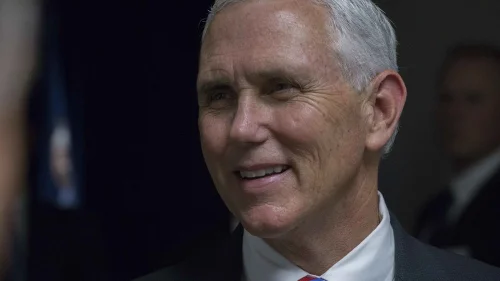
“It is an ill-advised step that will only strengthen Iran, weaken the E.U., and create still more distance between Europe and the United States,” said U.S. Vice President Mike Pence.
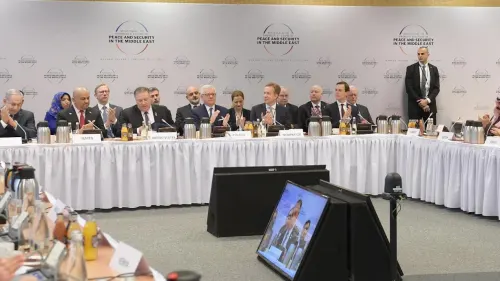
Israeli Prime Minister Benjamin Netanyahu noted that “an Israeli prime minister and the foreign ministers of leading Arab countries stood together and spoke with unusual force, clarity and unity against the common threat of the Iranian regime.”
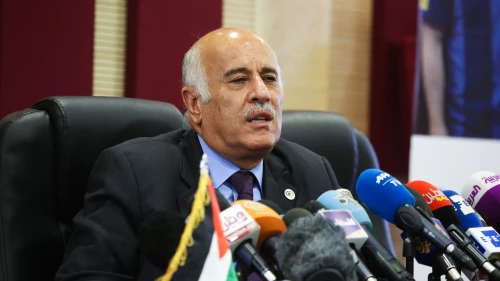
“They are welcoming [Israeli Prime Minister Benjamin] Netanyahu in Warsaw in order to remind us of the Holocaust and Auschwitz,” said senior Fatah official Jibril Rajoub.
An estimated 1.1 million people were killed at Auschwitz, including as many as 960,000 Jews.

The summit, which the Palestinians were not invited to, is seeking, among numerous issues, to combat the Iranian threat and solve the Israeli-Palestinian conflict.