


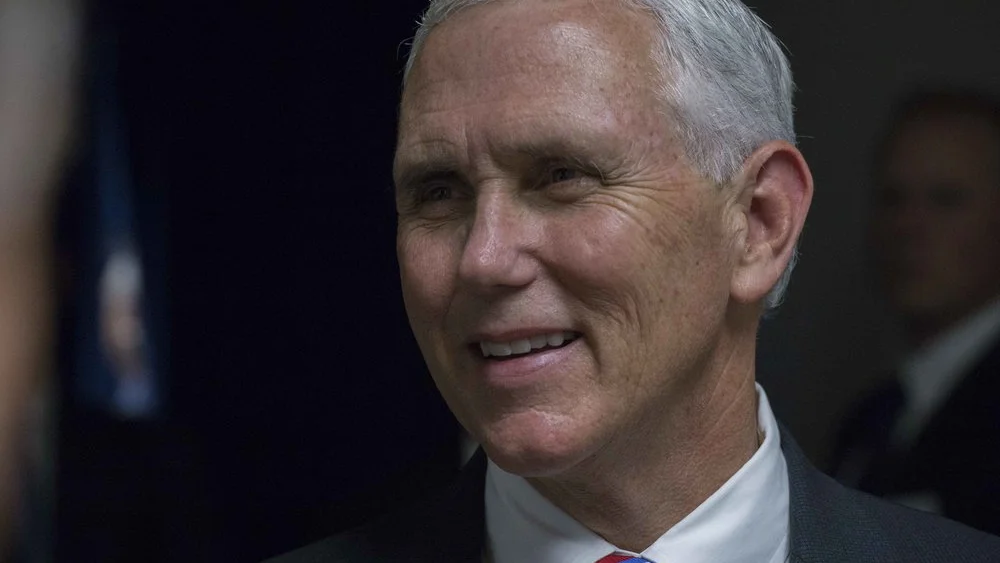
U.S. Vice President Mike Pence on Thursday urged European Union nations to withdraw from the 2015 Iran nuclear accord and stop attempting to circumvent U.S. sanctions.
Speaking at the Mideast summit in Warsaw, Pence said that Iran is “greatest threat to peace and security in the Middle East,” and that it wants a “new Holocaust” through its regional goals as the world’s leading state sponsor of terror.
He accused Germany, France and Britain for setting up a mechanism to facilitate business with “Iran’s murderous revolutionary regime” that would circumvent U.S. sanctions, called the Instrument in Support of Trade Exchanges, or INSTEX, that would allow European nations to still do transactions with the Islamic Republic, despite U.S. financial penalties on the regime.
“It is an ill-advised step that will only strengthen Iran, weaken the E.U., and create still more distance between Europe and the United States,” said Pence.
“As Iran’s economy continues to plummet, as the people of Iran take to the streets, freedom-loving nations must stand together and hold the Iranian regime accountable for the evil and violence it has inflicted on its people, on the region and the wider world,” he added.
Pence also said that U.S. sanctions “will get tougher still” until the Islamic Republic “changes its dangerous and destabilizing behavior.”
Along with addressing the Iranian threat, issues that were addressed at the summit, called “The Ministerial Conference to Promote a Future of Peace and Security in the Middle East,” included, but were not limited to, solving the Israeli-Palestinian conflict and ending the crisis in Yemen.


