Newsletter
Newsletter Support JNS

Hamas threatens more kidnappings if prisoner deal not reached with Israel

“A prisoner-exchange deal has a known price. Israel knows that. Either we will come to a respectable deal, or we will go to the other option. Our arm is long,” said Hamas leader Ismail Haniyeh.

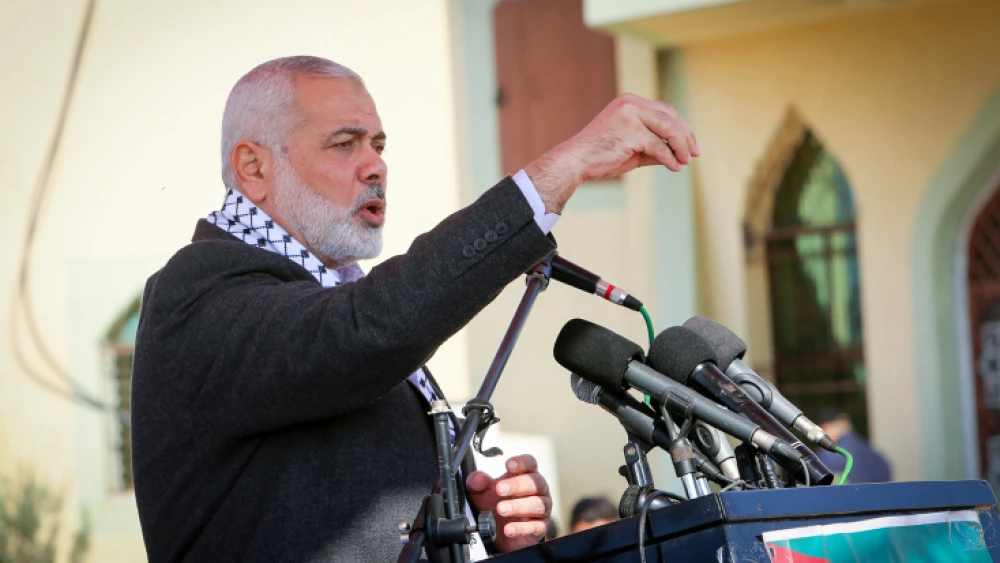
Hamas chief Ismail Haniyeh attends a groundbreaking ceremony for the Rafah Medical Complex in the southern Gaza Strip, Nov. 23, 2019. Photo by Abed Rahim Khatib/Flash90.

Hamas leader Ismail Haniyeh threatened to kidnap more Israelis on Wednesday if a prisoner deal is not reached.

“A prisoner-exchange deal has a known price. Israel knows that. Either we will come to a respectable deal, or we will go to the other option, which is increasing our loot. Our arm is long,” Haniyeh said according to a Ynet report.

Despite recent reports about the possibility of such an arrangement between Israel and Hamas, the reality is that there is no single, strong Hamas leader in the Gaza Strip who is free to make such decisions, wrote Pinhas Inbari, a veteran Arab-affairs correspondent and analyst for the Jerusalem Center for Public Affairs.

Reports about a pending prisoner-exchange deal between Israel and Hamas are gaining momentum.

According to Palestinian sources in Ramallah, however, major obstacles remain in the way, particularly within Hamas, said Inbari.

“I know Seattle’s Jewish community is acutely aware of a rise in antisemitism and is feeling anxiety and concern,” Katie Wilson told JNS, in the mayor’s first apparent comment on rising Jew-hatred since she assumed office in January.
“World Vision is severely compromised by ties to Islamist terrorists and a radical left wing climate change agenda,” the senior Trump administration official told JNS. “Why is he funding them?”
Washington must “compensate” the Islamic Republic for war damages, said Tehran’s Supreme National Security Council.
The anti-drone technology provided by Rafael Advanced Defense Systems is “military grade” and unsuitable for civilian use, the court ruled.