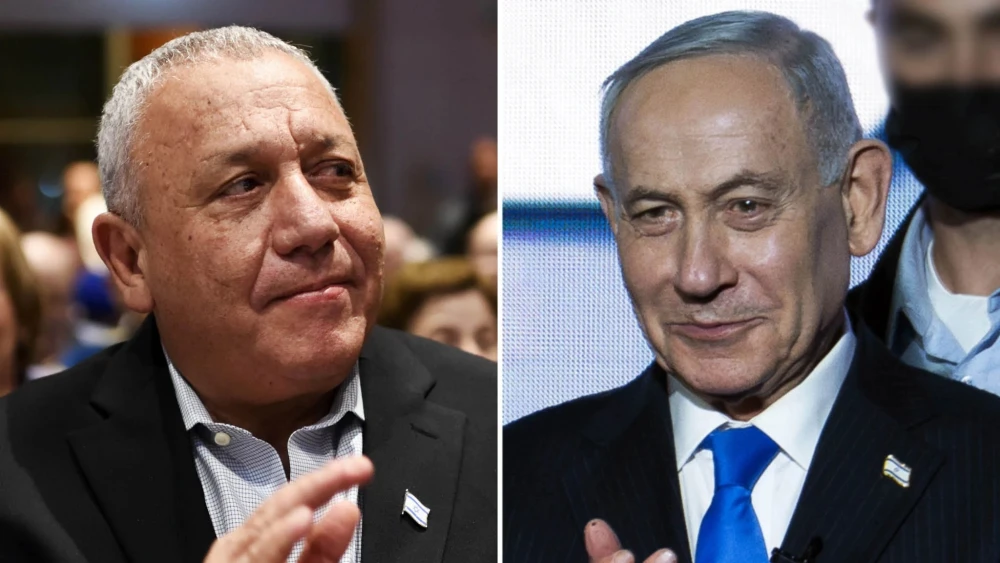
After more than four hours of talks Sunday at the Dan Accadia Hotel in Herzliya, negotiating teams representing Israeli Prime Minister Benjamin Netanyahu’s Likud party and Gadi Eisenkot’s Yashar party failed to reach agreement on key issues but agreed to resume negotiations.
“Positions on several substantive issues were presented at the meeting and discussed in detail,” a brief joint statement from the parties read in Hebrew. “A follow-up meeting will be held.” The statement, posted to Telegram by Israeli media, did not specify when the next meeting would take place.
Israeli media reported that the parties discussed establishing a commission of inquiry into the Hamas-led massacre on Oct. 7, 2023, though they remained divided over who would appoint the commission’s members. The parties also discussed judicial reform and Haredi military conscription, with Likud reportedly insisting that Haredi representatives participate in the latter discussions.
Yashar, meanwhile, demanded that Itamar Ben Gvir’s Otzma Yehudit party be excluded from any potential unity government, but Likud has refused to commit, according to Israeli media reports.
The central dispute over the premiership, including a potential rotation agreement, was not discussed, according to Israeli media reports.
Netanyahu has repeatedly called for a national unity government with him at the helm, something that multiple leaders in Eisenkot’s bloc have outright rejected. Yair Golan, leader of Israel’s Democrats party, said Sunday that his party would oppose the move because “the leaders of the Change Bloc were elected to replace Netanyahu, not to sit with him.”
Netanyahu has also disparaged the opposition bloc for entertaining the possibility of inviting Arab parties into the coalition, claiming that Ra’am and the Joint List “support terrorism and reject the existence of the Jewish state.”
Likud’s conditions for establishing a unity government also called for a commitment not to form a government with parties it describes as supporting terrorism and opposing the country’s Jewish character.
Other initial conditions included an end to political boycotts of Netanyahu, rejection of Palestinian statehood and a broad agreement with Haredi leaders on the status of Torah students, according to conditions the party published Saturday.
Eisenkot, who received the mandate to form a government from Israeli President Isaac Herzog earlier this month, has until Dec. 6 to assemble a coalition. Herzog has the ability to grant a two-week extension of the deadline is not met.