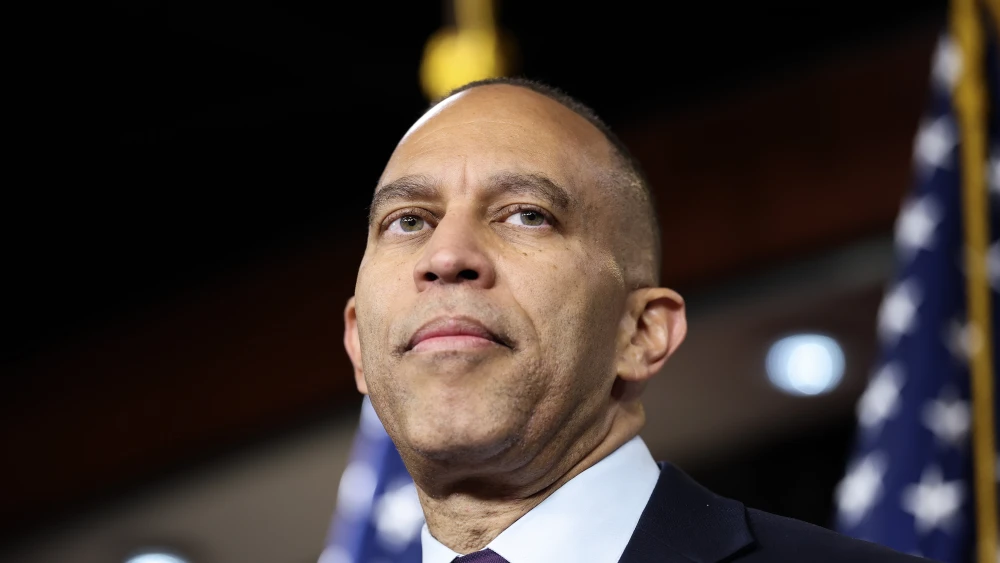
House Democratic leader Hakeem Jeffries said in an interview published on Saturday that he supports advancing the West Bank Settler Violence Protection and Prevention Act within the new Congress’s first 100 days.
Jeffries, whom House Democrats overwhelmingly nominated for speaker on Wednesday, said in the The New York Times interview that he expected strong support for the legislation within his caucus.
“I believe we should move on it early in the new Congress as a meaningful step forward to changing the conditions on the ground and hopefully meaningfully improving the relationship between Israel and the Palestinian people in the march toward two states for two people,” he said.
The New York Democrat called for “dramatic change” in Judea and Samaria and Gaza, describing “the death, the destruction, the devastation” experienced by Palestinian civilians in Gaza as “unacceptable, unsustainable and un-American.” He called for “a surge in humanitarian assistance,” including medical assistance, housing support, clean water and clean air.
Asked whether he supported the Block the Bombs or Stop the Settlements bills, or would bring them to a vote, Jeffries declined to commit.
“No, I haven’t articulated a position one way or the other,” he said, adding that Democrats would discuss their next steps as a caucus. Pressed about calls to halt U.S. weapons exports to Israel, he said, “That’s a conversation that we are going to have but that the current construct is not sustainable, and it needs to change.”
Jeffries said his goal was “a safe and secure Israel living side by side in peace and prosperity as a Jewish and democratic state with an independent Palestinian state.” He called for renewing Washington’s commitment to a two-state solution “with everything we’ve got.”
Asked repeatedly whether he would accept AIPAC support, Jeffries said the organization was no longer making direct contributions to candidates, without directly addressing whether he would accept donations from its members.
Jeffries said his re-election campaign had raised about $40 million over the past two election cycles, with an average contribution of $29, and that the money was raised and spent to help elect Democrats nationwide.
He also pushed back against suggestions that campaign contributions determine lawmakers’ positions. “When I talk to members of Congress, they’re voting their districts, regardless of who they may be raising money from,” he said.