
In the last week, the question of what to do about Iran has again become inescapable. In both the United States and Israel, speculation about whether military action against Tehran would resume has risen to a fever pitch. Talk about continuing the war was amplified by reports of Iranian chemical threats against the United States; worries about whether the cyberattacks from the Islamist regime were behind breakdowns of infrastructure networks that were dismissed by the Trump administration; and actual renewed missile attacks against Arab states.
After the joint U.S.-Israel military campaign to ensure that Tehran’s nuclear and missile programs were definitively destroyed that began on Feb. 28 was ended by a ceasefire in April and then a failed attempt at diplomacy in June, the debate about whether—in President Donald Trump’s words—either country would “finish the job” has hung in the balance.
Yet a decision may be determined more by political considerations than the question of whether the national interests of both the United States and Israel dictate action.
Mixed signals
Trump has been sending mixed signals for months. He’s been making characteristically tough threats against the Islamist regime for its unwillingness to give up its nuclear and missile programs, as well as its support for international terrorism. He’s also talked about wanting a deal with Iran’s leaders but then dismissed the idea. That’s because, as they showed with the foolish Memorandum of Understanding negotiated by Vice President JD Vance in June, the Iranians have demonstrated that they have no interest in keeping their word or coming to any agreement with Washington, except on terms that ensure their ability to continue to threaten the region and the West.
Just as importantly, some in the administration—most notably, Secretary of State Marco Rubio—have said resumed military action is unnecessary because the U.S. campaign to isolate and strangle the Iranian economy is succeeding. That’s a point seconded by commentary from the Foundation for Defense of Democracies, which says that the effective sanctions and the blockade of Iranian ports should be augmented by further action to cut off land routes into and out of the country.
Yet the very success of this nonmilitary campaign is what is driving Iran to actions, including redoubling its efforts to rebuild its missile arsenal, which may make it irresponsible for the United States or Israel to simply sit back and hope for Tehran to wave the white flag in order to save its economy from collapse.
As the Islamist regime has shown over the years, its tolerance for economic pain may be unlimited. The government, now controlled more by the Islamic Revolutionary Guard Corps rather than the ayatollahs, is willing to endure impoverishment and immiseration to continue to engage in brutal repression against dissidents. Indeed, it may be prepared to do just about anything other than to give up the weapons programs and terror that allow it to continue the jihad it has been waging against the West since it took power in the revolution of 1979.
In other words, if Washington and Jerusalem are to address a deadly threat to their security and that of the West, resumption of the war may be forced upon them. Still, there are powerful reasons why neither country may be able to act.
Narrow window of opportunity
The Trump administration knows that whether or not the unpopularity of the war against Iran—or rather, the hike in gas prices caused by the conflict—contributed to the Republican Party’s shellacking in the midterm elections earlier this month, the outcome may have narrowed the window during which the president can act without Congress seeking to stop him.
Foreign policy remains the preserve of the executive branch. The options for the new Democratic majorities that will take over both the U.S. House of Representatives and the Senate in January to stop a renewed war against Iran will be limited. But if Trump is going to resume military action, it’s more likely to happen during the next five weeks than after Jan. 1.
Though Trump has effectively fired Vance from any role in policy on Iran, he’s also wary of reigniting a debate among Republicans about foreign policy in which neo-isolationists like the vice president and his fans among the groyper wing of the GOP would resume griping about the war.
The president has always been an Iran hawk because his definition of “America First” has involved confronting and defeating America’s Islamist enemies. And, unlike Vance, he rightly regards Israel as a strategic asset and the only U.S. ally willing to fight alongside America. You don’t have to be a “neocon”—a term that some on the far right, like Vance’s close friend, former Fox News host Tucker Carlson, use interchangeably with “Jew”—to know that this is a fact.
The link between opposition to the war on Iran and antisemitism, as well as the false charge that the conflict is an Israeli plot, rests behind much of the commentary on the issue.
But that doesn’t mean Trump won’t act if he thinks he must, even if it means causing a political firestorm from left-wing Democrats and their right-wing allies.
Eisenkot’s political maneuvers
Israeli Prime Minister Benjamin Netanyahu’s problems are different but amount to a similar balancing act between strategic and political considerations.
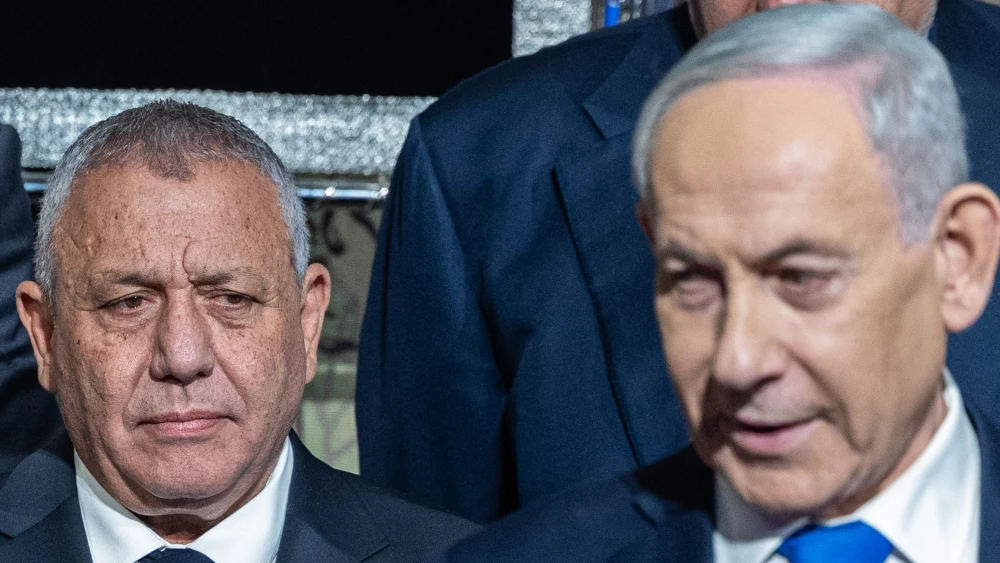
After last month’s inconclusive Knesset election, Netanyahu remains the caretaker prime minister, even as former Israel Defense Forces chief of staff—retired Gen. Gadi Eisenkot—attempts to form a new government. Eisenkot has repeatedly warned against Israel undertaking any military action against Iran during this holding period, even shockingly advising the IDF not to obey Netanyahu’s orders.
Nevertheless, the timing of efforts to deal with Iran cannot be determined by Israel’s slow-motion process by which coalition negotiations can drag on for weeks or even months.
Moreover, though Eisenkot’s patriotism shouldn’t be questioned, in his quest to topple Netanyahu by any means necessary, he may well form a minority government enabled by the votes or non-votes of anti-Zionist Arab parties that oppose Israel’s existence. In doing so, he’s setting up a situation in which a future government’s freedom of action to defend the Jewish state could be limited by its dependence on Arab nationalists, Communist and Muslim Brotherhood supporters, and their allies. Suffice it to say that the leaders of the Joint Arab List and Ra’am parties are unlikely to back any military effort to defend Israel against Iran and its terrorist proxies.
The possibility that Israel’s window of opportunity to strike Iran could be closed by this situation may be motivating Netanyahu to urge Trump not to wait any longer before resuming the war. Reports concerning intelligence about Iran’s rebuilding of its missile and drone arsenal via domestic production or aid they are receiving from China and Russia may be just as much a reason for the urgency that some in Jerusalem now feel about the necessity to act.
The “anybody-but-Bibi” coalition that got fewer votes than Netanyahu’s Likud and religious parties allies (thanks to the recommendations of the Arabs and one of the Haredi parties) allowed Israeli President Isaac Herzog to give Eisenkot the first crack at forming a government. It’s likely that the vast majority of his supporters among the Zionist parties would back a resumed war against Iran, as do the overwhelming majority of the Israeli people.
That said, the hostility to Netanyahu and the suspicion his opponents have that everything he does is about politics limits his ability to act.
Netanyahu’s iron will
That’s in spite of the fact that they said the same thing during the war against Hamas, Hezbollah and Iran after Oct. 7, 2023. Yet it was only Netanyahu’s iron-willed resolution to continue the fight that enabled Israel to achieve the incredible strategic victories it won over its foes while his political opponents, including Eisenkot, advocated giving up, when doing so would have meant ensuring that all of those enemies would be incomparably stronger than they are today.
In both countries, there’s no doubt that the politically safe thing to do is not to resume the battle and hope that Trump’s economic campaign succeeds. That is certainly true for Trump, who will have his hands full battling Democratic opponents wanting to impeach him and other administration figures, as well as to prevent him from finishing the job against Iran, rather than working with him.
And it’s also true for Netanyahu, whose best political strategy may now be to sit back and watch Eisenkot fail to form a government and eventually hope for a better result in new elections. The same may apply even if Eisenkot succeeds in becoming prime minister, as Netanyahu could benefit from the fact that whatever coalition the former general cobbles together would be weak and likely short-lived.
Yet no one in either country should mistake short-term political calculations for wisdom. In the long run, smart maneuvers based on downplaying or ignoring vital national interests are bad politics, even if they help politicians evade traps that may seem to benefit their opponents.
Allowing Iran to reconstitute its weapons arsenal while it continues to mount cyberattacks against American targets, even if it wasn’t responsible for last week’s series of system failures, or to rebuild its international terror network will be disastrous for the United States. The same applies to whether it is allowed to begin the process of rebuilding a nuclear threat, even if Israeli and American attacks have set it back by many years.
Under its Islamist regime, Iran will always be at war with the West, moderate Arab regimes and Israel. That is its raison d’être, despite the fact that many people in those countries would prefer to ignore that and continue business as usual. And the existential threat to Israel is a given, even if some Israelis are more focused on their war against Netanyahu or other domestic opponents.
What both Washington and Jerusalem need now are not politicians smart enough to avoid criticism about foreign wars but statesmen willing to risk their careers to protect their nation’s vital interests. That—and not the politics of the conflict with Iran—is what ought to dictate policy.
Jonathan S. Tobin is editor-in-chief of JNS. Follow him: @jonathans_tobin.