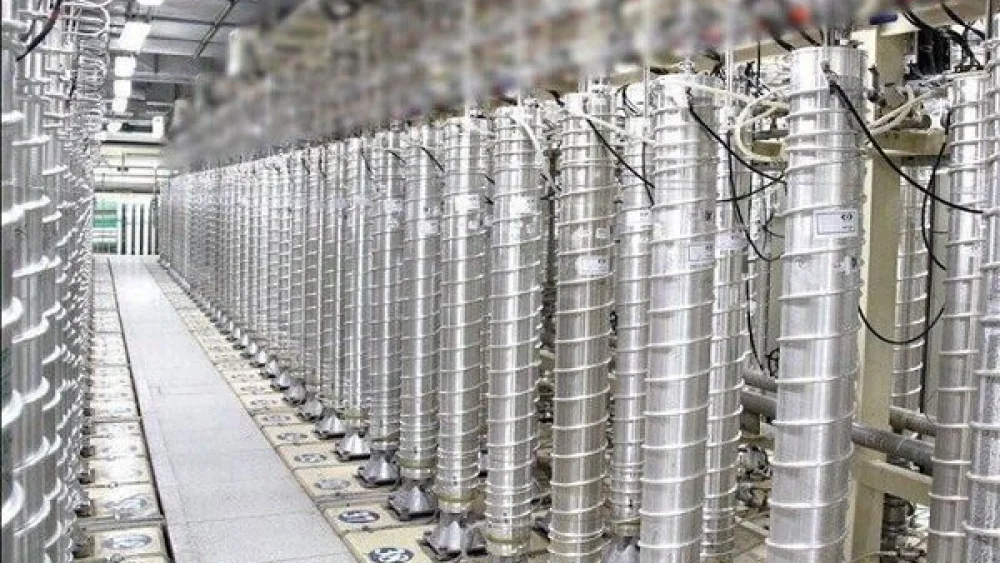
Iran is rapidly expanding its ability to enrich uranium using advanced centrifuges at its underground enrichment hall in Natanz.
Tehran intends to go further with its uranium enrichment program than it had previously planned, according to a confidential report from the United Nations’ International Atomic Energy Agency seen by Reuters.
As indirect talks between Iran and the United States to revive the 2015 Iran nuclear deal have stalled, the Islamic Republic has begun to deploy a growing number of advanced centrifuges that the accord forbids it from using to produce enriched uranium, said Reuters, citing the classified report from the UN’s nuclear watchdog.
The machines are far more efficient than the first-generation IR-1 centrifuges, which the deal allows Iran to use to increase its stockpile of enriched uranium. Iran has been constructing the advanced centrifuges, especially at two underground sites in Natanz and Fordow, which are designed to withstand aerial bombardment, according to the report.
The IAEA has recently warned its member-states that the third of three cascades, or clusters, of advanced IR-6 centrifuges recently installed at the underground Fuel Enrichment Plant (FEP) at Natanz has come online. According to diplomats, the IR-6 is Iran’s most advanced centrifuge.
Iran completed the installation of seven cascades that were either incomplete or in an early stage of installation on Aug. 31, the report added. The last inspection visit mentioned in the IAEA’s most recent quarterly report occurred on Sept. 6.
The seven cascades, each made up of one IR-4 centrifuge and six IR-2m machines, were fully installed but not yet enriching uranium, according to the report.