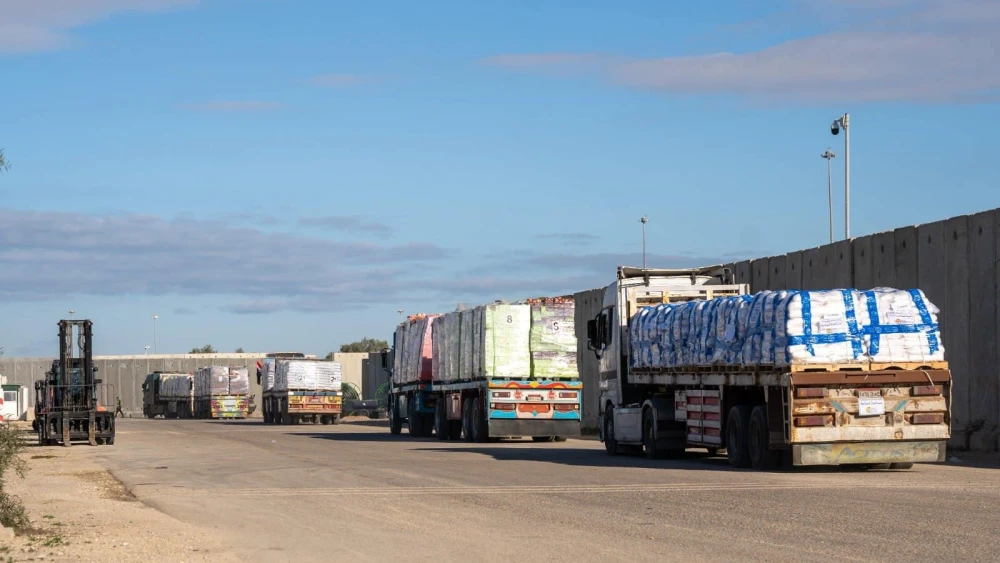
As international pressure mounts to allow more supplies to enter Gaza, Israel appears to be changing course and may let aid groups operating in the enclave remain in charge of non-food assistance while leaving food distribution to a newly established United States-backed group, according to a letter obtained by the Associated Press.
The development indicates Jerusalem may be walking back from its plans to tightly control all aid to Gaza and prevent aid agencies long established in the territory from delivering it in the same way they have done in the past, the news agency reported on Saturday.
In the past, Hamas has stolen much of the aid.
Israel blocked food, fuel, medicine and other supplies from entering Gaza for almost three months. It resumed aid on May 20, when five United Nations trucks carrying supplies, including baby food, entered the Gaza Strip via the Kerem Shalom Crossing, the Israeli military confirmed.
The letter, dated May 22, is from Jake Wood, the head of the Israel-approved Gaza Humanitarian Foundation or GHF, and is addressed to COGAT, the Israeli Defense Ministry unit in charge of transferring aid to the territory.
It said that Israel and GHF had agreed to allow non-food humanitarian aid—from medical supplies to hygiene items and shelter materials—to be handled and distributed under an existing system, which is led by the United Nations. U.N. agencies have so far provided the bulk of the aid for Gaza.
The foundation would still maintain control over food distribution, but there would be a period of overlap with aid groups, the letter said.
“GHF acknowledges that we do not possess the technical capacity or field infrastructure to manage such distributions independently, and we fully support the leadership of these established actors in this domain,” it said.
The letter says aid agencies will continue providing food assistance in parallel to the GHF until at least eight distribution sites are up and running in Gaza. The foundation confirmed the authenticity of the letter but did not comment on it further.
The GHF, which is not yet up and working in Gaza, is run by security contractors, ex-military officers and humanitarian aid officials, and has the backing of Israel. It is unclear who is funding the GHF, which claims to have more than $100 million in commitments from a foreign government donor but has not named the donor, AP reported.
COGAT and the Prime Minister’s Office in Jerusalem declined to comment on the letter.
COGAT announced on May 23 that “following the recommendation of IDF officials, and in accordance with the directive of the political echelon, 83 trucks belonging to the UN and the international community carrying humanitarian aid including flour, food, medical equipment and pharmaceutical drugs were transferred today via the Kerem Shalom Crossing into the Gaza Strip.”
It said that on May 22, 107 trucks carrying humanitarian aid provided by the U.N. and the international community, including flour, food, medical equipment and pharmaceutical drugs, were transferred via the Kerem Shalom Crossing into the Strip.
COGAT added that all supplies were transferred only after a thorough security inspection by personnel from the Ministry of Defense’s Crossing Points Authority.
“The IDF will continue to facilitate humanitarian assistance in the Gaza Strip while making every effort to ensure that the aid does not reach the hands of the Hamas terrorist organization,” it said.