Newsletter
Newsletter Support JNS

‘Dry Bones’ cartoonist Yaakov Kirschen dies at 87

Considered “a national treasure of the Jewish people,” the Brooklyn, N.Y.-born artist won the 2014 Nefesh B’Nefesh Bonei Zion Prize for his contribution to Israeli culture.

Yaakov Kirschen Dry Bones
Yaakov Kirschen at the drawing board. Photo by Sali Ariel.

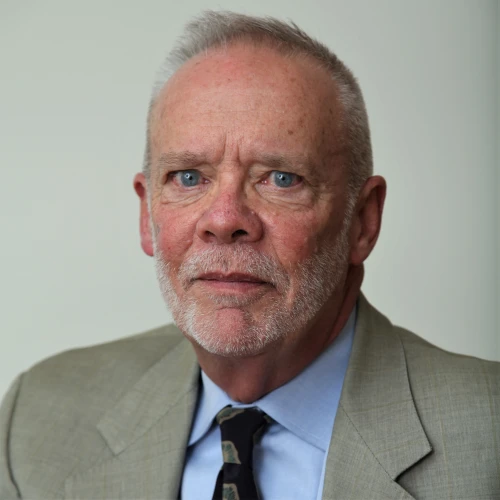
Israeli cartoonist Yaakov Kirschen, whose iconic daily cartoons were published by JNS for the last several years, died on April 14 at Meir Medical Center in Kfar Saba after a lengthy illness. He was 87 years old.

After making aliyah in 1971, the Brooklyn, N.Y.-born Jerry Kirschen began sketching his trademark “Dry Bones” cartoons in 1973. The cartoon was internationally syndicated and published in The Jerusalem Post for 50 years, after which Kirschen moved to JNS.

“It was our privilege to run his cartoon,” said JNS CEO Alex Traiman.

The name of Kirschen’s comic strip referred to the biblical vision of the “Valley of Dry Bones,” with its main character named Shuldig, which is Yiddish for guilty or blame.

“The cartoon started on January 1, 1973,” he once explained. “I named it ‘Dry Bones,’ thinking that everyone would immediately connect the name with the ‘dry bones’ that will rise again, from the book of Ezekiel. But the question that I get asked most often is, ‘Where does the name ‘Dry Bones’ come from?’ So what I thought would be most obvious was not obvious at all.”

A member of the U.S. National Cartoonists Society and the Israeli Cartoonists Society, Kirschen won several awards and was considered a “national treasure of the Jewish people.” Among the prizes he received were the Israeli Museum of Caricature and Comics’ Golden Pencil Award and the 2014 Nefesh B’Nefesh Bonei Zion Prize for his contribution to Israeli culture and the arts.

“A proud Zionist, he had an impeccable ability to capture the mood of a nation in just one drawing,” said media personality Arsen Ostrovsky.

Kirschen is survived by his artist wife, Sali Ariel; three daughters; eight grandchildren; and three great-grandchildren. He was laid to rest on April 16 at the Pardes Haim Cemetery in Kfar Saba.
Steve Linde, the JNS features editor, is a former editor-in-chief of The Jerusalem Post and The Jerusalem Report and a former head of Kol Yisrael English News. Born in Harare, Zimbabwe, he grew up in Durban, South Africa, and has degrees in sociology and journalism. He made aliyah in 1988, served in IDF Artillery and lives in Jerusalem.
Turkey has historically denied genocide allegations against the Ottoman Empire’s conduct during World War I.
In a draft report delivered to the U.S. president, the commission also called for improved religious accommodations for U.S. service members.
Salah Salem Sarsour, accused of concealing Israeli military court convictions on immigration forms, argued his detention was part of a Trump admin effort to target the pro-Palestinian movement.
CENTCOM stated that the strikes targeted missile, drone and radar facilities after the Islamic Republic attacked a cargo ship in the Strait of Hormuz, calling the assault a violation of the ceasefire.
Now that the primaries are over, “we hope that everyone will come together and be united,” Christine Quinn, chair of the executive committee of the New York State Democratic Party, told JNS.
An Iranian official warned on Friday that the safety of ships passing through the Strait of Hormuz without Iran’s permission “cannot be guaranteed.”
Benny Gantz, JNS editor-in-chief Jonathan S. Tobin, Gilad Erdan, Mosab Hassan Yousef, Nissim Black and leading voices in security, diplomacy, media, law and Jewish communal affairs headline the summit’s third day in Jerusalem.