Iran-backed terror groups are plotting to turn the Islamic holy month of Ramadan into the “second phase of Oct. 7" and set the Middle East on fire, Israeli Defense Minister Yoav Gallant charged on Tuesday.
“The main goal of Hamas is to take Ramadan, with an emphasis on the Temple Mount and Jerusalem, and turn it into the second phase of their plan that began on Oct. 7. This is the main goal of Hamas, and it is being amplified by Iran and Hezbollah,” Gallant said following a situational assessment at the Israel Defense Forces’ Central Command, which is responsible for Judea and Samaria.
“We cannot let them have this, and that means we need to do everything we can to bring calm to the area,” Gallant continued.
“We must not give Hamas what it failed to achieve during the beginning of the war and [let it achieve] ‘unity of the battlefields,’” he added, in reference to the terror group’s attempts to spark a multi-front war.
לאחר הערכת מצב עם הרמטכ״ל וראש השב״כ, הגעתי היום לפיקוד המרכז לשיח עם מפקד הפיקוד, מפקד אוגדת איו״ש ומפקדי החטיבות המרחביות. pic.twitter.com/zoc1CIKfMH
— יואב גלנט - Yoav Gallant (@yoavgallant) February 27, 2024
Judea and Samaria saw a dramatic rise in terrorist attacks in 2023 compared to the previous year, with shootings reaching their highest level since the Second Intifada of 2000-05, IDF data shows.
The violence has continued to escalate in the months since Hamas started a war with its murderous rampage across the northwestern Negev on Oct. 7. A total of 41 Israeli airstrikes have been carried out in Judea and Samaria since the start of the war, as well as more than 200 counterterror operations in Palestinian towns.
Since Oct. 7, around 3,250 Palestinian terror suspects have been captured in arrest raids throughout Judea, Samaria and the Jordan Valley, including more than 1,350 who are associated with Hamas, the IDF said Tuesday.
In the Gaza Strip, IDF forces are closing in on the position of Hamas terror leader Yahya Sinwar, The Washington Post reported on Tuesday, citing current and former Israeli officials familiar with the intelligence.
Sinwar is believed to be hiding in the vast tunnel systems underneath the southern Gaza city of Khan Yunis, where he has reportedly surrounded himself with a large number of living hostages, the officials confirmed.
“It’s not about locating him, it’s about doing something” without risking the lives of the hostages, one senior Israeli official told the newspaper.
However, the operation in Gaza cannot conclude until Sinwar is captured, killed, or removed from power, officials stressed to The Washington Post.
Speaking at a World Zionist Organization conference in Jerusalem on Tuesday, IDF Spokesperson Rear Adm. Daniel Hagari vowed to get to Sinwar “dead or alive.”
“We are fighting Hamas from the north to the south,” Hagari told attendees. “We will finish in Rafah; it is an important city—there are hostages in Rafah,” Hagari was quoted as saying. The city of Rafah is the last Hamas stronghold in Gaza and could be the key to ending the war.

Last month, the army launched a massive assault in Khan Yunis, killing scores of terrorist operatives, including company commanders. During previous operations in Khan Yunis that took place in the first weeks of the Gaza offensive, more than 300 tunnels had already been located.
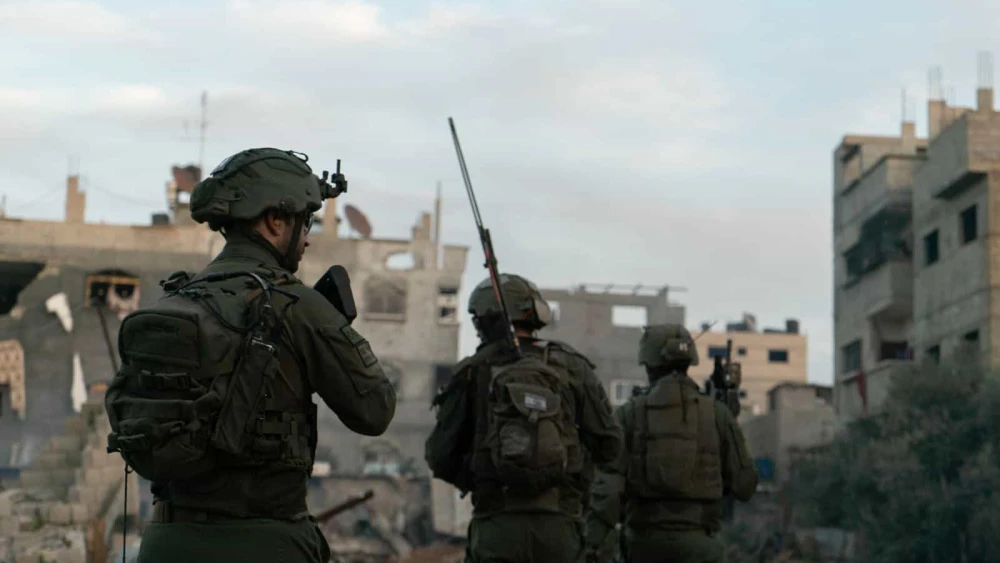
Soldiers of the Maglan and Egoz commando units continue to operate in the western part of the city, the IDF revealed on Tuesday, noting that troops are killing and arresting “dozens” of Hamas terrorists every day.
In Khan Yunis, troops found loaded weapons under beds in civilian homes, as well as rockets, grenades, launchers, explosive belts, shoulder missiles and other terror equipment.
Hamas started the war on Oct. 7 when it led a mass attack on the northwestern Negev, killing 1,200 people, wounding thousands more and kidnapping 253. Israel conducted an aerial campaign against Hamas in the weeks after the massacre, which paved the way for the ground offensive that started on Oct. 27.