Two Grad rockets fired from the Gaza Strip exploded near Beersheba in southern Israel on Sunday morning, prompting Mayor Ruvik Danilovich to close down the city’s schools for the day.
Fire continued overnight Sunday with more than 15 rockets exploding in Israeli communities bordering the Gaza Strip, with no injuries or damage to structures reported. Hamas’s military wing, Izzedine al-Qassam, took responsibility for the attacks.
Despite the renewed hostilities, schools in Beersheba were open on Monday and operated as usual.
In an interview with Army Radio, Danilovich said, “In recent years, missiles were fired directly into educational facilities while they were empty. We are not protected, and as long as there is not full protection within the education system, I will put human life first.”
Earlier Sunday morning, Israeli military forces along the Gaza Strip border fence were targeted with a salvo of mortar shells. The Israel Defense Forces identified a launch squad preparing to fire rockets into Israel and the Israel Air Force carried out a subsequent airstrike.
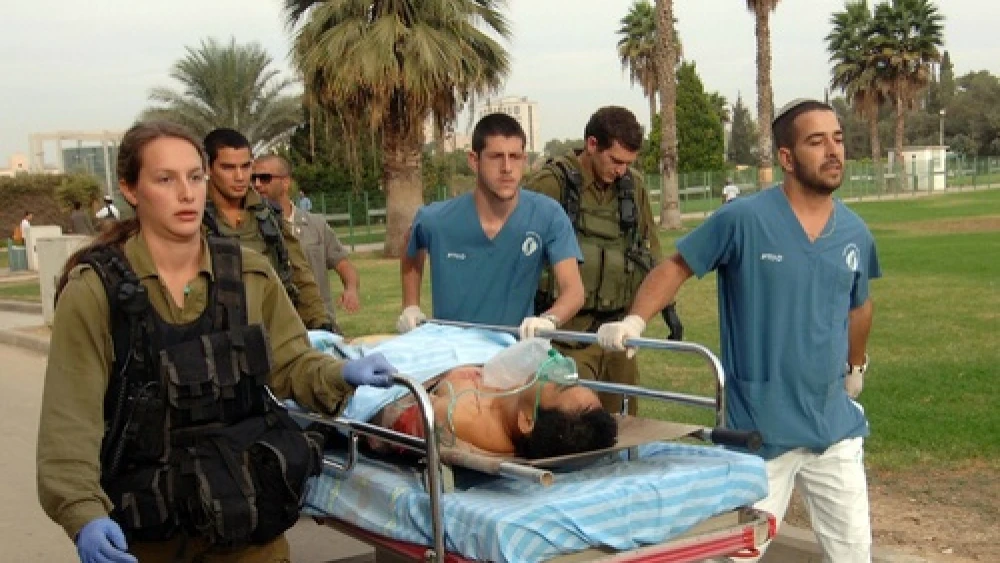
Gaza health official Ashraf al-Kidra said the early morning strike killed one Palestinian man and wounded another. The identity of the dead Palestinian was not immediately known.
The IDF Spokesperson’s Unit later said forces had launched another air attack that also targeted a rocket launching site. No casualties were reported in the second airstrike.
Meanwhile, during the weekly cabinet meeting, Prime Minister Benjamin Netanyahu announced that the government was ready to provide rocket protection and fortifications for a wider radius from the strip.
“Today we are about to make the decision to complete the fortification of the southern communities,” he told his cabinet. “Until now, residents of the south living up to 4.5 kilometers (2.8 miles) from the Gaza Strip have been given full protection. The addition of the Iron Dome missile defense system provides protection to communities 7 kilometers (4.3 miles) from the strip and beyond. We are left with the area in between.”
“In this middle area, schools have been fortified, and today we are deciding to fully fortify all structures, homes [and] residences, and this will obviously grant security to residents of the south,” Netanyahu said. “We are doing this because the vulnerability to short-range rocket attacks is far greater in the area surrounding the Gaza Strip than anywhere else. I think that this will answer the needs and hopes the residents of the south have had for a long time.”
The prime minister’s proposal was unanimously approved by the cabinet. The cost of completing fortifications in the region comes to about 270 million shekels ($70 million). The cabinet authorized Netanyahu to come up with a source of funding within 30 days without having to bring the subject to a second vote.
Subsequently, The Jewish Agency for Israel announced Sunday that it will provide 40 million shekels for the fortification of houses between 4.5 to 7km from the Gaza Strip.
The funds will be used to build protected rooms in residential housing in the area. The protected spaces will be built by the Jewish Agency’s subsidiary company, Amigour, which is responsible today for the building of 5,000 protected spaces in Sderot and other communities in the Gaza area.
In addition to the contribution from The Jewish Agency for Israel, the cabinet approved an additional allocation to be spread over three years for the building of protected spaces in the Gaza area.
Jewish and Israeli leaders attending the Jewish Agency’s Board of Governors in Tel Aviv were briefed on the decision. The Board of Governors meets three times a year to hold in depth strategic discussions about issues affecting the Jewish world.