
So you thought you knew the famous biblical story of Noah and the ark, right? Well, there is a little-known vignette most people don’t know about and is not in the story we usually tell our children.
Noah was responsible for feeding every animal: the elephants, giraffes, birds, snakes, monkeys, and, of course, the lions. Each had its own diet, needs and timetable. There were no refrigerators, no automated feeding systems and no animal-welfare department to call when things got out of hand.
Noah and his family had to do it all themselves.
Genesis 7:23 tells us how everything in the world was wiped out. “All existence on earth was blotted out—humans, cattle, creeping things and birds of the sky … only Noah and those with him in the ark survived.” In the Hebrew original, the words are ach Noach, “only” Noah (survived).
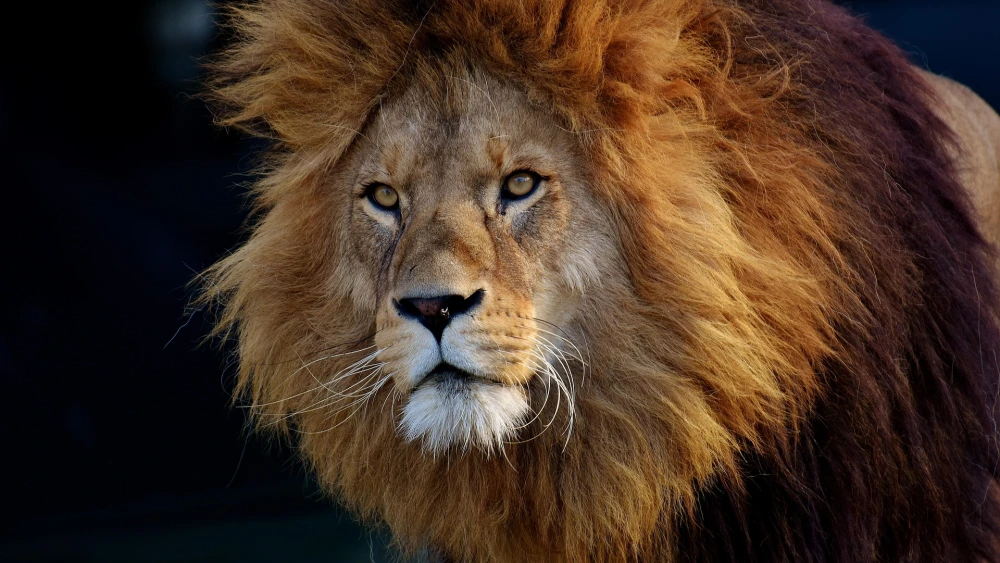
Rashi, quoting the Midrash, explains that the Hebrew word ach (“only”) is a limiting word, meaning that something was lacking. Noah was left somewhat diminished from all his huge workload. One opinion is that he was coughing and spitting blood from the ordeal. Others say that the lion once struck Noah because he was late in bringing him his food, leaving him injured and limping.
Think about it. Here was a man who had devoted himself to saving the world, doing a mitzvah of the highest order.
And what was his reward? A klop from the king of beasts!
You would think that if anyone deserved a little appreciation, it was Noah. But the lion was unsympathetic.
Biting the hand that feeds you?
The Lubavitcher Rebbe draws a powerful lesson that resonates today: What do you do when you are doing the right thing, for the right reasons, and life gives you a smack anyway?
It’s easy to speak about faith and dedication when everything is going well. It’s much harder when you are exhausted, unappreciated and nursing a wound.
There is the parent who sacrifices everything to give a child a Jewish education, only to see that child reject the values they were raised with.
There is the volunteer who gives up evenings and weekends to keep a communal institution up and running, only to be criticized by the very people who benefit from such work.
There is the person who tries to make peace in a family, only to end up with both sides blaming them.
And there is the person who quietly helps others, but when they themselves need help, nobody seems to notice.
Eventually, they question: Why bother?
I’ve seen people who dedicated decades of their lives to doing good for the community and, in the end, when they were mistreated, became disillusioned and even regretted all their good work. How sad!
That is when we must remember Noah.
He could have said, “Dear Lord, I built the ark, saved the animals, and worked day and night. And now the lion attacks me?! Do I deserve this? I’m finished!”
But he did not say that. He carried on doing his work faithfully, and in the end, rebuilt our world.
Responsibility must be stronger than our need for applause or even recognition.
The Rebbe’s message is not that life will always be fair, that good people will always be appreciated or that every kindness will be rewarded with gratitude. If appreciation is our only motivation, then we will inevitably be disappointed.
The deeper message is that our responsibility must be stronger than our need for applause or even recognition.
We do not do good to be thanked. We do not support our community only because everyone agrees with our decisions. We do these things because they are right, because we have a neshama and because we each have our own God-given responsibilities in this world.
Of course, there are times when we must speak up, set boundaries or ask for help. Dedication doesn’t mean accepting abuse or neglecting our own well-being. But there is a difference between addressing a problem and allowing it to destroy our purpose.
The lion may have hurt Noah, but it didn’t make him stop his work. Perhaps this is the significance of the word ach (“only”). The word can mean “but” or “nevertheless.” It introduces a difficulty, a qualification, a disappointment.
Life is full of ach moments.
I wanted to help, but I was hurt. I tried to do the right thing, but nobody appreciated it. I gave my best, but I failed.
The question is whether that “but” will end our story or strengthen our determination.
Yes, I was hurt, but I have a purpose. Yes, I was disappointed, but I can still do good.
That is not weakness. That is spiritual strength.
Noah’s work was not glamorous. He was doing the ordinary, repetitive, exhausting work of a zookeeper.
Much of the greatest work in Jewish life is exactly like that: communal workers serving their people, a parent preparing another Shabbat meal, a grandparent teaching a grandchild a bracha, a volunteer making another phone call or someone visiting the sick when nobody else has the time.
The world is sustained by people who keep showing up.
So, should you happen to get smacked by the lion of life, take a breath. Tend to the wound. Get the help you need. And then, return to the work that matters because your mission is bigger than the lion.
May God give us the courage to keep doing what is right, the wisdom to know when we need help and the strength not to let disappointment turn us into disappointed, bitter people.