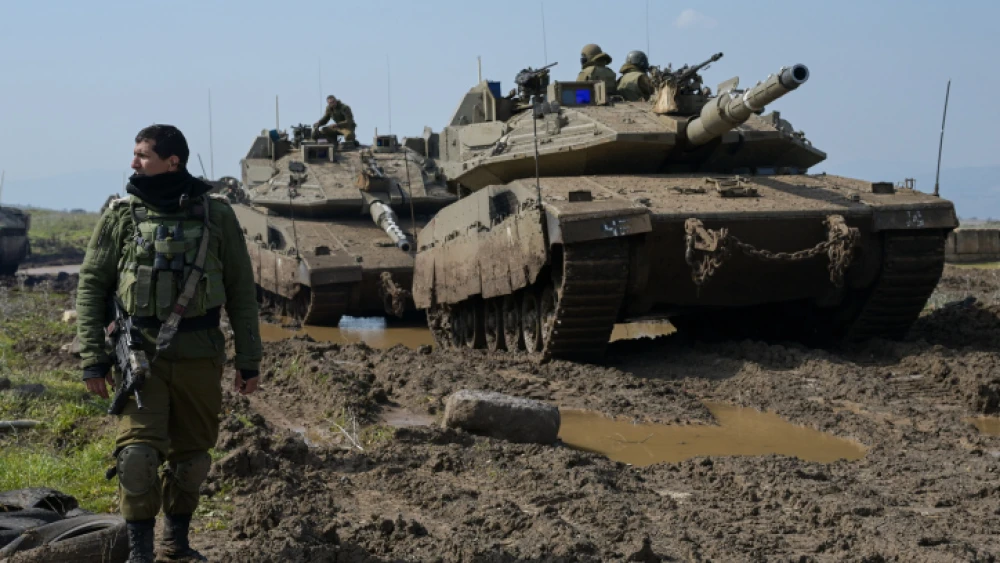
Israel Defense Forces tanks reportedly shelled a Syrian army post used by Iranian terrorist proxy Hezbollah early on Monday morning, in the second such incident in as many weeks.
According to Syrian media, the artillery strike targeted a military observation post located close to the village of Hader in the Quneitra Governorate.
Thereafter, the IDF dropped leaflets in the area warning Syrian soldiers against cooperating with Hezbollah.
The Israeli military did not comment on the development.
The IDF last week struck assets belonging to Hezbollah in the Syrian-held part of the Golan Heights.
And earlier this month, the IDF attacked targets in Syria in response to six rockets fired towards the Golan Heights. Among the targets were a military compound of the Fourth Division of the Syrian Armed Forces, military radar systems and artillery posts.
“The IDF sees the Syrian state as responsible for all activities occurring within its territory and will not allow any attempts to violate Israeli sovereignty,” the military said.
Israel regularly conducts airstrikes in Syria with a view to preventing Iran and its terror proxies, foremost among them Lebanon-based Hezbollah, from developing permanent military infrastructure with which to open a front against the Jewish state.