Newsletter
Newsletter Support JNS

Israel extends COVID-19 state of emergency until Jan. 3

The measure will take effect upon approval by the Knesset Constitution, Law and Justice Committee.

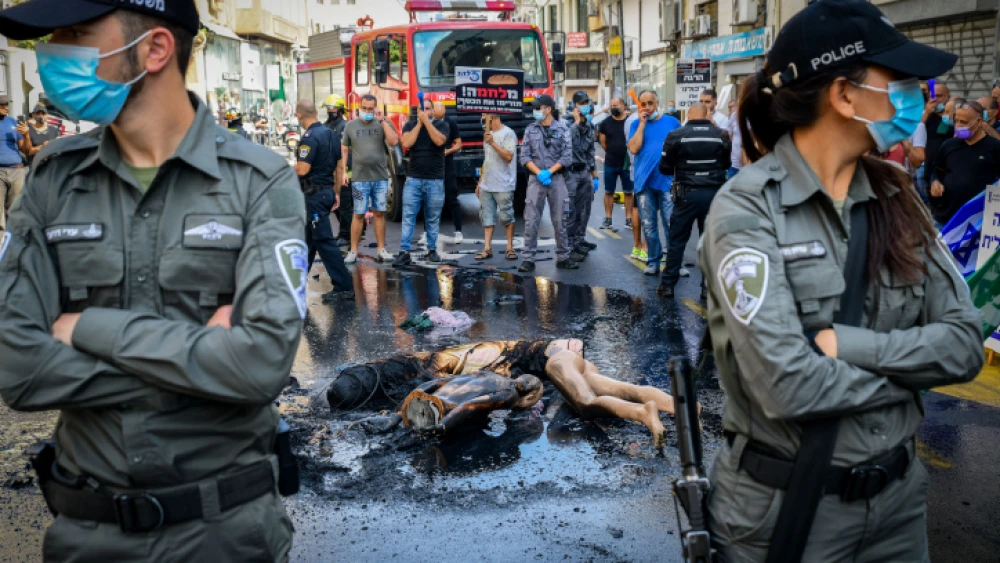
Israeli business owners protest against the COVID-19 emergency regulations in Tel Aviv on Oct. 29, 2020. Photo by Avshalom Sassoni/Flash90.

The Israeli Cabinet on Thursday approved the extension of the COVID-19-spurred state of emergency by 60 days, from Nov. 5 until Jan. 3, 2021.

The measure was approved via conference call and will take effect upon approval by the Knesset Constitution, Law and Justice Committee, according to a joint statement of the Israeli Health Ministry and Prime Minister’s Office.

The “Major Coronavirus Law,” passed on July 22 by a vote of 48-35, grants the government special powers for dealing with the pandemic. Under the law, the government can declare a state of emergency, allowing it to impose restrictions on the public to stem the spread of the novel coronavirus.

Until the law expires on June 30, 2021, the government may extend the state of emergency at 60-day intervals with the approval of the Constitution, Law and Justice Committee. The Knesset may annul the state of emergency, and the government must cancel it if the circumstances justifying it no longer exist.

“For Jewish families, this means the chance to give their children an education rooted in who they are, without being priced out,” stated Sydney Altfield, of the Orthodox Union.
In a wide-ranging political face-off, eight of nine panelists rejected Palestinian statehood, while the opposition split over its choice for PM.
“If Michigan Hillel wants to remain the center of Jewish life on campus, it cannot retreat from one of the central and challenging parts of being Jewish there,” Seth Mendel, of CAMERA, told JNS.
“There is no doubt in my mind that Israeli forces prosecuting the war in Gaza violated the law of armed conflict and international humanitarian law,” the Jewish Georgia Democrat said.