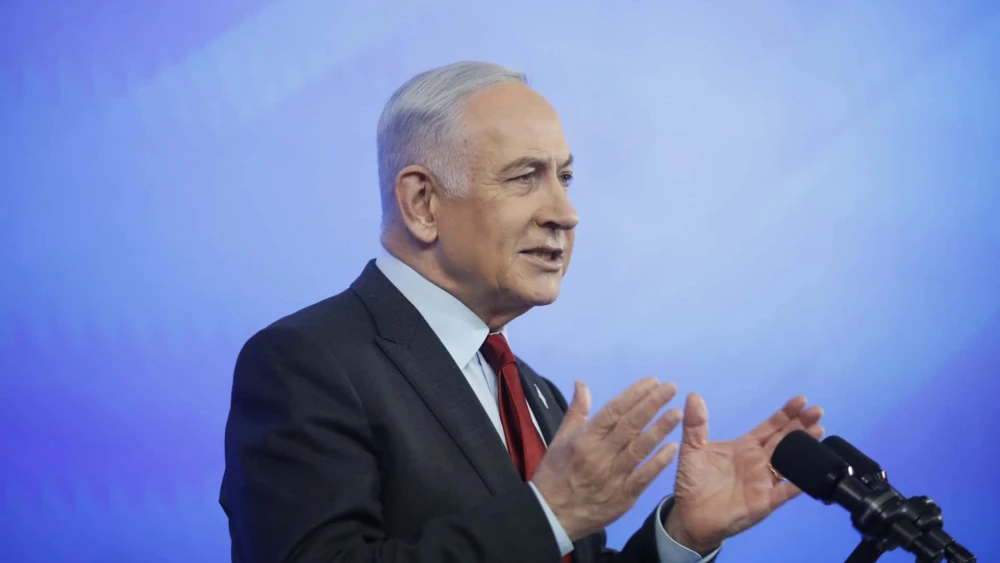
Israeli Prime Minister Benjamin Netanyahu on Sunday set out the country’s core demands for ending the war against Hamas in Gaza.
“The essential goal is, first of all, the elimination of Hamas. To achieve this goal, three things are needed,” Netanyahu told journalists ahead of the weekly Cabinet meeting at the Kirya military base in Tel Aviv.
“The first requirement is the collapse of Hamas’s battalions. To date, we have leveled 17 out of 24 battalions. Most of the remaining battalions are in the southern Gaza Strip and Rafah—we will also take care of those,” he said.
After the battalions are destroyed, the Israeli military will have to carry out clearance operations to prevent Hamas from rebuilding its terrorist army, “as our forces are doing with determination in very aggressive raids in the north and center of the Strip,” Netanyahu continued.
Finally, Netanyahu said, Israel will need to complete “the neutralization of the underground [tunnels], as our forces are systematically doing in Khan Yunis and in all parts of the Strip, and this requires more time.”
The Israel Defense Forces will not withdraw from Gaza before it achieves the goals of eliminating Hamas, returning all 136 hostages and ensuring that the coastal enclave never again constitutes a threat to the Jewish state, Netanyahu reiterated.
Netanyahu also called to replace the Palestinian refugee agency UNRWA with other aid organizations “not tainted by support for terrorism.”
In an interview published by The Wall Street Journal earlier on Sunday, Israeli National Security Minister Itamar Ben-Gvir leveled criticism at U.S. President Joe Biden, saying Donald Trump would have been better for Israel during the current war.
“Instead of giving us his full backing, Biden is busy with giving humanitarian aid and fuel [to Gaza], which goes to Hamas,” charged Ben-Gvir. “If Trump was in power, the U.S. conduct would be completely different.”
Ronen Bar, head of the Israeli Security Agency, or Shin Bet, has said Hamas diverts at least 60% of the aid entering the Strip for its own purposes, Channel 12 reported on Jan. 31. Nevertheless, Washington continues to pressure Israel to allow food, fuel and medicine into Gaza.
“I don’t need help navigating our relationship with the U.S. and the international community while standing firm on our national interests. Thank God, I’ve been doing this for several years,” Netanyahu said on Sunday, in an apparent swipe at his right-wing coalition partner.
“Israel is a sovereign state. We greatly appreciate the support we have received from the Biden administration since the outbreak of the war.... This does not mean that we do not have differences of opinion, but so far we have managed to overcome them with determined and weighed decisions,” he noted.
On Jan. 8, IDF Spokesperson Rear Adm. Daniel Hagari told The New York Times that Israel had shifted to a new and less intense phase of its war against Hamas, that would involve fewer ground troops and airstrikes.
The move followed repeated demands from Washington for Israel to lower the intensity of combat in the enclave.
Exactly one week later, Israeli Defense Minister Yoav Gallant called a press conference to signal the impending end to heavy combat in Gaza. “The intensive maneuvering phase in the north of the Gaza Strip has ended, and in the south, it will also end soon,” stated Gallant.