


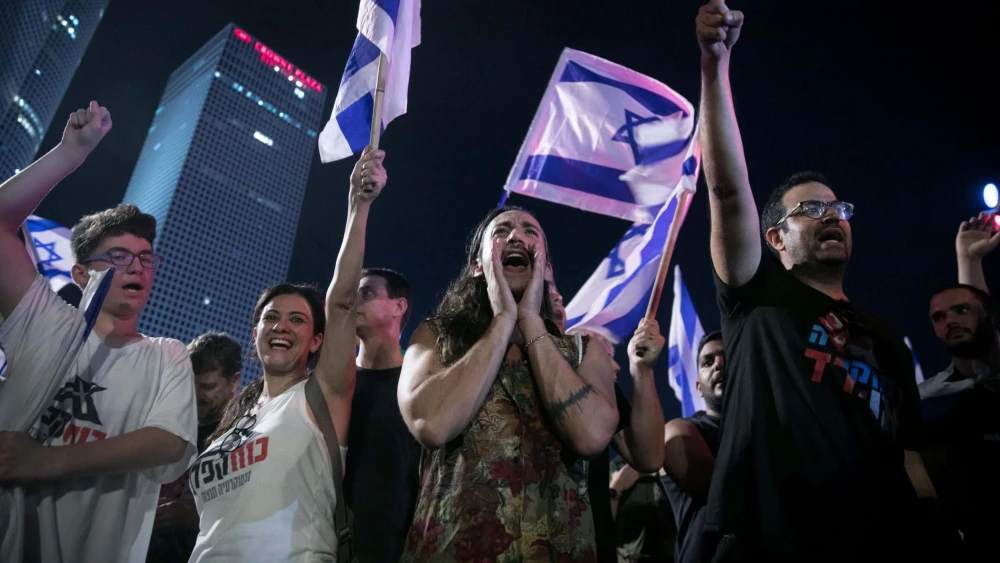

More than half (52%) of Israelis have unfavorable views of Israeli Prime Minister Benjamin Netanyahu, while 47% view the premier favorably, according to a Pew Research Center survey conducted between March 15 and April 24.
The survey was conducted amid widespread protests in Israel—both for and against judicial reform—but prior to the Knesset passing the first judicial reform bill in July.
Jews viewed Netanyahu favorably overall (57% to 41%; 36% very favorably), while Arabs tended to have unfavorable views of the prime minister (89% to 10%), per Pew data. Religious Jews overwhelmingly favored Netanyahu (93% to 6%; 60% very favorable), while secular Jews viewed him unfavorably (76% to 22%).
Pew also found that Israelis overwhelmingly perceive there to be conflicts between the political right and left (75%), Arab and Jewish Israelis (71%) and the religious and secular (61%). The data also suggested that young Israelis are likelier than older ones to perceive conflicts between different groups.
For example, 67% of those aged 18 to 29 and 55% of those over 50 think there are strong or very strong conflicts between the religious and non-religious—a difference of 12 percentage points.
JNS sought clarity from Pew about how telling these statistics are four to five months after the polling was conducted, given how quickly things move on the ground in Israel.
“The public opinion data collected during this timeframe was likely impacted by the events at the time, which continues to be a high-profile issue in Israel,” Moira Fagan, a research associate at the Pew Research Center, told JNS.
Pew posed the questions about religious, ethnic and ideological conflicts for the first time to Israelis this year, Fagan told JNS.
“We are not able to see if age differences are a pattern for these topics. We asked about conflicts between political parties in Israel in 2022, and there was no statistically significant difference between older people and younger people,” she said.
“However, outside of Israel, previous Pew Research Center surveys have found that young people in many countries are more likely to say there are strong conflicts between supporters of different political parties and between people who practice different religions,” she added.



