


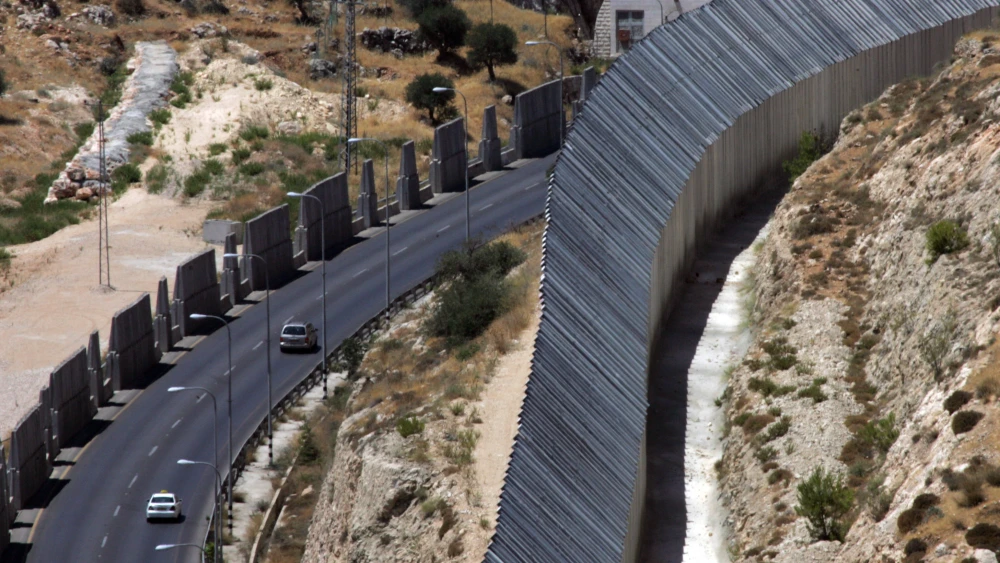
The Israeli government has approved a 508 million shekel ($138 million) plan to improve road safety in Judea, Samaria and the Jordan Valley, according to a report on Thursday morning.
Israeli Minister of Transport, National Infrastructure and Road Safety Miri Regev and Finance Minister Bezalel Smotrich, who also has some authority over civilian matters in Judea and Samaria, announced the budget after it was approved by the Knesset Finance Committee, according to Israel National News.
Among the roads included in the plan are Route 45 (the “Quarry Road” allowing Israelis from southern Samaria to bypass traffic at the entrance to Jerusalem) and the nearby Route 437, as well as Route 55 that runs from the central city of Kfar Saba to Nablus (Shechem) in Samaria.
Additional budgets will be allocated for existing roads, including for adding lighting and other safety measures, as well as completing the Gush Etzion-Hebron bypass road in Judea and other projects.
“The budget transfers approved last night are a direct continuation of a clear policy: de facto sovereignty through action,” Regev stated, adding: “We continue to connect the communities, strengthen transportation safety and reduce the gaps for the hundreds of thousands of loyal citizens living in Judea, Samaria and the Jordan Valley.”
Smotrich hailed the expansion of the infrastructure budget as a first step to bringing a million Israeli residents to Judea and Samaria while “taking the idea of a Palestinian terror state off the table.”
The investment in roads is “part of a clear strategic plan: strengthening the communities, physically and politically connecting this area to the State of Israel and turning sovereignty into an irreversible fact,” he said.
On Wednesday evening, a majority of 71 out of 120 Knesset members passed a non-binding resolution in favor of extending Israeli sovereignty to Judea and Samaria, as well as the Jordan Valley.
Only 13 lawmakers voted against the motion, which was submitted by Dan Illouz (Likud), Simcha Rothman (Religious Zionism), Limor Son Har-Melech (Otzma Yehudit) and Oded Forer (Yisrael Beiteinu).
“Judea, Samaria and the Jordan Valley are an inseparable part of the Land of Israel—the historic, cultural and spiritual homeland of the Jewish people,” the preamble to the resolution declares.
Led by Israeli Prime Minister Benjamin Netanyahu, the government has initiated an unprecedented drive to expand Jerusalem’s control of Judea and Samaria, approving 41,709 housing units and 50 new towns since 2022.
Last year, the Knesset voted 99-11 to back the Netanyahu-led Cabinet decision to reject any unilateral recognition of a Palestinian state.
All coalition members and most lawmakers of the Zionist opposition parties voted to support the Cabinet statement against “international diktats regarding a permanent settlement with the Palestinians.”


